
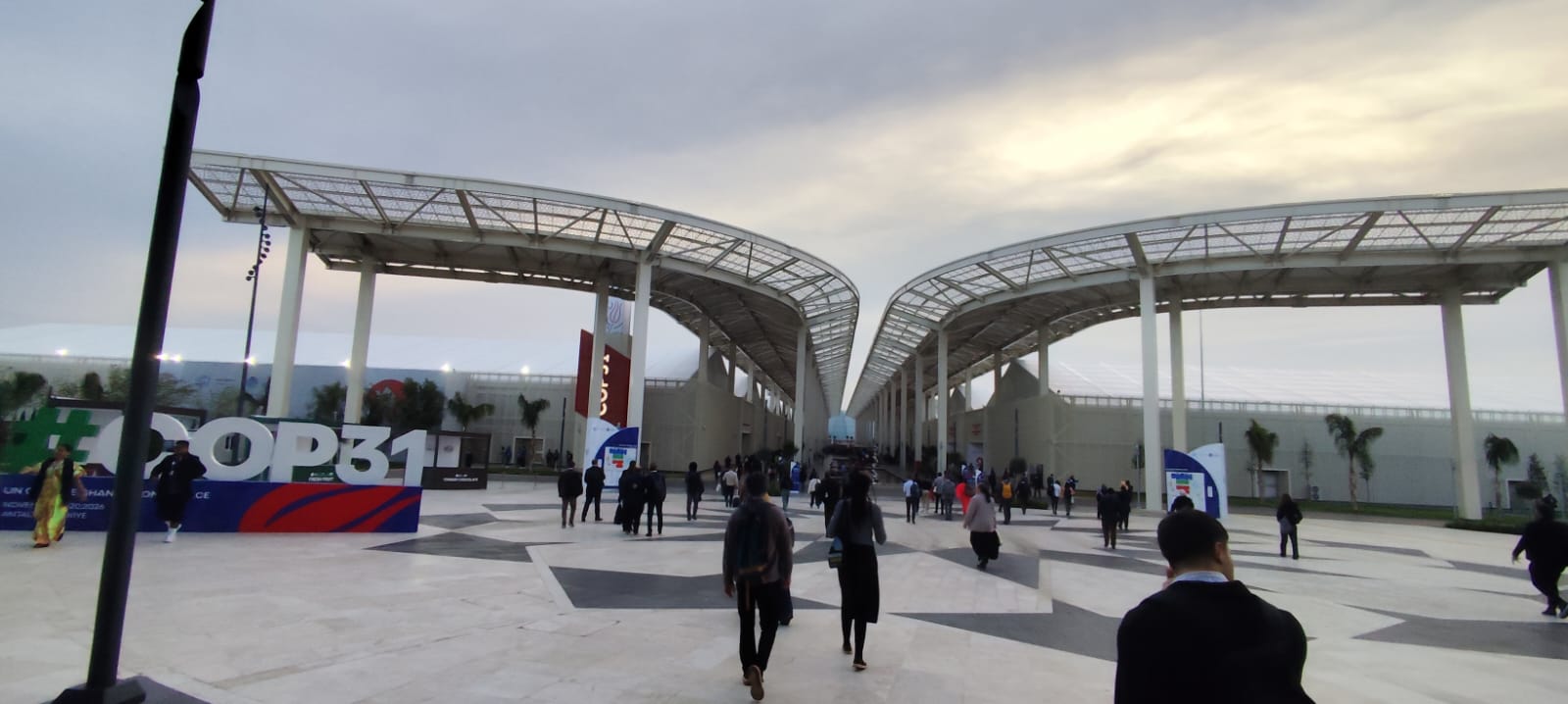
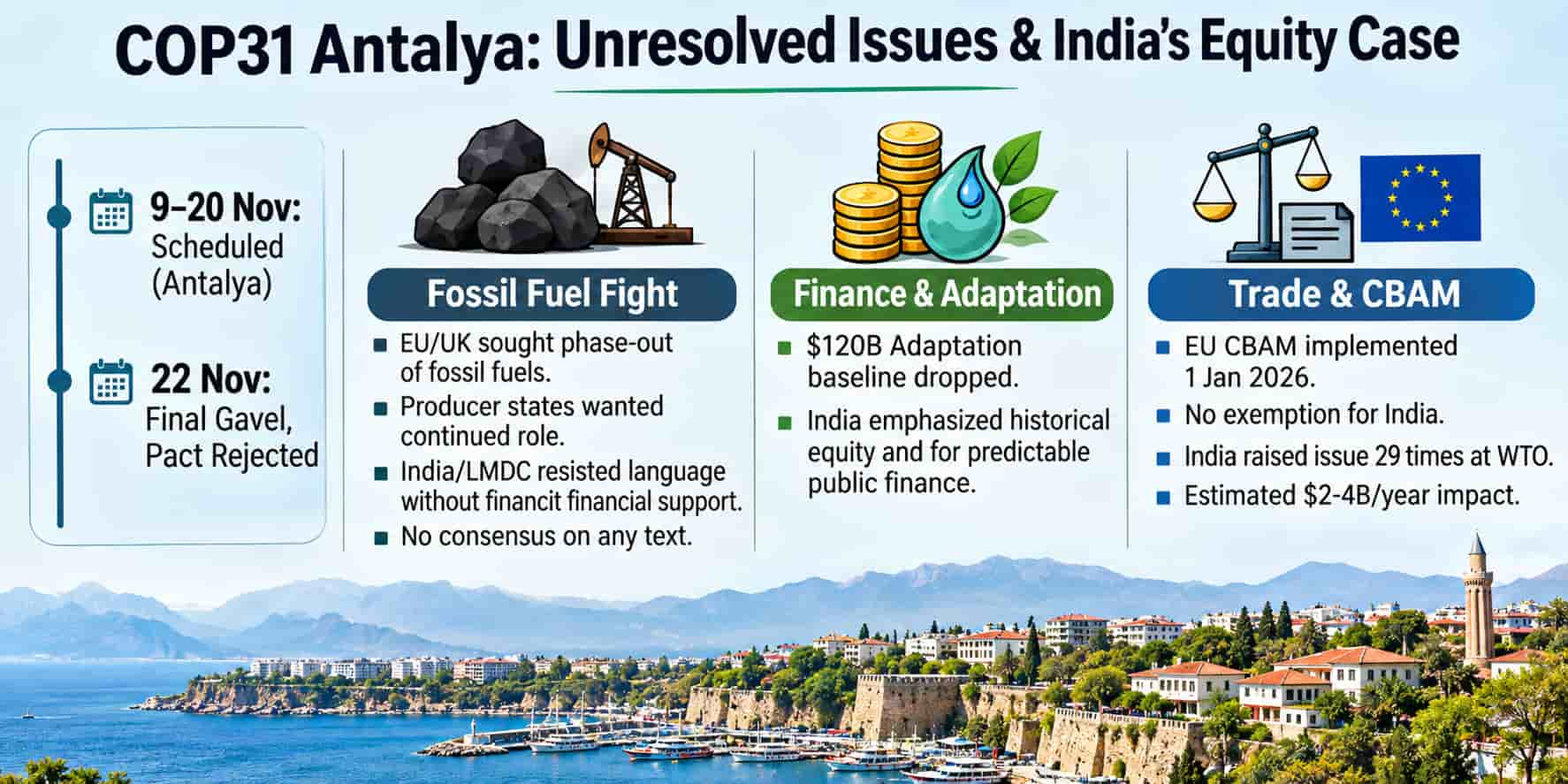
The 31st UN climate conference was scheduled for 9 to 20 November in Antalya, Türkiye. It did not finish on time. The final gavel came on 22 November, nearly 50 hours after the scheduled close, making COP31 the longest in history.
Türkiye hosted the meeting and ran its action agenda. Australia presided over the negotiations. The arrangement was a compromise reached at COP30 after a long dispute over who would host.
The presidency’s first draft of an overarching political text, known as the cover decision, arrived on 16 November. It ran to 144 paragraphs and collected every idea that parties had put forward. The second draft, on 19 November, was cut to 80 paragraphs. It did not mention coal, oil or gas and had dropped the US$120 billion a year adaptation figure that developing countries wanted. A third text came at around 3 am local time on 22 November. A fourth followed a few hours later, with only small changes.
At the closing plenary on 22 November, the pact was rejected by at least 32 countries. The EU, Panama, the Marshall Islands, Belize, Norway and Vanuatu objected openly. The UK, Japan, South Korea and the group of least developed countries said consensus had not been reached. Before that, 126 countries had asked the presidency to change how the text treated fossil fuels, adaptation finance and carbon capture.
Their reasons differed. The EU said it would not endorse a text that ‘does not even mention fossil fuels’. Others pointed to the lack of a response to the overshoot of 1.5°C and to the missing adaptation finance figure.
Not everyone opposed the text. Ghana, for the African Group, said it could support it despite gaps on adaptation finance and trade. Saudi Arabia, for the Arab group, said it had engaged constructively and objected to carbon capture being called greenwashing. Russia opposed any wording on fossil fuels, including the language agreed at Dubai in 2023. China called the outcome a deep disappointment.
Some experts note that the talks did not strictly collapse, since many other items were adopted. They also note something new. For the first time, countries seeking higher ambition rejected the lowest common denominator on offer. The UN climate chief spoke of scope to improve, modernise and reform the process.
The United States, which has pulled back from international climate action, was not part of this fight. That removed one big emitter, and one big paymaster, from the room.
What was adopted, and what fell
Several items went through at the closing plenary. The just transition work programme was extended, with a phased path to design a mechanism by COP32 in Addis Ababa in November 2027. The mitigation work programme was extended to 2030. A decision on the global goal on adaptation set up an expert taskforce to refine the 59 adaptation indicators agreed at COP30. The climate finance work programme will run until 2028. Rules for carbon markets under Article 6 also passed, along with a decision that lets the Adaptation Fund receive a share of carbon-market proceeds.
Others fell. The pact itself was rejected. So was the decision on response measures, the forum where trade-related climate policies are discussed. Talks on agriculture ended without a result for the second year in a row. A new plan on climate education and public awareness was blocked after objections to language on misinformation. As a result, trade was entirely missing from the formal outcome.
Much of the visible progress sat outside the negotiating rooms. Around 80 countries signed a presidency pledge for electricity to supply 35% of final energy by 2035. Coalitions backing national roadmaps for moving away from fossil fuels grew. These steps are voluntary. None of them binds India or anyone else.
India’s place in the fossil fuel fight
India’s public line was steady. The environment minister said India engaged constructively till the end and regretted the lack of consensus.
India, speaking for the Like-Minded Developing Countries (LMDC), said the cover decision had drawn attention away from the mandated agenda items that parties had to deliver. It also argued that historical and continuing emissions have used up a disproportionate share of the carbon budget.
That case is strong on its own terms. India’s per-capita emissions remain low. Its development needs are large. India also holds that transitions must be nationally determined and backed by finance and technology.
The EU and vulnerable states argue differently. They say the Dubai agreement already commits everyone to transition away from fossil fuels, so a text that stays silent steps backwards. Producer states say oil and gas keep a role even in 1.5°C pathways. Each camp has a logic. The difficulty is that three logics cannot fit into one paragraph.
Four facts complicate India’s position.
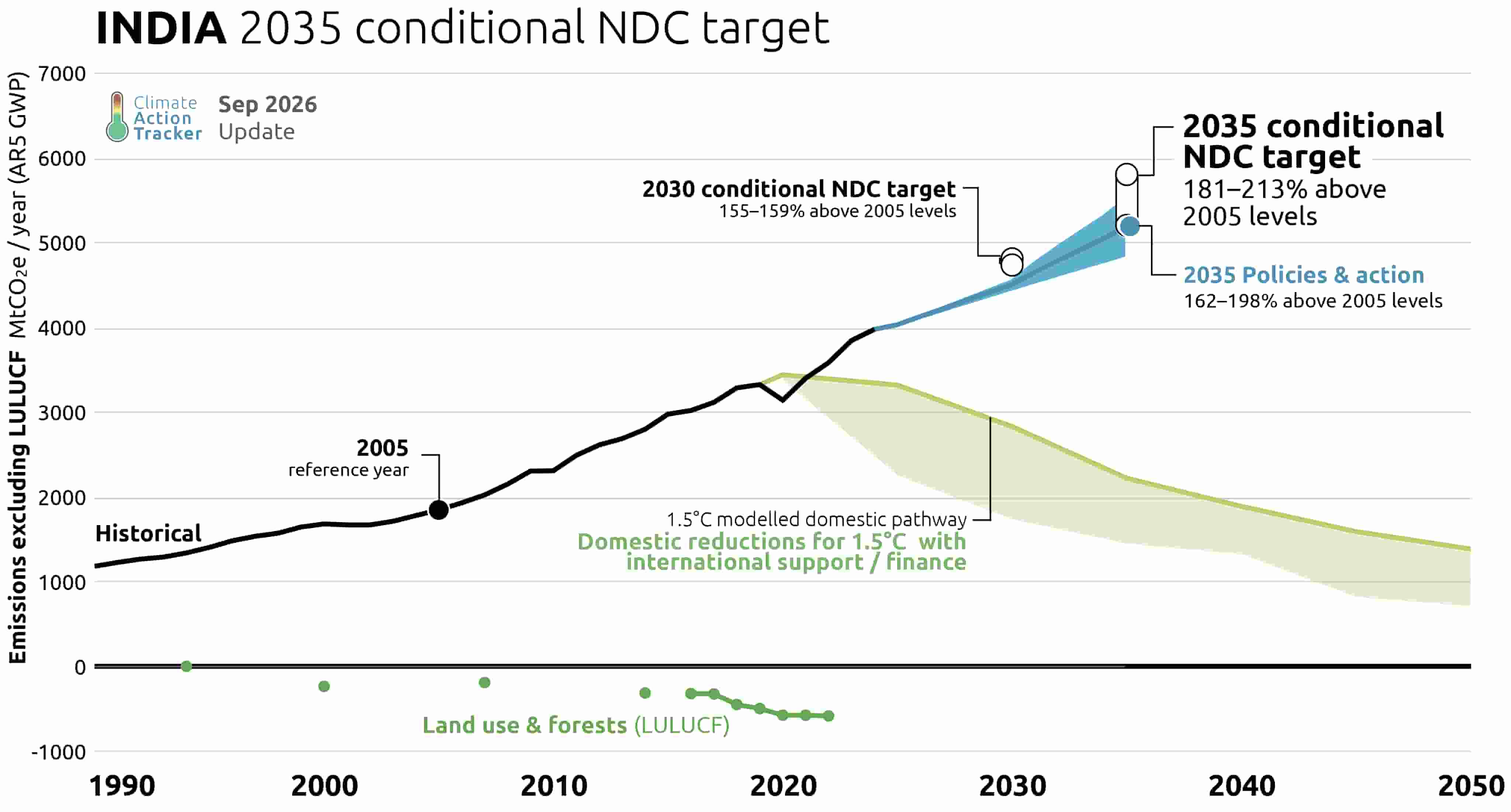
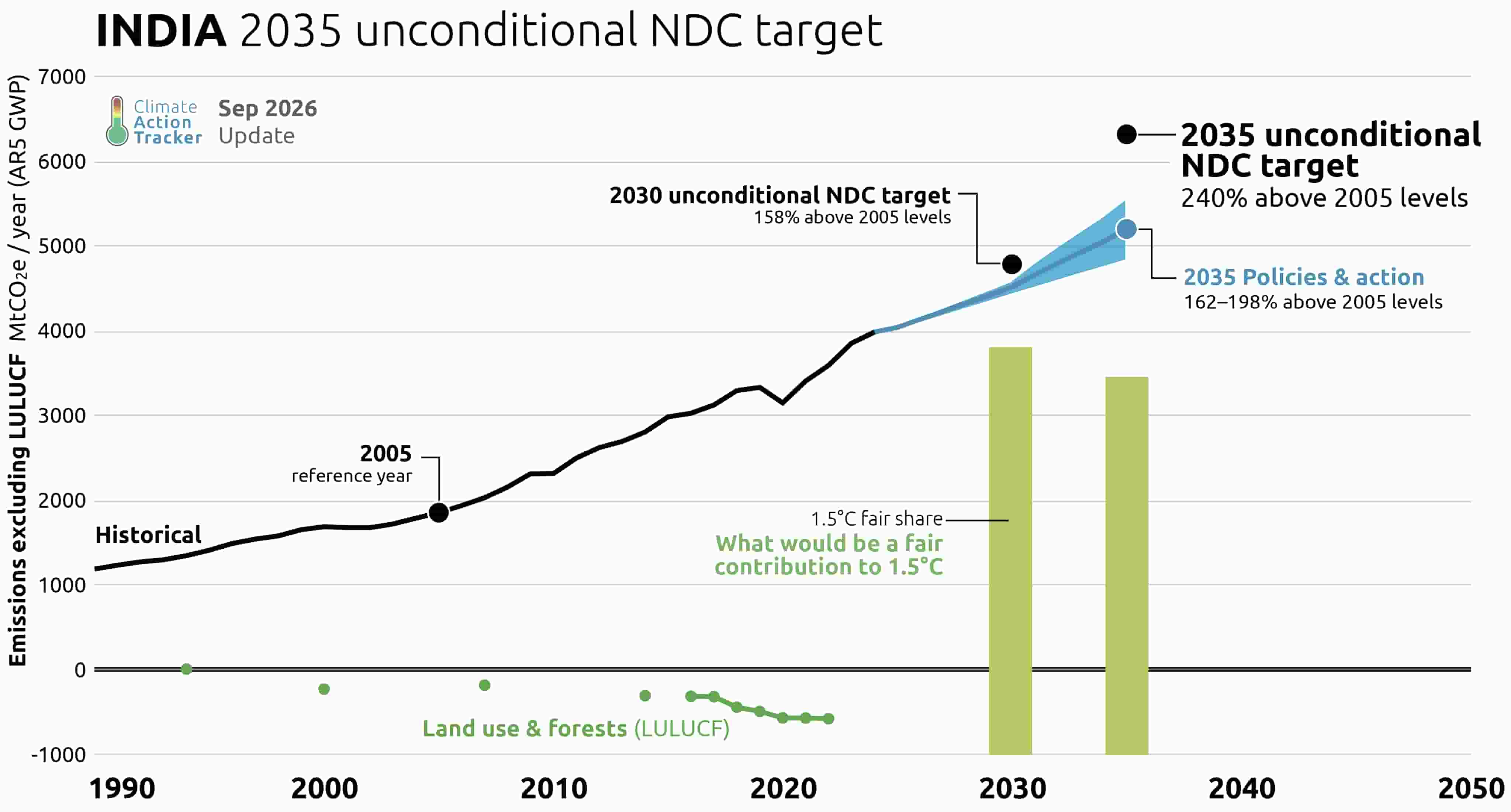
The first is scale. India is the world’s third-largest emitter. Its fossil CO₂ emissions, as Indoen earlier reported, are projected to rise 4.4% in 2026, within a range of 1.7% to 7.1%, while China, the US and the EU are expected to fall. Coal drives the rise, up 5.9%. Coal still generates about 74% of electricity, even after installed capacity crossed 500 GW, with more than half of it non-fossil. India’s per-capita emissions, at 2.2 tonnes in 2025, are far below the US figure of 14.5 tonnes. That argument is valid. But the world negotiates on absolute numbers.
The second is the pledge. India’s 2035 climate plan, sent to the UN on 24 April 2026, promises a 47% cut in emissions intensity from 2005 levels and 60% non-fossil power capacity. Analysts say both targets are likely to be met under current policies, potentially well before 2035. Because they are intensity-based, they do not cap total emissions.
The third is history. At COP30 in Belém, the EU and more than 80 countries sought a roadmap to phase out fossil fuels. The demand was dropped after oil-dependent economies won the support of major economies, India and China included, for softer language.
The fourth is India’s own interest. Unlike Saudi Arabia or Russia, India buys most of its oil and gas. Its solar and wind build-out saved more than US$100 billion in imported coal and gas since 2011, yet the 2026 oil shock still hit elsewhere, including LPG. A managed transition is therefore an energy security question as much as an environmental one. In climate talks, India is often grouped with producers. Its import bill suggests its interests are more mixed.
There is also the matter of overshoot. The failed pact expressed concern that peak warming will exceed 1.5°C within the next few years, and it leaned on carbon removal to bring temperatures back.
Overshoot is now widely expected, as noted in an earlier Indoen report. The remaining 1.5°C carbon budget is about 150 billion tonnes of CO₂, less than four years of current emissions. India’s equity case rests on a remaining carbon budget. If the 1.5°C budget is treated as spent, the argument moves to who pays to bring temperatures down again. Developing countries have the least capital and technology for that work. It is a reason to seek clarity on finance, and not only on equity.
The wider picture is sobering. The latest UN synthesis of national plans points to warming of about 2.1°C to 3.2°C by 2100. By 18 November, 167 countries had submitted new national plans, according to the draft text.
Coalitions are filling the gap. The Santa Marta group of 57 nations, led by Colombia and the Netherlands, is working on moving away from fossil fuels, and about 25 of its members have promised national roadmaps. Whether India will engage with such groups is not clear from public statements.
Finance and adaptation: the missing number
Finance was the other great fault line. Talks ended with little beyond decisions to meet again. The finance work programme continues until 2028. This came as public climate pledges fell by about 70%, amid aid cuts and rising defence spending.
The dispute was about framing. Developing countries wanted to discuss Article 9.1 of the Paris Agreement, under which developed countries shall provide finance. Developed countries preferred the US$300 billion a year mobilisation goal agreed at COP29, which also counts private and multilateral money. The Baku to Belém roadmap points towards US$1.3 trillion a year by 2035 from all sources.
Positions hardened. Before the summit, a senior EU official said any talk of new money was ‘dead in the water’. India’s delegate quoted that phrase back at the closing plenary. Developed countries argue that they already contribute tens of billions each year, and that existing pledges should be honoured before the deal is reopened. They also want help for access to funds, and a wider contributor base that includes richer developing countries. That last idea touches large emerging economies.
The adaptation number shows the problem. At COP30, countries agreed to triple adaptation finance by 2035, but without a baseline. Early drafts at Antalya used the 2025 target of US$40 billion as the base, which gives US$120 billion a year. An NGO network reported that France, a finance co-chair, floated a 2019 baseline, which would give only US$60 billion. No figure survived in the final texts.
The need is much larger. UNEP’s 2026 report puts developing countries’ adaptation needs at about US$305 billion a year by 2035. Public adaptation flows were US$28.2 billion to US$31.7 billion in 2024. Flows today are roughly a tenth of the likely need. The comparison mixes years, but the direction is clear.
Some adaptation decisions did land. The Adaptation Fund will be able to receive a share of carbon-market proceeds under Article 6.4, which are not subject to national budget politics. Developing countries keep a majority on its board. A new platform will help the 44 least developed countries implement their adaptation plans.
Loss and damage tells a similar story. Floods in the Himalaya this summer devastated Nepal, which asked the UN fund for US$20 million. The fund has only US$342 million in pledges against US$2.8 billion in requests. Its board plans to begin disbursing in December. Its start-up phase reserves at least half its money for least developed countries and small island states.
India is therefore unlikely to be first in the queue. Its gain from a firm adaptation number would be indirect. A precedent of predictable, grant-based flows shapes how development banks lend. For India, cheaper capital is likely to matter more. Solar and wind spending in emerging markets could reach US$356 billion by 2040, but high financing costs slow it. Development finance institutions from the UK, Norway and Canada have signed a pact targeting US$10 billion in climate finance by 2030. Indian banks, meanwhile, are still poorly prepared for deeper climate financial risks.
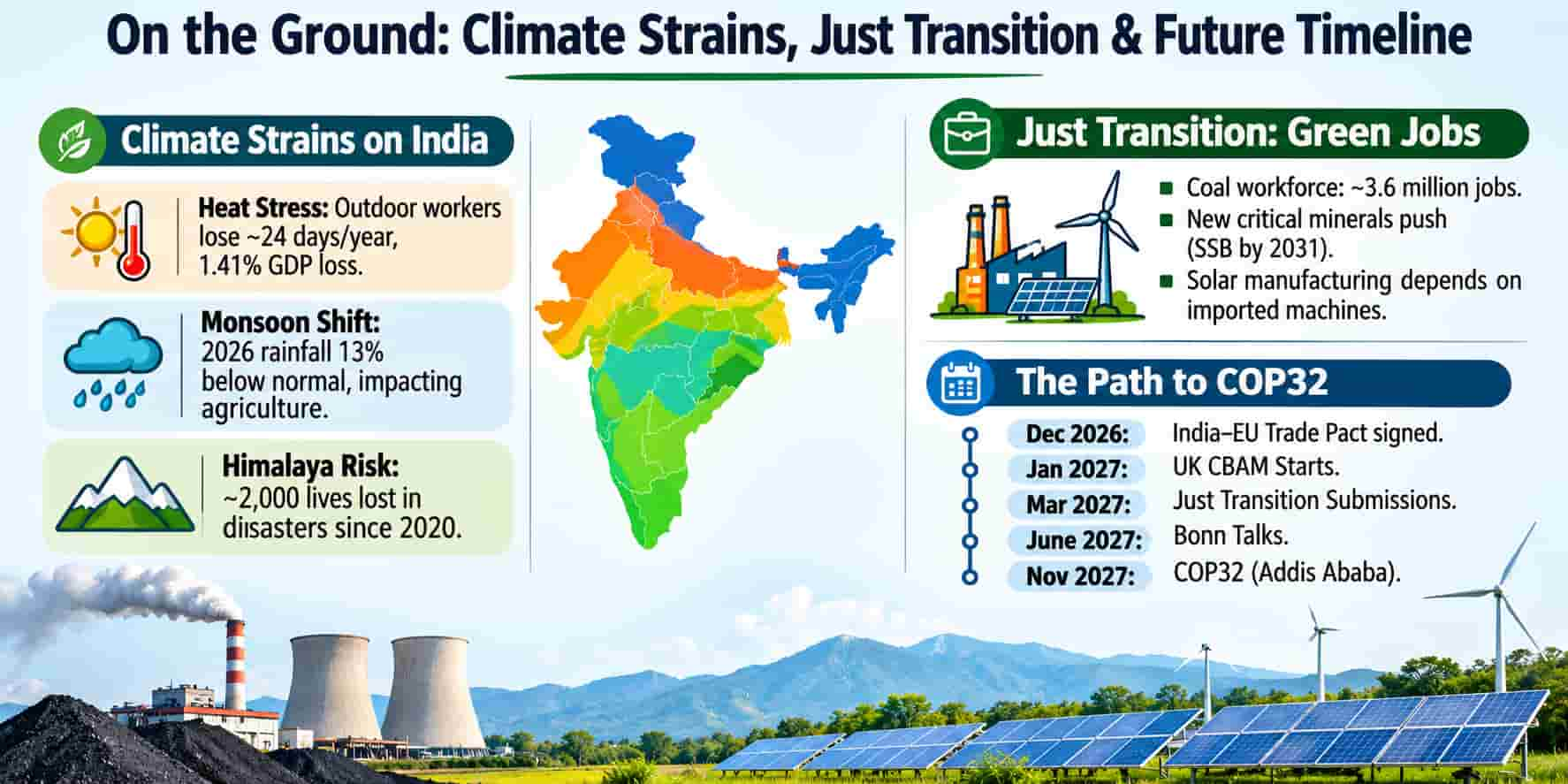
The bill at home is already visible. Himachal Pradesh lost more than 2,000 lives to climate-linked disasters between 2020 and 2025, and a study of 12 villages shows how some are adapting early. The failure at Antalya does not change that bill. It only makes it more likely that India pays most of it from its own budgets.
Trade and carbon borders: The issue that went missing
Trade was one of the sharpest fault lines in Antalya. A request for a separate agenda item on trade was rejected at the start. The first draft, a compilation of parties’ ideas, included a call to phase out certain unilateral trade policies in 2027. The EU’s Carbon Border Adjustment Mechanism (CBAM) was not named, but everyone knew its target. Later drafts dropped the deadline.
The response measures forum, where trade and climate are discussed, also failed. COP30 had set up annual global dialogues on the subject from 2026 to 2029. The first met in Bangkok on 21 and 22 September. At Antalya, the EU, Canada and the UK rejected the decision, arguing that it would unduly influence the next global stocktake. Brazil and Saudi Arabia expressed disappointment. Trade ended up with no text at all.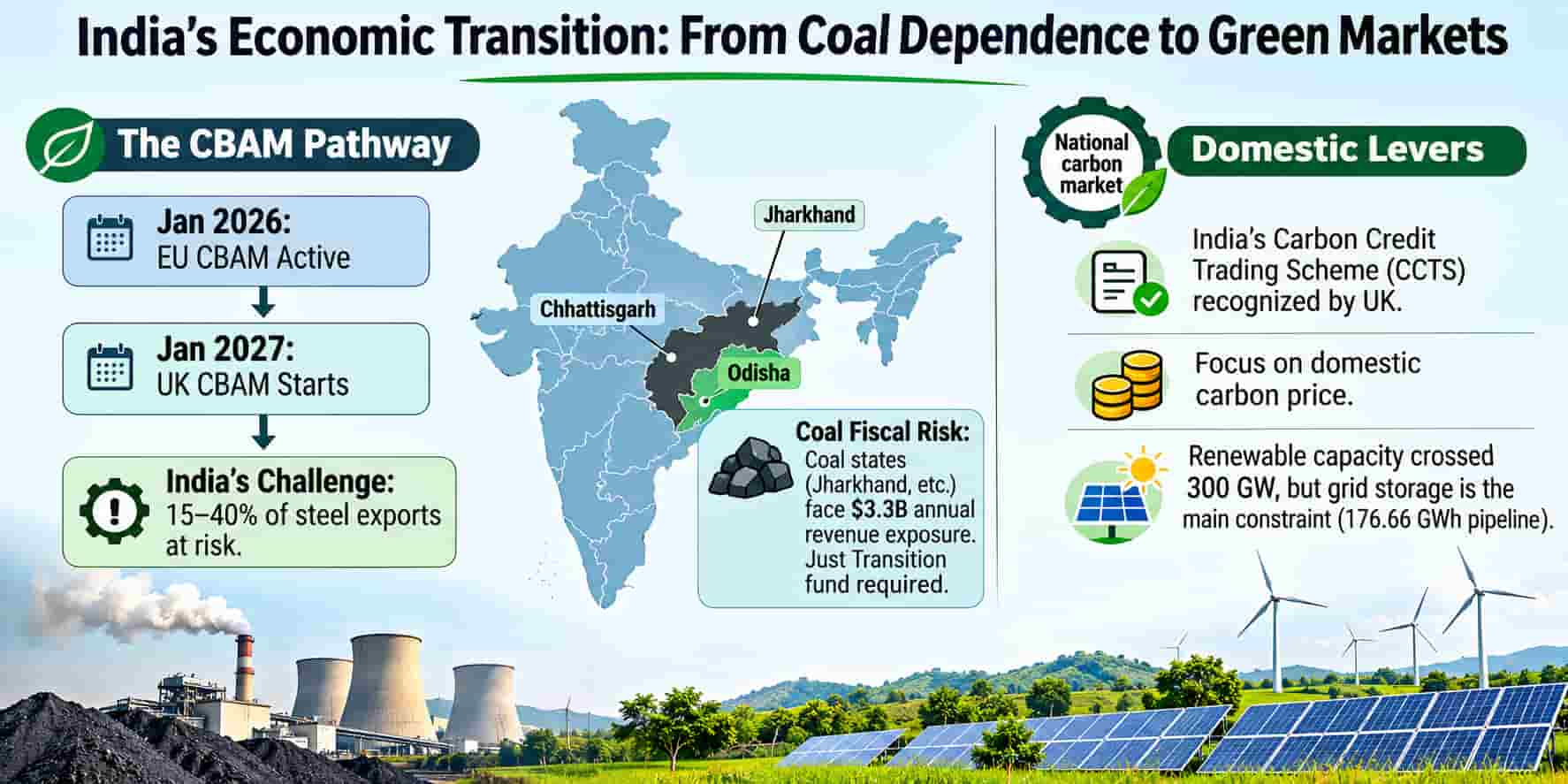
Each side has an argument. The EU presents CBAM as a tool against carbon leakage. India and other developing countries argue that unilateral border measures cut across the principle of common but differentiated responsibilities.
The numbers matter for India. CBAM has been in full force since 1 January 2026. It covers iron and steel, aluminium, cement, fertilisers, electricity and hydrogen. The EU has also proposed extending it to about 180 more steel and aluminium products. India and the EU concluded their trade agreement on 27 January 2026 without a CBAM exemption. Compliance costs for Indian exporters could be US$2 billion to US$4 billion a year. The rating agency ICRA has estimated that CBAM could affect 15% to 40% of India’s steel exports to the EU between 2026 and 2034 if carbon intensity is not cut. The blast furnace route, which makes 70% to 80% of India’s steel, is the most exposed.
The UK is next. Its own CBAM takes effect on 1 January 2027. India’s trade pact with the UK lets it rebalance benefits if the levy cancels its gains.
A climate summit was never the only place to win this argument.
India raised CBAM at the WTO’s trade and environment committee 29 times between 2020 and 2024, without result. The practical answers lie in bilateral channels and at home. The India–EU agreement provides for technical cooperation on recognising carbon prices and for mutual recognition of verifiers. It carries about €500 million (roughly US$550 million) of EU support for decarbonising Indian steel and aluminium. It also says that any future CBAM flexibility the EU gives others will extend to India.
India’s own carbon market is the main lever. In September 2026 the UK listed India’s Carbon Credit Trading Scheme as a qualifying carbon pricing mechanism, so relief will equal the carbon price already paid at home. Talks with the EU were still open in July 2026, with no recognition announced. The stakes are real. India’s steel and aluminium exports to the EU fell 24.4% in FY2025, steel alone by 35.1%, before any border payment began. One estimate says the border burden on India could fall 42%, to €480 million, if India’s carbon price reached a quarter of the EU level. The scheme sets intensity targets, not an absolute cap, and a visible price will decide how much credit it earns.
There is a catch. India is meeting its transition costs mainly through subsidies, not through a visible carbon price. Its carbon capture plans must also clear three border tests of price, tonnes and storage. The EU and UK were expected to announce a link between their carbon markets on 20 November. On 6 November, UK allowances stood at £64.81 a tonne and EU allowances at €86.55, as per recent reporting. Brussels is also easing rules elsewhere. India’s US$9.5 billion green hydrogen export plans now lean on fertiliser fields as the EU softens its hydrogen rules.
Food: A poor monsoon, a hotter belt and a stalled farm negotiation
India’s 2026 southwest monsoon ended about 13% below normal, an 11-year low. East and Northeast India recorded their lowest monsoon rainfall since 1901, and reservoir storage fell to about 70%. The agriculture ministry cut its 2026–27 foodgrain target to 373.93 million tonnes, which is 2.63 million tonnes below last year’s estimated output. ICRA flagged risks to wheat sowing in Punjab and Rajasthan, where rainfall was only 59% and 78% of normal.
The picture is not one-sided. Food stocks, irrigation in the central and western belts and steady rural demand have cushioned the impact so far, and headline inflation stayed within the RBI’s band. The risk lies ahead. If heat arrives during grain filling, even a crop that survives a dry start can lose yield.
The longer trend is hotter. India’s climate zones have shifted over seven decades, and the hot, dry belt now reaches Uttar Pradesh, with a US$13 billion food-loss gap in its path.
Weak rain also reaches the power system. India’s coal plants posted a record July even as renewables hit a record 20% share, because weak rain cut hydropower.
Against this backdrop, the agriculture track at COP31 delivered nothing. The Sharm el-Sheikh joint work on agriculture and food security ended without agreement for the second year, and its four-year mandate ran out. The Arab group raised CBAM, arguing that fertilisers are vital for food security and that EU carbon border rules hit fertiliser exports.
The EU opposed any mention of CBAM. The G77 opposed language on food systems. India was among the countries that opposed language on agroecology. The reporting did not set out India’s reasons. Observers said the deeper problem was finance, and that without it developing countries saw little for themselves in the talks. The work now moves to Bonn in June 2027 and to COP32.
Other food initiatives sat outside the formal talks. The FAO launched a platform linking food, water and climate action in Antalya, and a think tank released a report on reforming agricultural subsidies. Subsidy reform is a sensitive subject in India, where fertiliser and food support carry large political weight.
Finance reaches farmers through small channels too. Solar-powered tools such as dryers and cold rooms raised incomes for 87% of surveyed users, yet adoption is under 3%, held back by a US$5.7 billion credit gap. Methane is another farm link. UNEP’s alert system flagged five methane leaks and helped countries avert 125,000 tonnes, but in India paddy and livestock are also major sources.
Heat, power demand and the Himalaya
Heat is the clearest daily climate cost for Indian workers. A 2026 IIED survey of 538 informal-worker households in Delhi, Agra and Ajmer estimated that outdoor workers lose about 24 working days a year to heat, nearly a tenth of their annual earnings. The national model puts heat-related productivity loss at 1.41% of GDP. Adding the cost of heat-linked kidney problems, informal workers may lose about US$78 billion in wages a year, close to 2% of GDP. Workers also reported few toilets for women at work sites.
The World Bank projects that Delhi will lose the equivalent of 266,000 full-time jobs by 2030 and 418,000 by 2050, because working hours become unsafe. For Kolkata the figures are 360,000 and 391,000. Mumbai could lose 204,000 and 255,000, and Chennai 141,000 and 145,000. Across South Asia, the Bank estimates that heat costs productivity equal to nearly 31 million full-time jobs a year. The Union labour ministry issued a nationwide advisory on heat in April 2026.
Heat also drives the power system. When rain and cooler weather arrived this autumn, day-ahead power prices fell sharply, a reminder of how much weather sets demand.
COP31 touched this only lightly. A health day on 9 November highlighted heat risks to outdoor workers. The presidency and WHO launched a resilient health systems initiative, but it had announced no participating countries, staff or funding in its first week. Talks on the Belém gender plan and a new climate-education plan also made little progress, after objections from a small group of countries.
The Himalaya got similar treatment. Two proposed agenda items on mountains and climate change were not added, though the presidency said it would hold consultations. India’s own record shows the stakes. Himachal Pradesh lost more than 2,000 lives to climate-linked disasters between 2020 and 2025.
Jobs and the just transition
India’s coal economy is a jobs question before it is an emissions one. The formal coal mining workforce exceeds three lakh, according to one study. A 2021 study estimated that about 3.6 million people work directly or indirectly in coal mining and power across 159 districts. Many more work informally. Coal also feeds state budgets. It makes up 13% of Jharkhand’s revenue and 8% of Chhattisgarh’s, against 3% in Odisha. India’s coal states hold a US$3.3 billion fiscal fault line.
Just transition talks at Antalya were among the most heated. Developing countries wanted a mechanism with institutional power and the means to deliver support. Developed countries favoured dialogues, reports and networking, and stressed the role of non-party stakeholders.
The outcome is a phased approach. Countries will work out what the mechanism does at Bonn in 2027, with a view to agreeing it at COP32 in November 2027. Stakeholders can send views until 15 March 2027. Civil society groups called the result damage control.
The outcome also mentioned critical minerals in a COP decision for the first time. Groups working on mineral supply chains said human-rights safeguards were stripped out.
Minerals link to India’s own jobs plans. The Cabinet has approved ₹2,814 crore (US$303 million) for lithium and nickel processing. The World Bank plans US$19 billion for critical minerals, and India eyes US$5 billion by 2031. In solar manufacturing, India’s US$7.8 billion parts boom still depends on Chinese machines. Clean-energy jobs will not automatically land where coal jobs are lost.
Heat and jobs are linked as well. Workplace heat rules, cooling and rest breaks decide whether outdoor workers can stay productive. The labour ministry’s advisory urges states to act, but it remains an advisory.
Energy choices behind the pledges
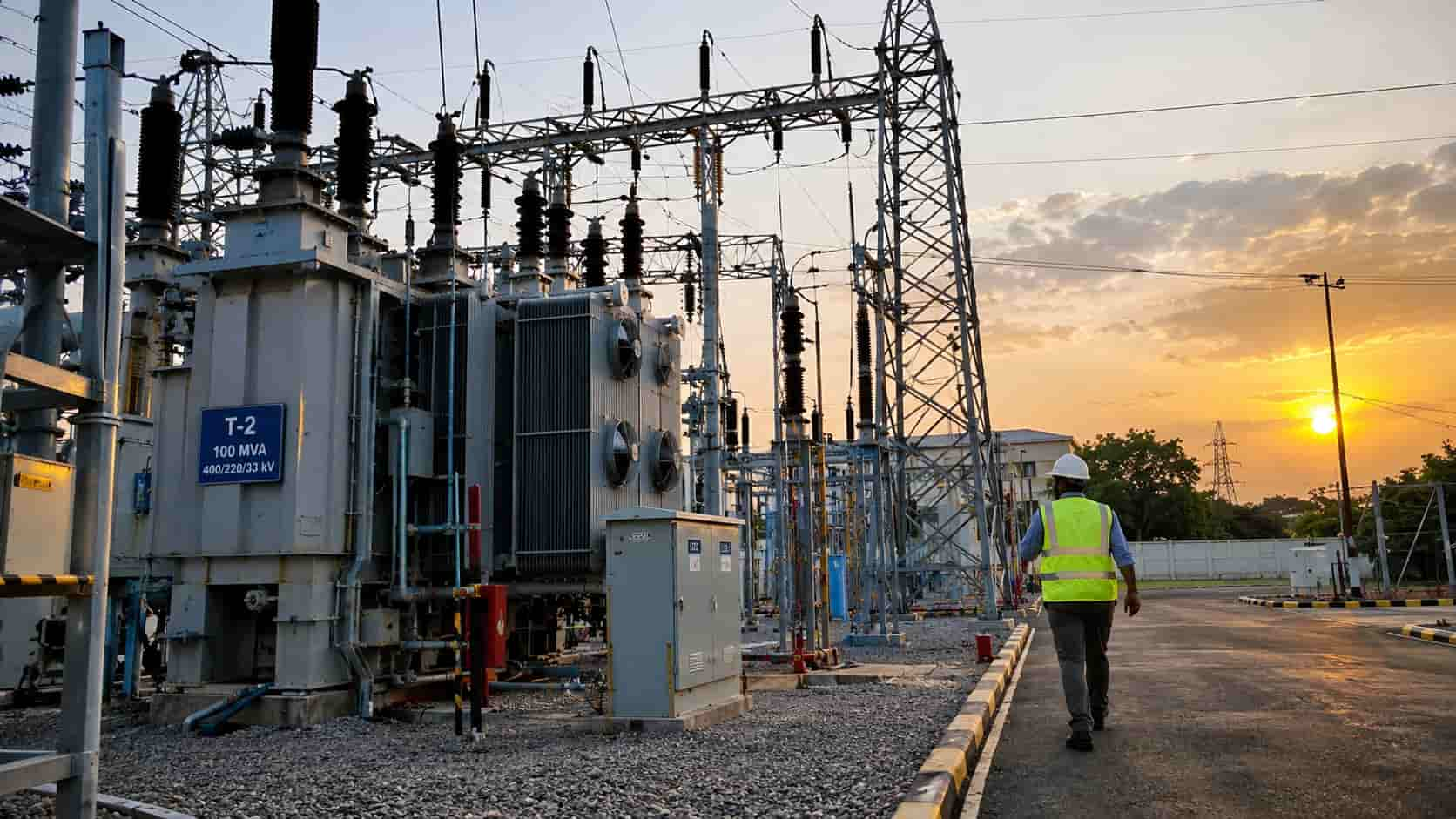
The 35 by 35 pledge would lift electricity from roughly 22% to 35% of final energy by 2035. Around 80 countries signed. It is not clear from public reporting whether India did. For India, the test is the grid. Renewable capacity has crossed 300 GW and could reach about 530 GW by 2030, but wires, storage and discoms must keep pace.
 The strain is already visible at dusk. In the latest weekly review, evening buyers on the day-ahead exchange bid 24 GW but received only 3.4 GW, with prices pinned at ₹10 per kWh (US$108 per MWh). The grid also showed low frequency and sharp price spikes, and power-plant coal stocks are being raised to 55 million tonnes by March. More electrification means more evening demand. That makes storage the real constraint.
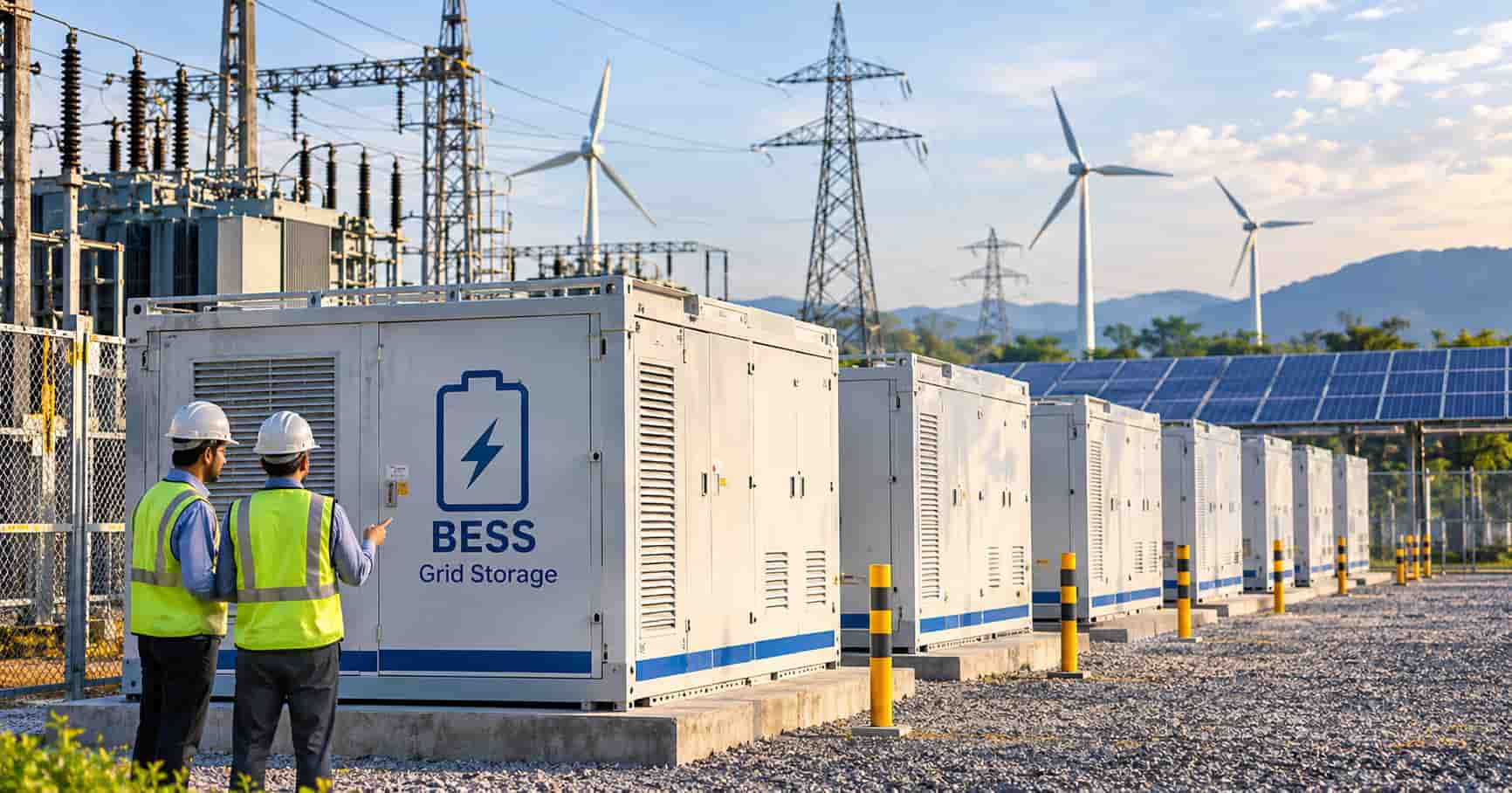
Global storage targets for 2030 now add up to 822 GW, almost three times the level seen at COP29, but two economies did most of the work. In India, the transmission utility now asks for four hours of storage behind most new battery connections, and the battery pipeline stands at 176.66 GWh. Turning tenders into working capacity is the hard part.
The failed pact also set numbers for carbon capture. It sought at least 500 million tonnes a year by 2035. The world’s 113 commercial capture plants today have capacity of about 68 million tonnes a year, and plants under construction would lift it past 100 million. The target is therefore roughly seven times what operates now. Producers backed it. Critics called capture greenwashing.
For India, the pipeline does not match its emissions growth. Capture projects lean towards gas, hydrogen, ammonia and cement, while India’s emissions growth this year is coal. Its ₹20,000 crore (US$2.15 billion) plan over five years is a start. But only ₹500 crore (US$54 million) is set aside for FY2026-27, which makes it pilot-sized.
Forests and oceans also featured in the action agenda. A COP30 roadmap on halting deforestation by 2030 was relaunched in Antalya. The Blue NDC (nationally determined contribution) challenge added ten members. The failed pact proposed an Antalya Ocean Current plan, with a synthesis report due on 1 June 2028. For India, with its long coastline and fishing communities, ocean-climate work will matter. But these steps remain voluntary or unadopted.
Carbon markets: Where India has something to sell
Article 6 was one of the few places where countries reached agreement. Even so, concerns remain. Reviews of 16 national reports on bilateral trading under Article 6.2 found 543 inconsistencies, 115 of them significant. A paragraph noting this with concern disappeared from the final text. Funding for the process was left for 2027.
Under Article 6.4, industry asked for less conservative rules, and the EU pushed back. The final text asks the supervisory body to consider how standards operate together. A review of the rules begins in 2028. Forty-five scientists warned that the rules must stay consistent with science. Seventeen governments endorsed a playbook for high-integrity credit trading, and UNCTAD launched a Global Carbon Market Network on 12 November.
India has a stake on both sides. Its own market and project pipeline give it credits to sell. It gains if buyers trust Indian credits. It loses if weak rules cut quality and prices.
Process, coalitions and the road to COP32
Antalya has restarted a debate on how COP works. The UN climate chief said there is scope to reform the process. Peru, for a Latin American group, asked for a clear rule on votes and an independent review of efficiency. Reform talks continue in Bonn in 2027. Critics also questioned the hosts. Türkiye announced two new oil fields on the eve of the summit, and Australia is among the largest historical CO2 exporters.
Other threads remain open. A second global stocktake is coming, and countries fought over what feeds into it, including the timing of the next IPCC reports and the role of response measures. Bonn in June 2027 will pick up agriculture, Article 6.2 funding, the just transition mechanism and reform. COP32 in Addis Ababa in November 2027 will inherit the fossil fuel fight, the adaptation finance figure and the trade question.
What it means for India
Four things stand out.
First, on fossil fuels, India avoided a clause it had not sought. But it has no clear seat yet in the coalitions forming on roadmaps. Whether to join them, and on what terms, is a decision for Delhi.
Second, on finance and adaptation, the missing number leaves India relying on domestic budgets and cheaper capital, while it keeps pressing for predictable public finance. The case is strong. But Indian needs may compete with those of poorer countries.
Third, on trade, nothing at Antalya moves the CBAM clock. The practical routes are the trade agreements, a credible domestic carbon price and verified emissions data.
Fourth, on food, heat and jobs, no COP outcome can substitute for domestic policy. Water, crop choices, workplace heat rules and a plan for coal districts decide how Indians feel climate change. Antalya’s failure does not alter any of these. It removes only the hope that outside help would arrive on a fixed date.
The dates to watch are close. The India–EU trade agreement is expected to be signed in December 2026, and the UN loss and damage fund plans its first disbursements the same month. The UK’s carbon border levy starts on 1 January 2027. Submissions on the just transition mechanism close on 15 March 2027. Bonn follows in June 2027, and COP32 in Addis Ababa in November 2027. The review of Article 6 rules comes in 2028.
The collapse in Antalya will not change the monsoon, the heat or the coal belt. It will not stop India’s solar build either. Reasonable people differ on where the blame lies. The EU wanted stronger language on fossil fuels. Producers wanted room for oil, gas and carbon capture. Developing countries wanted money before more commitments. India sat between these demands. The next test is not a clause. It is whether any of these camps will fund, build or price what they promised.