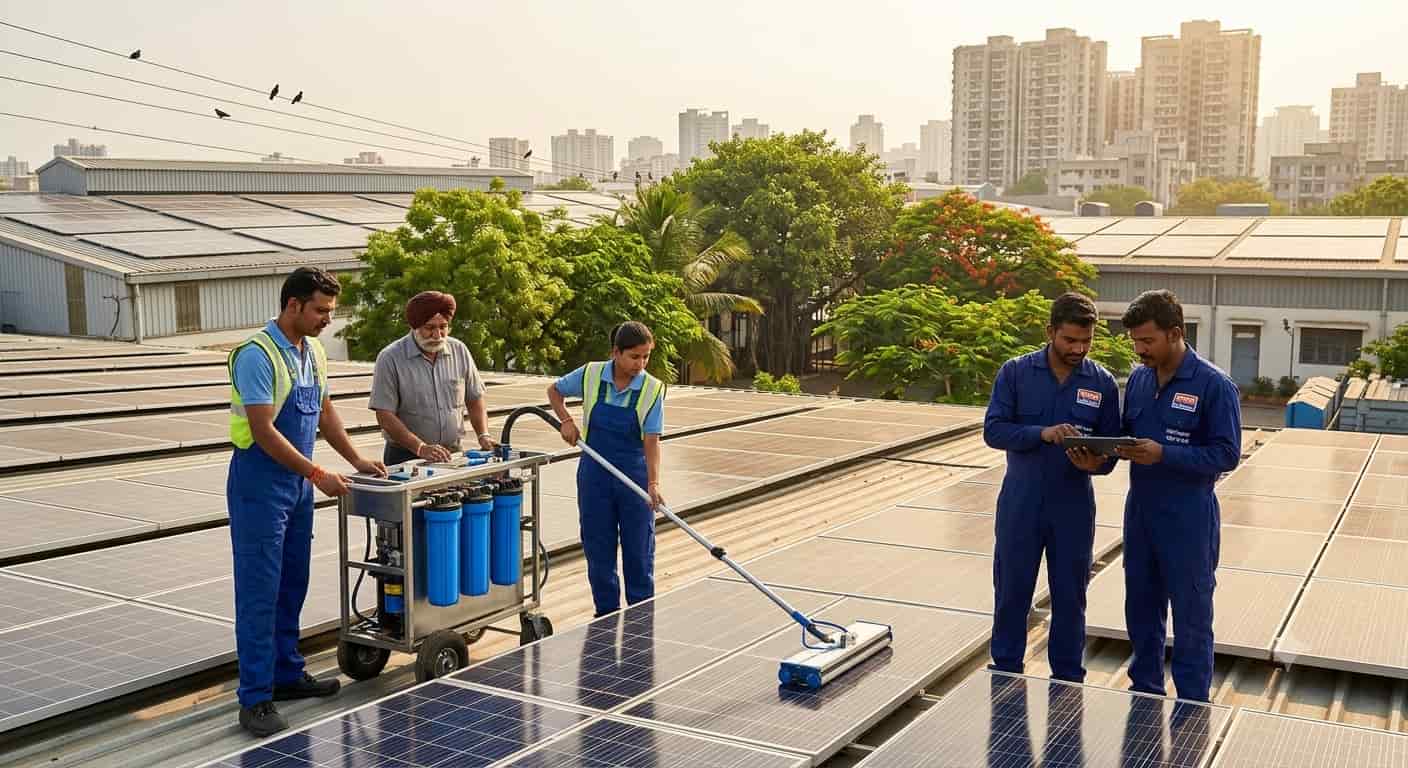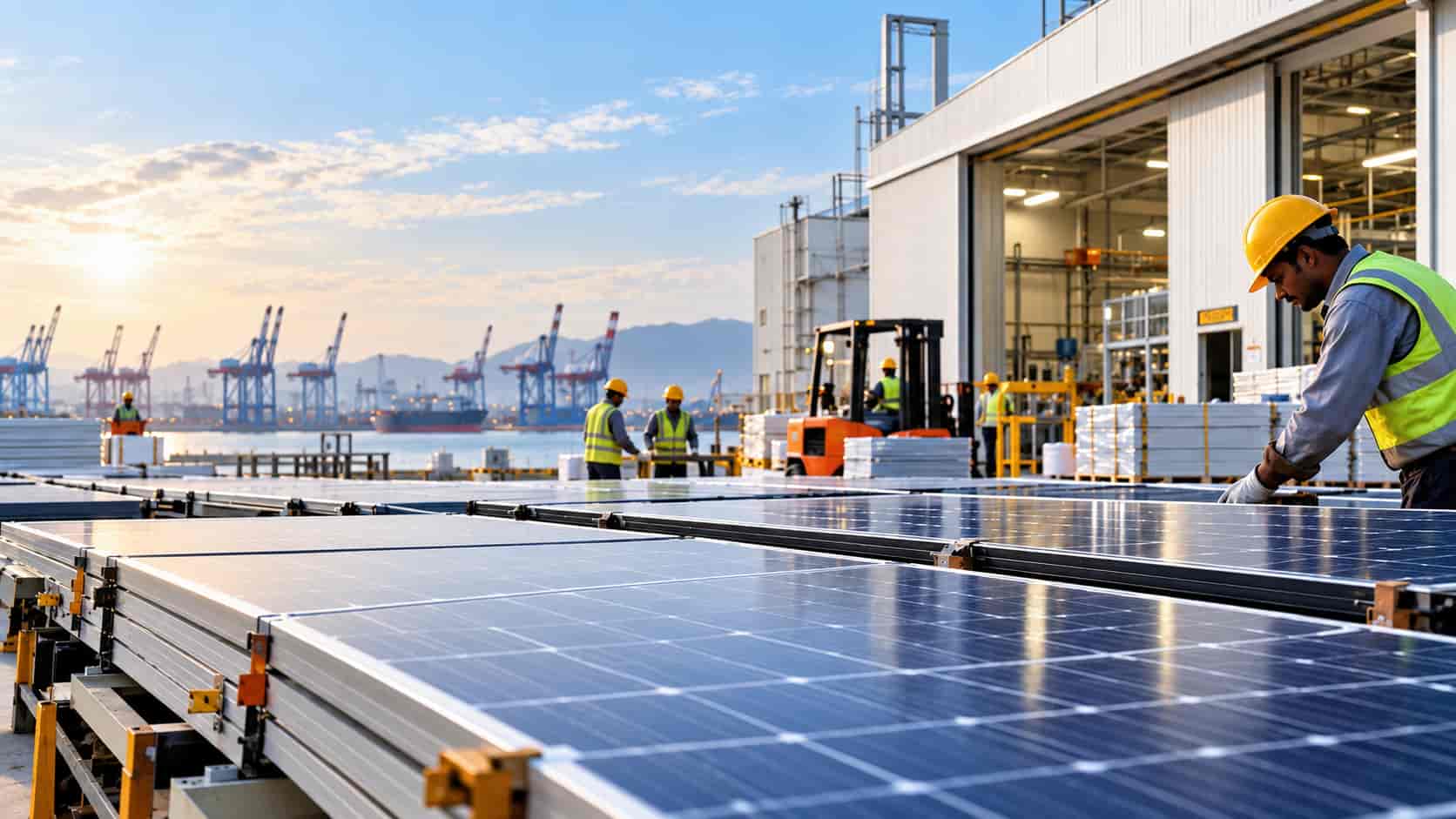

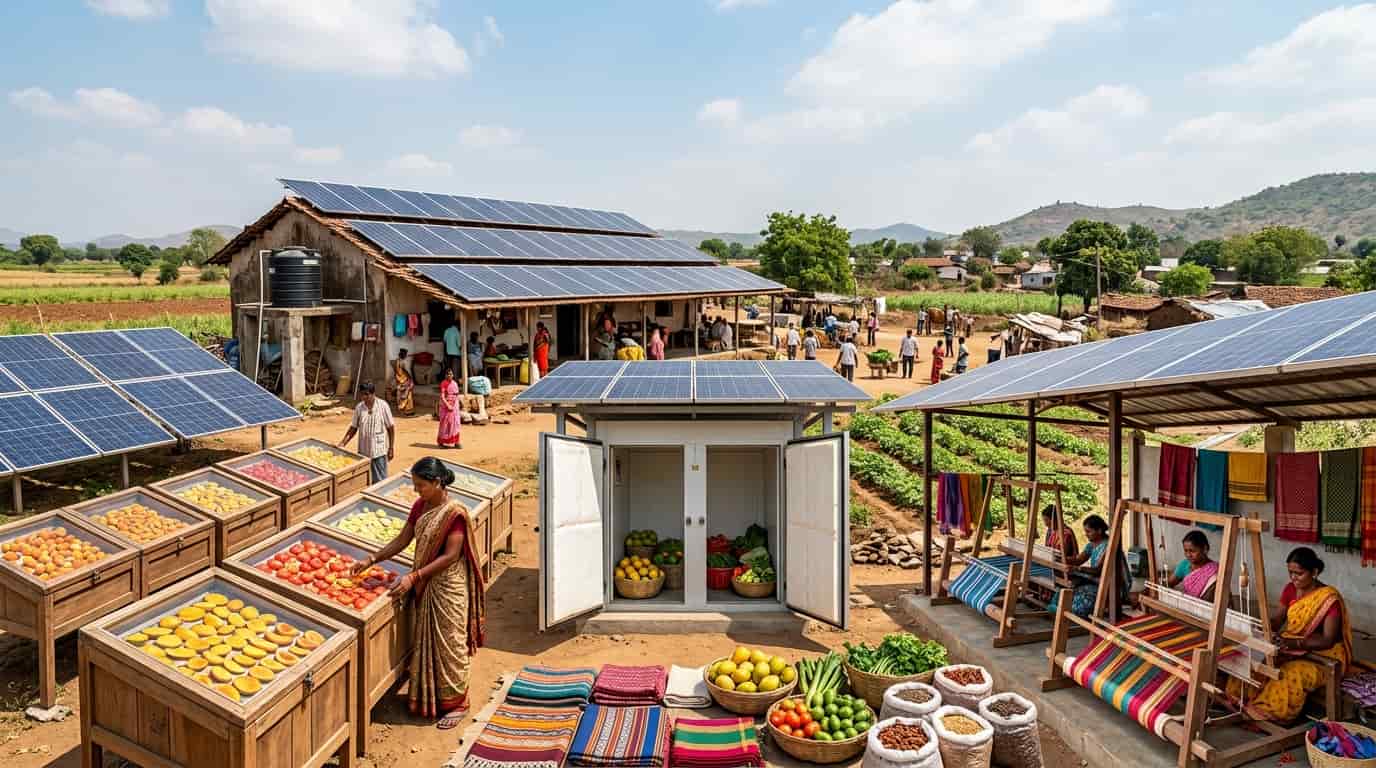
A solar dryer can turn a mango glut into a year-round income. A solar loom can earn back its cost in under a year. Yet the loan needed to buy either often does not arrive.
A new study by the Council on Energy, Environment and Water (CEEW), working with Villgro and the National Institute of Bank Management (NIBM), asks why. It looks at decentralised renewable energy (DRE) tools that power livelihoods at the farm gate or in the village workshop. The answer, it finds, is not weak technology. It is a credit system built for other kinds of borrowers.
A farm economy short of energy
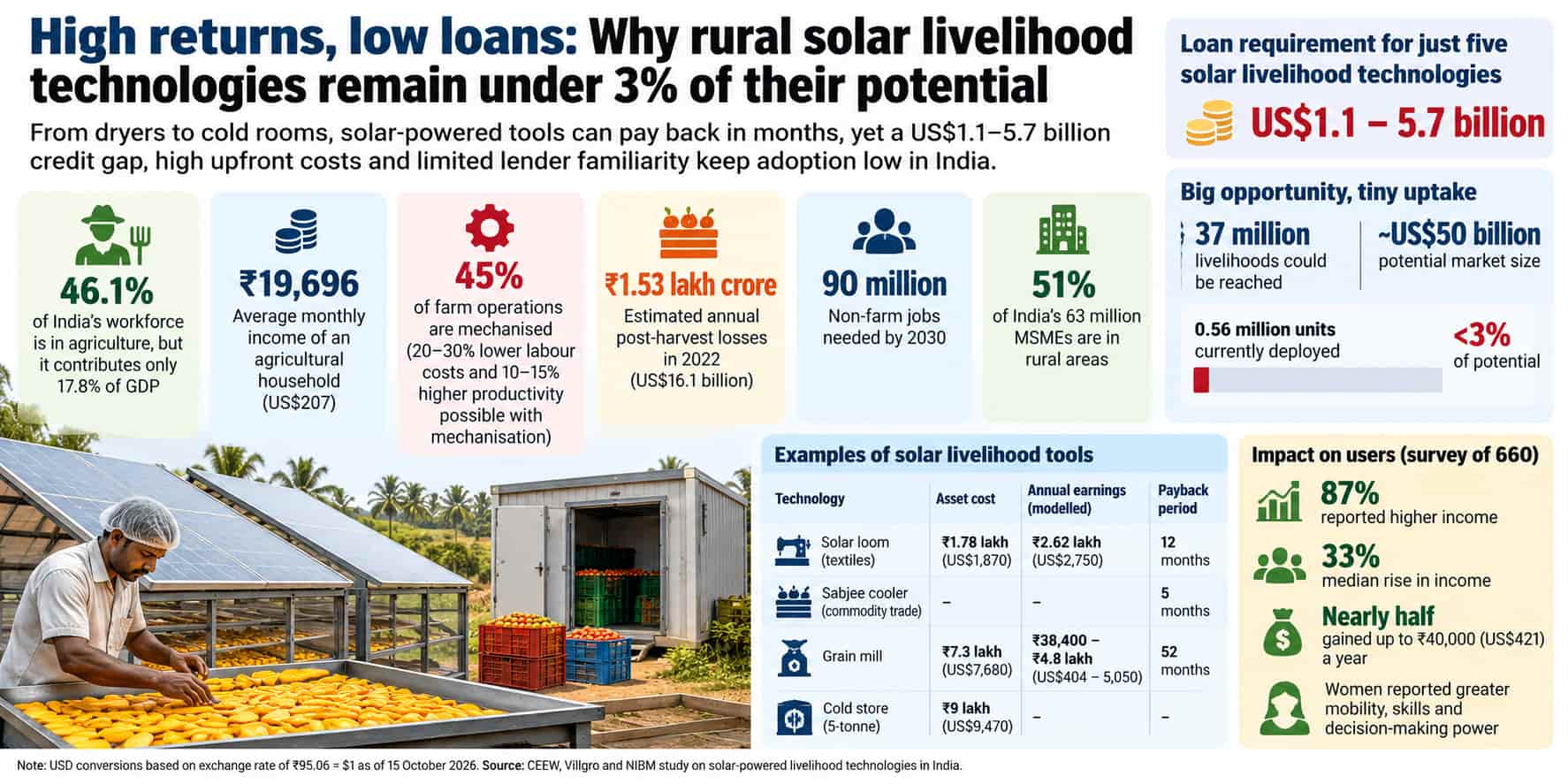
Agriculture employs 46.1% of India’s workforce but contributes only 17.8% of GDP. Across 93.1 million agricultural households, average monthly income is ₹19,696 (US$207). Only about 45% of farm operations are mechanised, even though mechanisation can cut labour costs by 20–30% and lift productivity by 10–15%.
Post-harvest losses add to the strain. A 2022 estimate puts them at ₹1.53 lakh crore (US$16.1 billion) a year, driven by weak storage and unreliable rural power. At the same time, India needs 90 million non-farm jobs by 2030. Rural areas already hold 51% of the country’s 63 million micro, small and medium enterprises (MSMEs).
DRE tools sit at this crossroads. Solar pumps, dryers, cold rooms, mills and looms bring power to where income is earned. The study estimates they could touch 37 million livelihoods and open a market of nearly US$50 billion.
The uptake, however, is thin. About 0.56 million units are deployed, against a potential of over 20 million. That is under 3%. Most are solar irrigation pumps under PM-KUSUM, a scheme whose groundwater trade-offs Indoen has examined earlier.
Machines that repay themselves
The economics are better than many lenders assume. Asset values range from ₹32,000 (US$337) for a solar silk reeling unit to ₹9 lakh (US$9,470) for a five-tonne cold store. Payback runs from five months for a sabjee cooler used in commodity trading to 52 months for a grain mill costing ₹7.3 lakh (US$7,680).
Textile units are the quickest. A solar loom costs ₹1.78 lakh (US$1,870) and is modelled to earn ₹2.62 lakh (US$2,750) a year. That is more than its price within twelve months.
These are modelled averages, and the study is open about it. The same grain mill could earn ₹38,400 (US$404) in a village of 100 households, or ₹4.8 lakh (US$5,050) in one of 1,250. Utilisation, not technology, decides whether a loan gets repaid.
Field data is encouraging all the same. Of 660 users surveyed under the Powering Livelihoods programme, 87% reported higher income, with a median rise of 33%. Almost half gained up to ₹40,000 (US$421) a year. Women reported greater mobility, skills and decision-making power.
The cases bring this alive. A turmeric and juice enterprise in Valsad, Gujarat, put ₹20 lakh (US$21,000) into solar processing equipment. It was backed by a ₹16 lakh (US$16,800) Bank of Baroda loan at 7.9 % and a PMEGP subsidy of ₹5.74 lakh (US$6,040). Income rose about 300%, with annual profit of ₹8 lakh (US$8,420).
In Bargarh, Odisha, a women’s group spent ₹5.28 lakh (US$5,550) on solar-powered sewing machines. Daily output rose from under 15 garments to over 20. Each woman now earns ₹4,500–5,000 (US$47–$53) more every month.
 Where the credit chain breaks
Why, then, is credit scarce? The study lists several reasons. DRE assets cost a lot upfront compared with user incomes. Lenders know little about them. There are no standard appraisal benchmarks. Many users, such as small farmers and street vendors, have thin or no credit histories. As a result, most deployments still rely on philanthropy or subsidy.
“Credit decides whether a farmer or micro-entrepreneur can adopt the technology at all,” as the study puts it.
Two distortions stand out. The first is a so-called missing middle. Assets priced at ₹1–5 lakh (US$1,050–$5,260), such as dryers, micro-processors and looms, are too big for microfinance, where loans average ₹60,000 (US$631). Yet they are too small for banks, whose appraisal and monitoring costs are largely fixed. A ₹1.8 lakh (US$1,890) loom falls neatly between the two.
The second is an inverse interest-rate pattern. Microfinance loans for the smallest assets can cost 18–26% a year over 6–24 months. For the largest assets, rates are 8–12%, and effectively 5–9% with an agriculture infrastructure subvention. The borrower least able to pay more ends up paying the most.
Here the data offers a surprise. In the study’s payback table, raising the rate from 9 to 18% adds only 1.5 months to a small solar pump’s payback, and under five months to a large one. Tenure seems to matter more. Among users who gained income and made some upfront payment, 46 % could repay from higher earnings alone. Stretch the tenure, and that share rises to 68%.
There is a counterpoint. The study notes that willingness to borrow falls sharply once rates look unaffordable. Borrowers also tend to wait for a subsidy even when market loans exist. Perception, in short, can matter as much as arithmetic.
A gap worth up to US$5.7 billion
According to the study, financing just five technologies needs between US$1.1 billion and US$5.7 billion. These are solar dryers, solar refrigerators, cold storage, food processors and fodder grow units. The range rests on two assumptions: how much of the market needs credit (20, 50 or 80%) and how much users pay upfront (10, 20 or 30%). The low case is US$1.11 billion. The high case is US$5.69 billion.
A fivefold spread shows how little is known about real demand.
Existing flows look small beside it. Under the Asian Development Bank’s India Green Finance Facility, DRE has an allocation of US$130 million and total mobilised financing of US$322 million. Even the larger figure is under 6% of the high case, and under a third of the low case.
What has worked so far
The Powering Livelihoods programme has enabled 583 loans worth about ₹3 crore (US$316,000) across five states and 40 districts. Uttar Pradesh accounts for 76.6% of loans and Maharashtra for 19.9%. Together, that is 96.5%. Women are 27.5% of borrowers, against about 40% of the livelihoods the programme has reached.
The lesson, the study says, is to copy successful local partner ecosystems rather than roll out uniformly. Trusted local partners screen borrowers, spot early repayment stress and help with collections.
Risk-sharing has done the heavy lifting. Devi Dayal Solar Solutions backed solar refrigerator loans with a 25% first-loss default guarantee (FLDG). Across 434 borrowers and about ₹1.7 crore (US$179,000) disbursed, bad loans stayed at 2.5%. About 57% of borrowers were new to credit. The guarantee was later cut to 15%.
“Risk cover works best as a bridge, and it can be lowered as repayment records build up,” the study argues.
A peer-to-peer platform tells a harder story. It raised money from 272 investors at 10.5%, including a 2.5% processing fee, and lent about ₹31.6 lakh (US$33,240) to 96 borrowers. Borrowers have repaid ₹13.9 lakh (US$14,620), around 44% of the principal, but bad loans stand at 17.9%. The portfolio is young, yet the gap with the refrigerator case is stark.
Banks have followed once evidence emerged. Canara Bank lent ₹3.65 lakh (US$3,840) at 10% over 60 months to 10 tailoring households in Odisha. A guarantee covered the first five. After timely repayment, the bank financed the other five without one.
A route for lenders and policymakers
The study’s prescriptions are practical. It wants standard appraisal benchmarks for common technologies. It suggests training for public sector and rural banks, with NIBM and the Bankers Institute of Rural Development as possible hosts. A credit guarantee facility anchored by NABARD or SIDBI is proposed. Aggregation through farmer producer organisations and self-help group federations could cut the cost of small loans.
Repayment design is another lever. A solar dryer earns little off-season and far more at harvest, yet equated monthly instalments demand the same sum every month. Seasonal schedules can keep total repayment unchanged while easing lean months.
Classification also needs clarity. Under priority sector lending norms, the same asset can fall under agriculture, MSME or weaker sections, depending on who owns it. Silk reeling machines can sit in three categories. The study wants dedicated DRE windows rather than competition within wider budgets. The climate-risk challenge facing India’s banks may nudge lenders in the same direction.
Some simple arithmetic shows the stakes. A 25% guarantee lets one unit of cover stand behind four units of lending. At 15%, it is nearly seven. A 15% first-loss cover on the US$1.1 billion low case would be about US$165 million, a sum between the ADB facility’s US$130 million allocation and its US$322 million mobilised. On the high case, it would be nearly US$850 million. This holds only if defaults stay near the refrigerator portfolio’s 2.5%, not the peer-to-peer platform’s 17.9%.
Beyond India, the study points to Bangladesh. A programme launched there in 2003 trained existing microfinance institutions to deliver solar home systems. It grew from a target of 50,000 households to several million within a decade. India’s own renewable energy ministry framework, the study notes, is the world’s first dedicated policy for productive-use DRE. The pieces exist. What is missing is a financing architecture to join them.