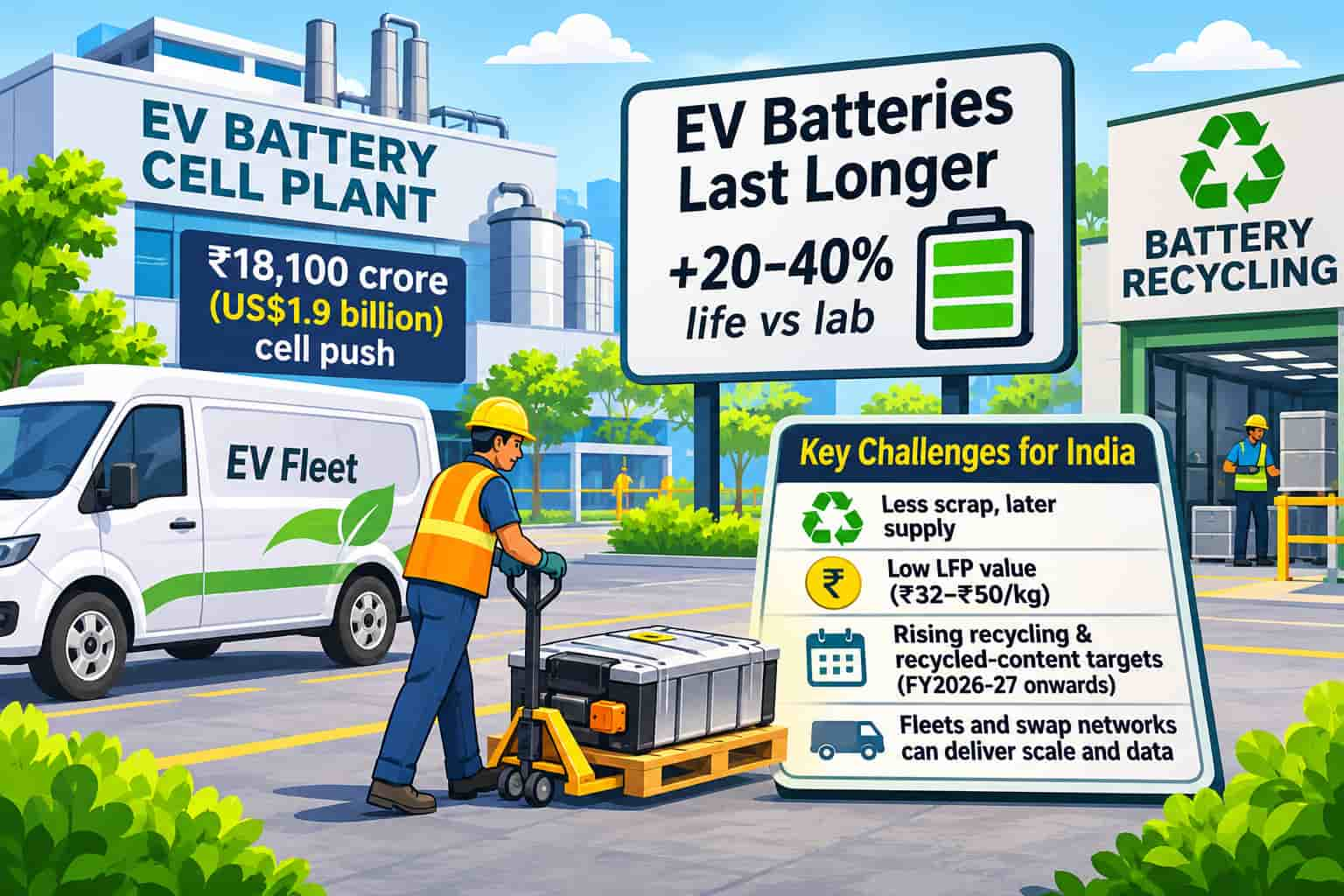
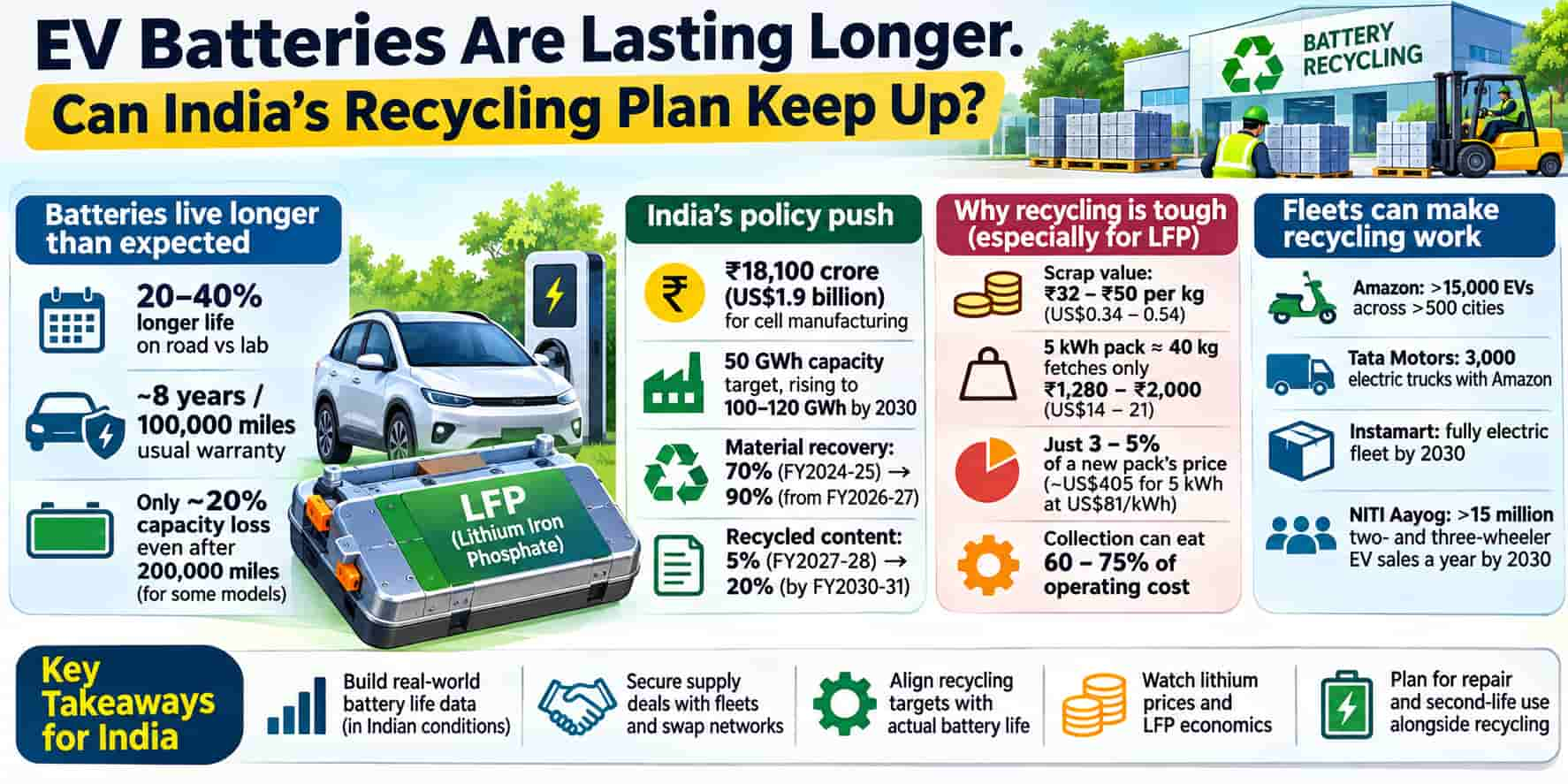
Owners will like this finding. EV batteries last 20–40% longer on the road than in the lab. Carmakers usually offer an eight-year or 100,000-mile warranty. Used-car dealers and telematics firms now see packs running well past that before capacity falls below 80%. One carmaker says some of its models have lost only 20% of capacity after 200,000 miles.
The reason is a surprise. Labs age cells by cycling them non-stop. Real driving has pauses. A Stanford study of 92 cells found that real, stop-start duty cycles stretched life by up to 38%. Rest at a red light lets lithium ions settle, which cuts harmful side reactions.
For India, this sounds like a gift. Delivery riders stop at every junction. But the same report carries a warning.
Where India’s data runs thin
Heat and fast charging hurt. A telematics survey of more than 22,700 EVs found that packs charged often on DC fast chargers lost 2.5% of capacity a year, against 1.5% for the rest. Uneven cooling also makes hot cells age faster.
India has plenty of heat and plenty of hard use. Yet public data on real-world battery life in Indian conditions remains limited, according to one charging company’s explainer. Most of the long-life evidence comes from cars in cooler markets. India’s EVs are mostly two- and three-wheelers with smaller packs.
Swapping adds another unknown. A Blinkit delivery partner says a battery change takes three to four minutes. The platform says about 80% of its Gurugram last-mile fleet is already electric. Swap stations charge packs in bulk, so the operator, not the rider, sets the charging pattern. That could protect batteries or punish them. No public Indian data settles the question.
“Everyone quotes the eight-year warranty,” says a researcher at a New Delhi-based energy think tank. “Very few can say how a pack ages on a delivery route in a Jaipur summer. Until that data exists, recycling targets are partly guesswork.”
 Rules written for a faster clock
India’s battery waste rules are demanding. Material recovery from EV batteries is set to rise from 70% in FY2024-25 to 90% from FY2026-27, according to an industry column. Recycled-content obligations begin at 5% in FY2027-28 and climb to 20% by FY2030-31.
The same column notes that the ₹18,100 crore (US$1.9 billion) cell-making incentive targets 50 GWh of capacity, rising to 100–120 GWh by 2030. Domestic value addition must grow from 25% within two years to 60% within five.
Now look at the supply side. EV penetration stood at 8.5% in FY2025-26, while more than 33 crore petrol and diesel vehicles remain on the road. The EV fleet is young and, it now seems, durable. In the early years, recyclers are therefore more likely to get factory scrap from new cell plants than old packs. That is Indoen’s reading, not a figure from the sources. Indoen has already shown how thin India’s reuse supply could be. The same thinness reaches recycling.
Why LFP scrap is a hard sell
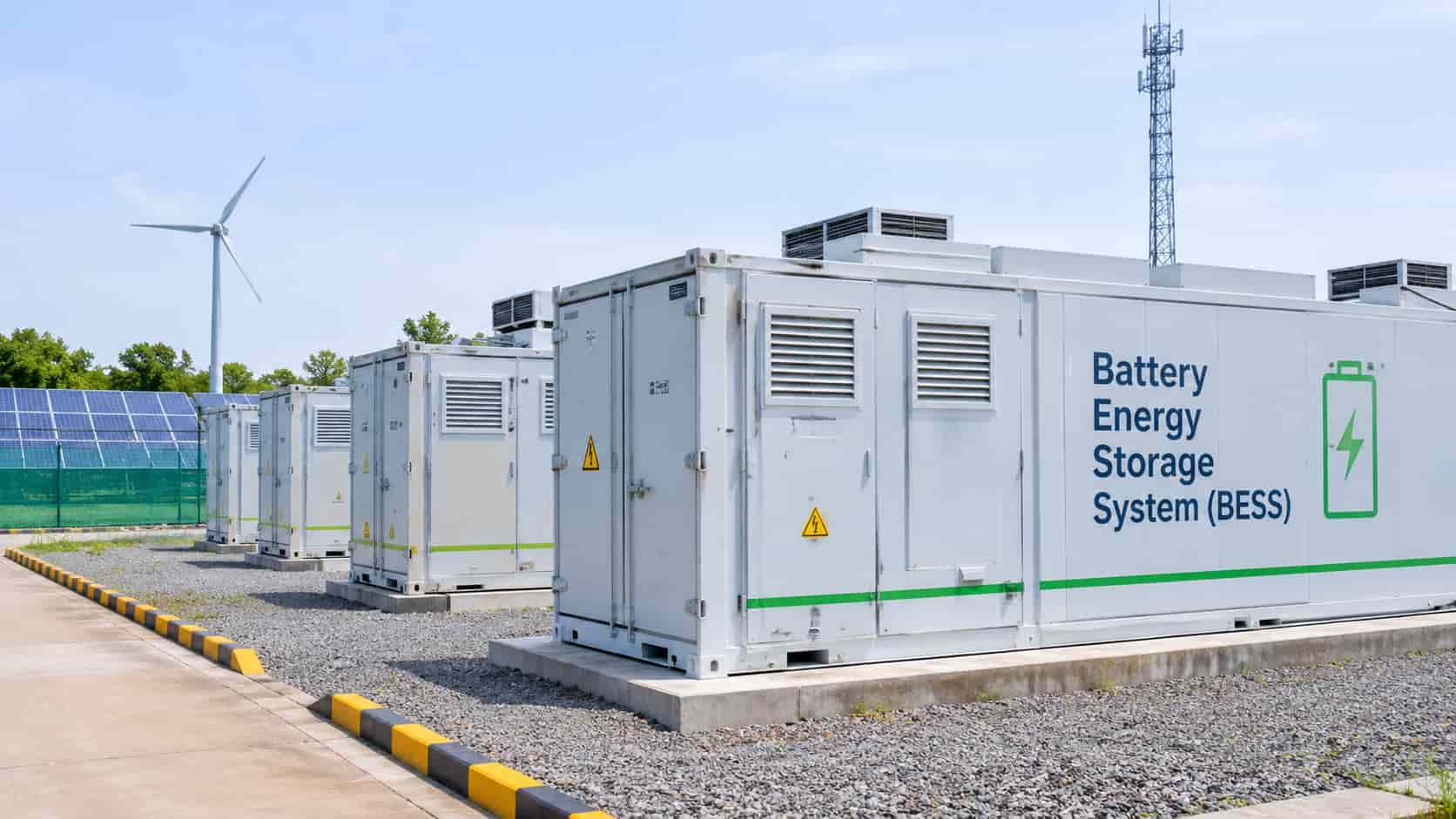
Most cost-sensitive Indian two-wheelers, three-wheelers and e-buses are moving to LFP. It lasts long and runs safe, but it has no cobalt or nickel. Lithium is only 2–3% of cell weight. Spent LFP batteries may fetch just ₹32 to ₹50 per kg (US$0.34 to US$0.54), the column says. Collecting feedstock can eat 60–75% of operating cost. If lithium prices fall, the economics get harder.
Try a rough sum. Assume a 5 kWh pack weighs about 40 kg. That is Indoen’s assumption. At those prices it fetches ₹1,280 to ₹2,000 (US$14 to US$21). BloombergNEF’s 2025 survey put average LFP pack prices at US$81 per kWh, so a new 5 kWh pack costs roughly US$405. Scrap value is then only 3–5% of the new price.
Metal value alone will not pay for LFP recycling. Scale and steady supply have to.
Fleets as the missing aggregator
Here the story turns. A private scooter owner is hard to find and hard to collect from. A fleet is not.
Amazon says it has deployed more than 15,000 EVs across over 500 Indian cities. It is also working with Tata Motors on 3,000 electric trucks, according to the company’s own announcement. Instamart aims for a fully electric fleet by 2030. NITI Aayog projects over 15 million two- and three-wheeler EV sales a year by 2030. Even if quick commerce triples its EV fleet, it may still account for fewer than a million units.
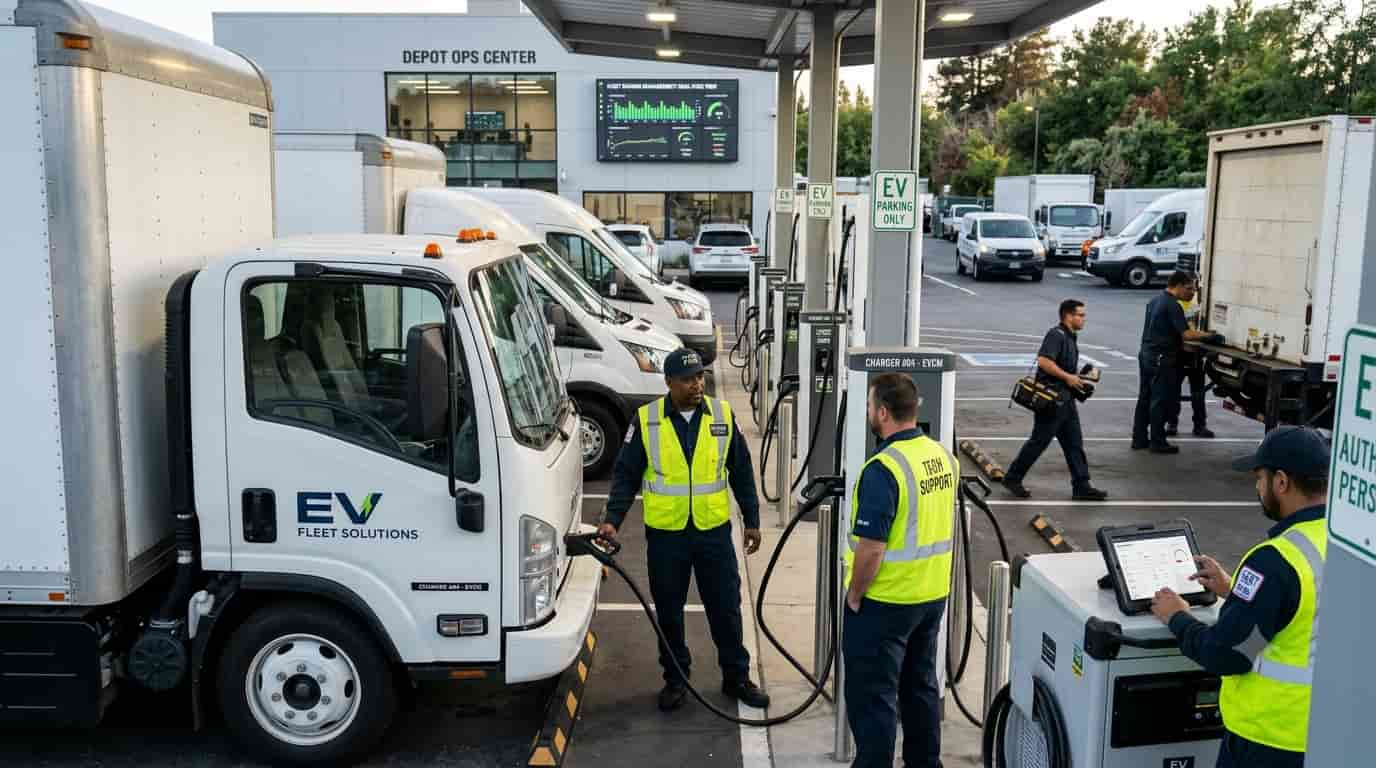
Fleets will be a small share of vehicles but a large share of tracked, high-cycle batteries. An operator holding a thousand swap packs can send them to a recycler in one consignment. Those packs also carry usage logs. That health record is exactly what lenders and second-life buyers lack. Indoen has reported that lenders are wary of EV resale values. Fleet data could start to fix this. The recycling column also points to toll-recycling deals and offtake agreements that give recyclers predictable volumes.
“Fleets and swap networks will decide whether recycling works for LFP,” says an executive at a battery recycling company. “They own the packs, they know the history, and they can deliver volume. Scattered owners cannot.”
Longer life is still the better outcome
None of this makes durable batteries a problem. Longer life cuts mining and gives recycling time to scale, as the science report itself notes. Research also hints at more to come. Battery management systems that swap out weak cells could extend life by about 20%. Cambridge researchers found that constant pressure on cells doubled longevity in their tests.
If repair works, it will compete with recycling for the same packs. That is a good problem, but it argues for reviewing India’s targets against measured battery life, not warranty-period assumptions.
Four things are worth watching. The first is whether fleets publish battery-health data. The second is whether recyclers sign supply deals with swap operators. The third is lithium prices, which decide LFP recycling margins. The fourth is whether the FY2027-28 recycled-content obligation is met from factory scrap or from old packs.
India’s cell push is a bet on the front of the chain. Its durability may decide whether the back of the chain has anything to do.