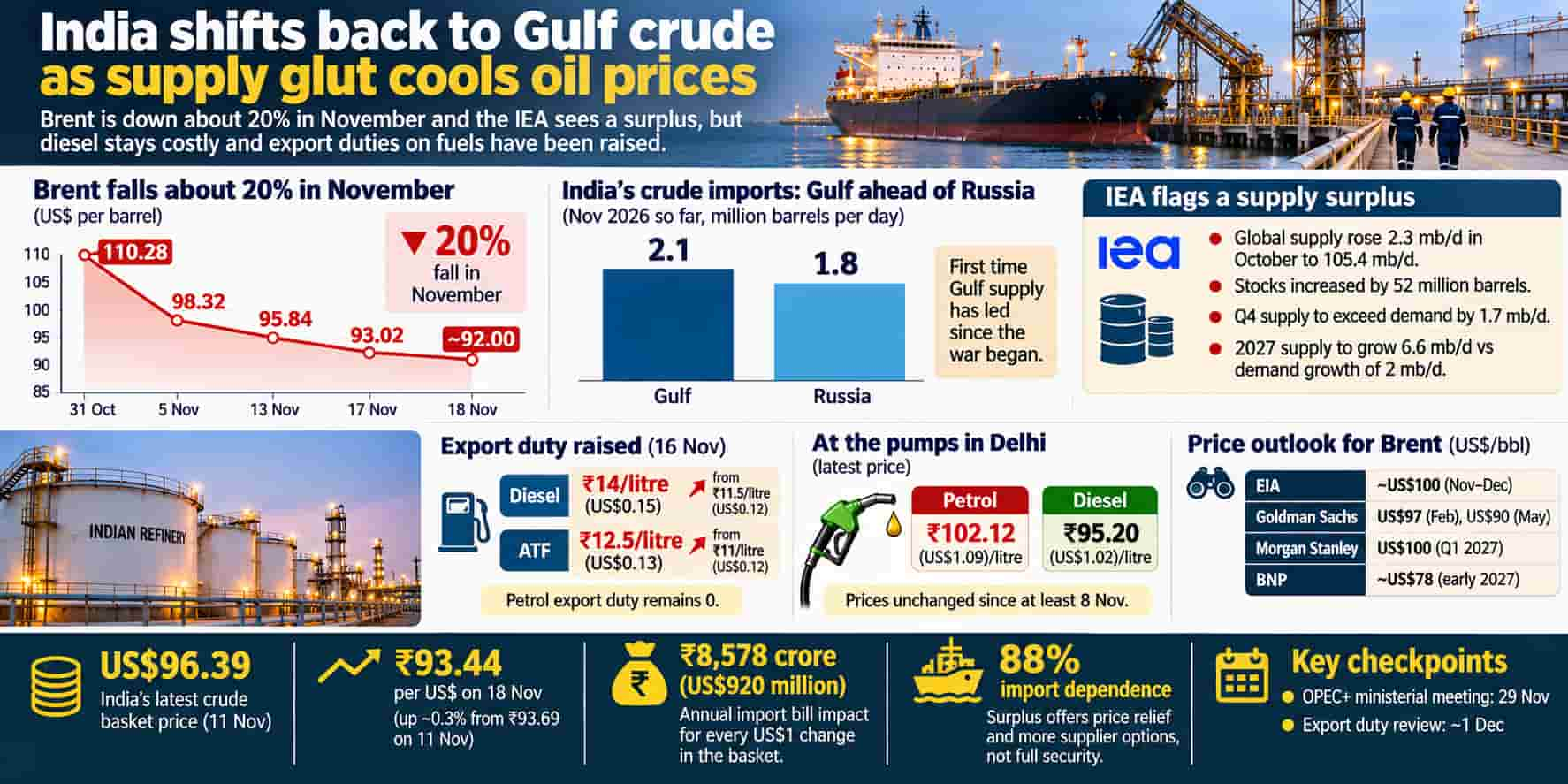
Brent settled at US$95.84 on 13 November, its second weekly fall after a six-month high at the end of October. President Trump had told Vice President Vance to focus on domestic issues, which dented hopes of a deal. Brent fell 3.6% on 16 November, settled at US$93.02 on 17 November, and traded near US$92 on 18 November. The US benchmark, West Texas Intermediate (WTI), fell to about US$83, its lowest since August.
The main driver was supply. The IEA’s 13 November report said global supply rose 2.3 million barrels a day in October to 105.4 million, and that stocks rose by 52 million barrels. It expects fourth-quarter supply to exceed demand by 1.7 million barrels a day. Last week we reported that physical cargoes had slipped to a discount to futures. The IEA data supports that.
The fighting has not stopped. Iran said it attacked US drone and missile sites in Kuwait overnight on 17-18 November, after the US struck Qeshm Island. Seven ship attacks near Hormuz have been reported since 10 November. The surplus data outweighed both.
For India, each US$1 on the basket is worth about ₹8,578 crore (USUS$920m) a year. The latest basket reading available is US$96.39 on 11 November, as per aggregated price data.
Refiners turn to the Gulf
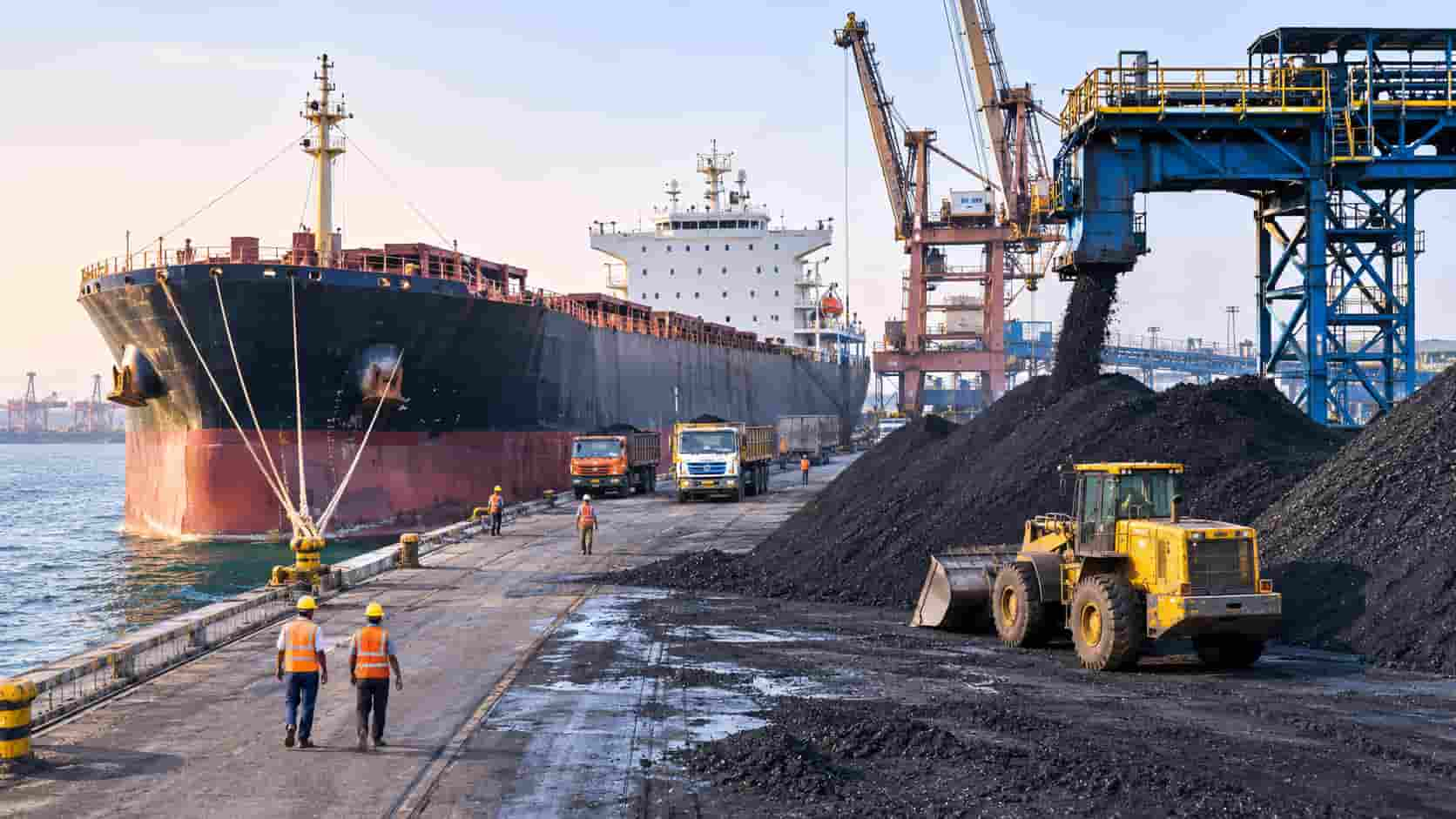
Kpler data shows India took about 2.1 million barrels a day from the Gulf in November so far, against 1.8 million from Russia. It is the first time Gulf supply has led since the war began. Gulf flows to India had fallen to 247,000 barrels a day in April, from 2.8 million in February.
Bharat Petroleum cut its Russian purchases for November because freight and premiums made them dearer than Gulf offers. Russian crude now carries a premium, not a discount. “When Gulf barrels are cheaper and closer, Russian crude has to compete on price, and right now it does not,” said an executive at a leading Indian refiner.
The shift can reverse. If Hormuz closes again, analysts expect refiners to return to Russian barrels, even at higher freight.
 Export duty raised as crude falls
On 16 November the government raised the duty on diesel exports to ₹14 a litre (USUS$0.15) from ₹11.5 (USUS$0.12), and on aviation turbine fuel (ATF) to ₹12.5 (USUS$0.13) from ₹11 (USUS$0.12). Petrol exports stay at zero for a second fortnight. Domestic duties are unchanged. The levy has been revised every fortnight since 27 March.
It rose while Brent fell, because diesel has not followed crude. The IEA says disruption to refined product exports still weighs on consumers, especially for diesel. “Crude is down 20% in a month, but diesel is not, so refiners keep the margin and the government keeps taxing it,” said an analyst tracking global crude markets.
Pumps frozen, rupee firms
Delhi petrol stays at ₹102.12 (USUS$1.09) a litre and diesel at ₹95.20 (USUS$1.02), unchanged every day since at least 8 November. Cheaper crude should narrow state retailers’ marketing losses, but no revision has been announced.
The rupee closed at ₹93.44 on 18 November, up about 0.3% from ₹93.69 on 11 November. Cheaper crude and over US$8 billion of foreign equity inflows this month helped. A 19-month-high dollar capped the gains.
Where forecasters see prices heading
Near term, forecasts diverge. The US Energy Information Administration (EIA) expects Brent near US$100 in November and December, but it froze its inputs on 5 November, before the fall to US$92. Goldman Sachs sees US$97 in February and US$90 in May, Morgan Stanley US$100 in the first quarter of 2027, and BNP about US$78. That is a US$22 spread for the same quarter.
Long term, the EIA expects Brent to average US$86 in 2027, easing to US$77 in the fourth quarter. Goldman sees US$79 in twelve months. The IEA expects 2027 supply to grow 6.6 million barrels a day against demand growth of 2 million, a larger surplus. The IEA also warns that attacks on shipping could derail the recovery, and the EIA assumes Iranian exports stay constrained.
What it means for energy security
With 88% import dependence, India gains from a surplus mainly through price and a wider choice of suppliers, not through security. The next checkpoints are OPEC+’s ministerial meeting on 29 November and the next export-duty review, due around 1 December.