


The fragile calm that had briefly pulled Brent below US$86 a barrel in late August unravelled fast. On 5 September, the US struck three Iranian oil tankers in retaliation for Iranian ballistic-missile strikes on two US Navy warships, and Iran subsequently attempted a further attack on Navy vessels on Monday.
By Tuesday, Iranian state media reported a US missile had struck a small tanker just four miles from Kharg Island, the terminal that handles the overwhelming majority of Iran’s own crude exports. That is a notable escalation: for most of this year’s conflict, strikes have clustered around the strait itself rather than the export infrastructure Iran depends on to fund the war.
A second front opened almost simultaneously. On 8 September, Yemen’s Houthi forces launched dozens of missiles and drones at Saudi Aramco facilities in Najran and Abha, wounding 73 people and forcing a temporary halt to some operations.
The attacks followed weeks of fighting that shattered a four-year Yemen truce, and specifically targeted Aramco’s Jazan refinery and the Yanbu export gateway on the Red Sea, a route Saudi Arabia has leaned on precisely because it bypasses the Hormuz blockade. Brent rose to US$99.46 that day, its highest since mid-July, and climbed further to above US$101 by Wednesday.
Ukraine, meanwhile, kept up its own campaign, with drones again striking Russia’s Novorossiysk terminal on the Black Sea this week, adding to the disruption already inflicted on the Baltic port of Ust-Luga.
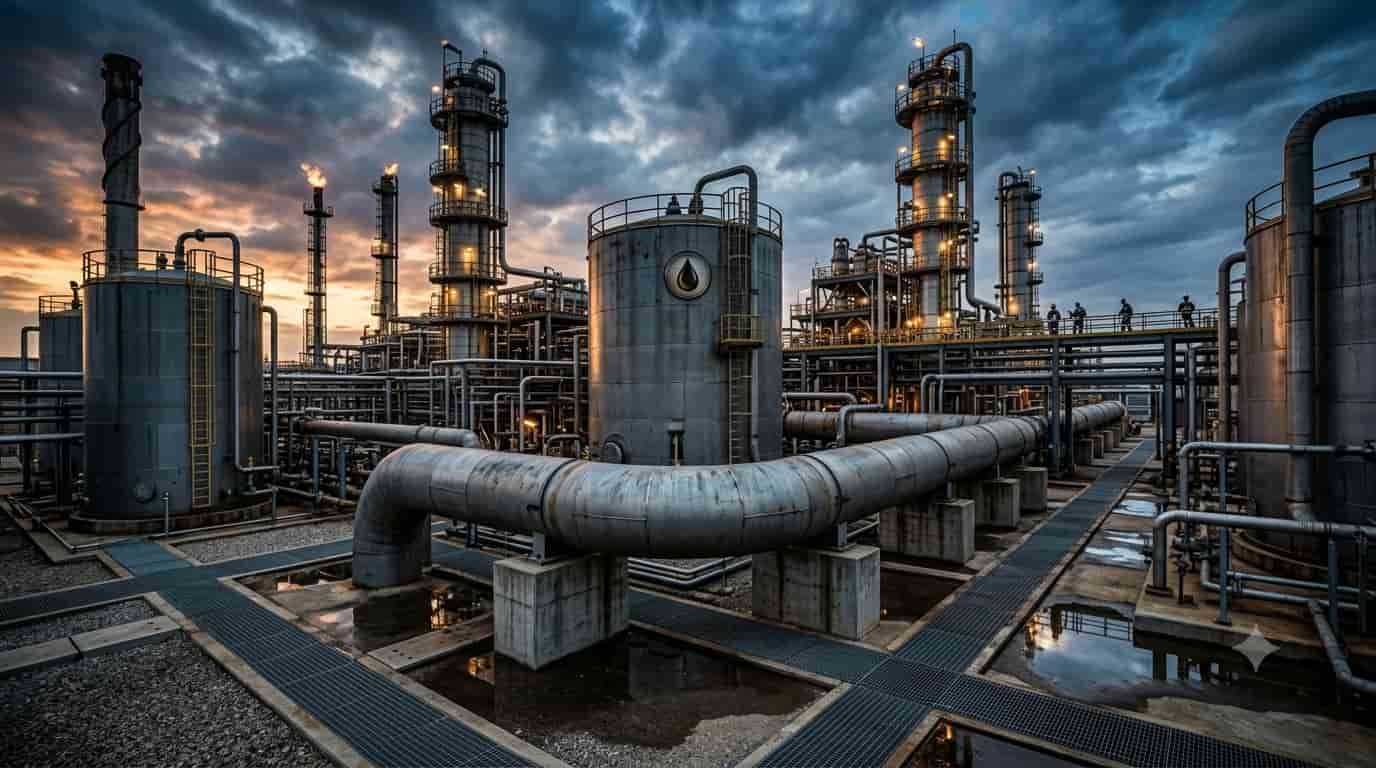
Between Kharg Island, Yanbu and Novorossiysk, three of the crude-exporting world’s most important terminals have now been targeted within the space of roughly a fortnight, a degree of simultaneous chokepoint stress that has not been seen even at earlier peaks of this conflict.
OPEC+ sits tight as its leverage fades
Against this backdrop, OPEC+’s seven core members met on 6 September and chose to hold October output at September’s level, having already completed the unwind of the 1.65 million bpd voluntary cuts agreed back in 2023. The decision was largely symbolic; actual output from several members remains well below official targets because war-related disruption, not quota discipline, is now the binding constraint on supply.
The group is turning instead to reviewing members’ sustainable production capacity ahead of setting new 2027 baselines, with its next meeting scheduled for 4 October.
 India’s basket follows crude past US$100, and margins turn negative
India’s crude basket has moved in lockstep with the global surge. Having averaged US$82.04 a barrel in July and US$90.19 in August, the basket reached US$106.26 a barrel on 7 September and US$108.91 the following day, taking the September-to-date average above US$100 for the first time since May.
The consequence for the country’s import bill is already visible in the data: crude imports for the first four months of the current financial year rose 56% year-on-year to US$63.4 billion, from US$40.5 billion a year earlier, on essentially flat volumes of roughly 81.9 million tonnes. That is a pure price effect, and September’s numbers, once tallied, look set to push the annual comparison further out of shape.
With retail petrol and diesel prices unchanged since the last revision on 25 May, the burden has fallen entirely on state-owned oil marketing companies. Marketing margins on petrol turned negative to the tune of roughly ₹5 a litre (USUS$0.05) by 9 September, and diesel margins slid to about minus ₹23 a litre (USUS$0.24), having been only mildly negative, at minus ₹2 a litre on petrol, barely a week earlier.
Delhi retail prices stood at ₹102.12 (USUS$1.08) for petrol and ₹95.20 (USUS$1.00) for diesel as of 8 September. “Every dollar the basket moves above our budgeted assumption comes straight off the marketing margin, since the pump price lever hasn’t been touched in months,” said a senior official at the Ministry of Petroleum and Natural Gas.
For every dollar the Indian basket rises, the country’s annual import bill increases by an estimated ₹8,578 crore (USUS$905m), so a sustained move from August’s US$90 average towards US$100-plus implies tens of thousands of crore in additional annual outgo if the elevated level holds.
Refiners lean on diversification, but margins are the shock absorber
Strong refining margins earned earlier this year are currently the main cushion preventing outright losses at the retail end, even as marketing margins turn negative.
Indian refiners had already been buying spot cargoes from West Africa and instructing suppliers to avoid Hormuz and Red Sea routings, a strategy this publication examined in the aftermath of the earlier ceasefire attempt.
“We built in enough headroom on sourcing that a price shock like this hits the margin line before it hits physical availability,” said an executive at a leading Indian refiner, a distinction that matters for consumers even if it does little to soften the fiscal arithmetic.
That arithmetic is the real story of the week. India’s energy security debate has long centred on its 88% import dependence and the risk of a physical supply disruption; this week’s events suggest the more immediate exposure may be financial rather than physical, as diversified sourcing keeps crude flowing even while its cost climbs sharply.
Whether that cost eventually reaches the pump, or continues to be absorbed by state refiners’ balance sheets, will be the question to watch as September’s average basket price firms up.
Follow us on : X | LinkedIn | Facebook | Bluesky