BPCL adds $1.8bn to Mozambique LNG, taking India’s equity-linked gas bet to about $4.6bn
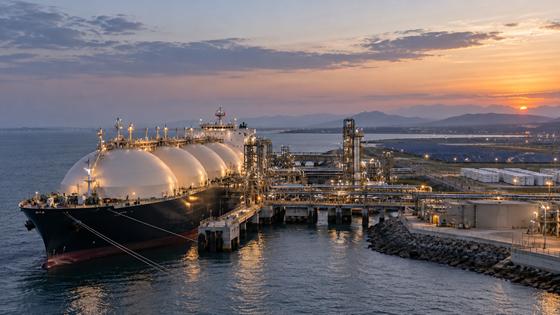
BPCL’s chief financial officer told analysts on 26 October that the company plans a further $1.8bn in Mozambique LNG. It had already invested about $2.8bn, so the total would reach roughly $4.5–4.6bn, including exploration costs. That buys a 10% stake in a TotalEnergies-led consortium building in the Rovuma Basin. The project, valued at nearly $20bn, was halted by force majeure in 2021 and resumed construction in January 2026 after the declaration was lifted. BPCL puts it at 47% complete.
The structure is the point. Equity brings BPCL a 1 mtpa purchase agreement of the 13 mtpa first phase, which it is already offering to Indian customers, with commercial deals hoped for within two to three quarters. This is upstream capital used to buy supply security rather than financial exposure. Two caveats apply. BPCL expects gas around mid-2028, while TotalEnergies has indicated 2029 for first production, so the schedule risk is not fully priced in. And the volume must still find Indian buyers willing to contract years ahead.
For India, the timing is not incidental. India relies on LNG for about half its gas demand and previously routed around 60% of imports through Hormuz. Petronet’s chief executive has said Qatar remains non-committal on deliveries, with force majeure reviewed month to month. Mozambique offers non-Gulf supply on a route to India’s west coast, and it fits the petroleum ministry’s push for state companies to acquire overseas assets. Gas is still only about 6% of India’s energy basket, so the strategic value lies in resilience rather than volume.
QatarEnergy secures 20-year Louisiana LNG deal amid Hormuz risks
QatarEnergy has signed a 20-year agreement with Woodside to buy 3 million tonnes a year from the Louisiana LNG project, with deliveries expected from 2030 on a free-on-board basis. The plant is under construction. It is a three-train, 16.5 mtpa facility targeting first cargo in 2029. The deal follows a 4 mtpa Cheniere agreement running to 2054, and QatarEnergy’s chief executive says it is now the largest buyer of US LNG.
The world’s largest LNG exporter is buying molecules outside the Gulf. QatarEnergy says the deal builds a more flexible, diversified portfolio amid Strait of Hormuz disruptions, and reporting indicates it has been forced to raise US purchases to serve some customers. FOB terms leave QatarEnergy free to direct the cargoes wherever it needs. It is becoming a portfolio player alongside a producer.
For India, the implications cut both ways. Qatar is India’s largest LNG supplier, and Petronet holds a 7.5 mtpa contract with it that is currently disrupted. If QatarEnergy can blend US-origin supply into its customer commitments,
Indian contract holders gain a possible workaround to Hormuz, though whether Petronet’s terms allow origin flexibility is not public and should be treated as an open question. The competitive effect is clearer. US exporters with the most uncommitted capacity are Woodside and Venture Global, and each tranche Qatar takes narrows the pool available to Indian buyers who have been leaning on US cargoes to offset Gulf losses.
EIB backs Scatec’s $90m Egypt solar-storage project
The European Investment Bank will lend up to $90m, backed by an EU guarantee, for phase one of the Dandara project in Qena. Phase one is a 569 MWp solar plant with a 100 MWh battery, developed by Scatec and co-financed with the EBRD and AfDB. Output goes to EgyptAlum, the country’s largest aluminium producer, under a long-term PPA. EgyptAlum’s payments carry a Finance Ministry guarantee, and commercial operations are due in April 2028.
This extends a template. Scatec’s neighbouring Obelisk project, which EIB financed with $150m, is now fully operational at 1.1 GW with 100 MW/200 MWh of storage, under a 25-year corporate PPA. The bankability comes from a sovereign guarantee on an industrial offtaker plus a layered development-finance stack, not from the technology. On our reading, a battery of 100 MWh against 569 MWp suggests partial firming rather than full round-the-clock supply.
India’s aluminium industry faces the same problem. Smelters use 14-15 MWh per tonne and the major producers run captive coal plants. EU carbon border levies on aluminium have applied since January 2026. NALCO’s chairman has said power is 35–40% of production cost and that renewable supply with storage remains expensive. Vedanta has secured 1.3 GW from Serentica. The lesson from Egypt is about financing structure: credit support and multilateral lenders can make long industrial PPAs bankable, which Indian smelters have yet to replicate at scale.
CATL scales up sodium-ion batteries for grid storage
At All Energy Australia, CATL launched TENER+, a 9 MWh container it says cuts container counts by up to 40% and footprint by 12%, and showcased its sodium-ion TENER Sodium system. It also signed MoUs with Hitachi Energy, EPEC Group and UNSW Sydney on integration, validation and training. The specifications are company claims from a paid press release. They include sodium-ion modules above 30 MWh, 95% round-trip efficiency and more than 10,000 cycles at 45°C.
The release matters less than the commercial pattern behind it. CATL first presented the sodium system as field-validated in June and has a 60 GWh, three-year agreement with HyperStrong. It has also taken European orders for 5 GWh with Alfen and 2 GWh with Solarpro. Sodium is moving from pilot to procurement. The Hitachi Energy tie-up points to a bundled cell-plus-power-conversion offer, which lowers integration risk for financiers.
India’s exposure is direct. Industry analysis puts 89–91% of battery storage and lithium-ion requirements as imported, and lithium-ion battery imports rose eightfold between April 2019 and March 2025. India’s cell-manufacturing incentive scheme was designed around lithium chemistries, and analysts have urged that storage frameworks include sodium-ion, including round-the-clock tenders. If sodium-ion storage scales at Chinese cost levels, domestic lithium cell plants could face a cheaper rival in grid storage, the segment where India’s tenders are concentrating.