
Saudi Arabia awards US$1.16 billion for 2 GW of battery storage as its build-own-operate model matures
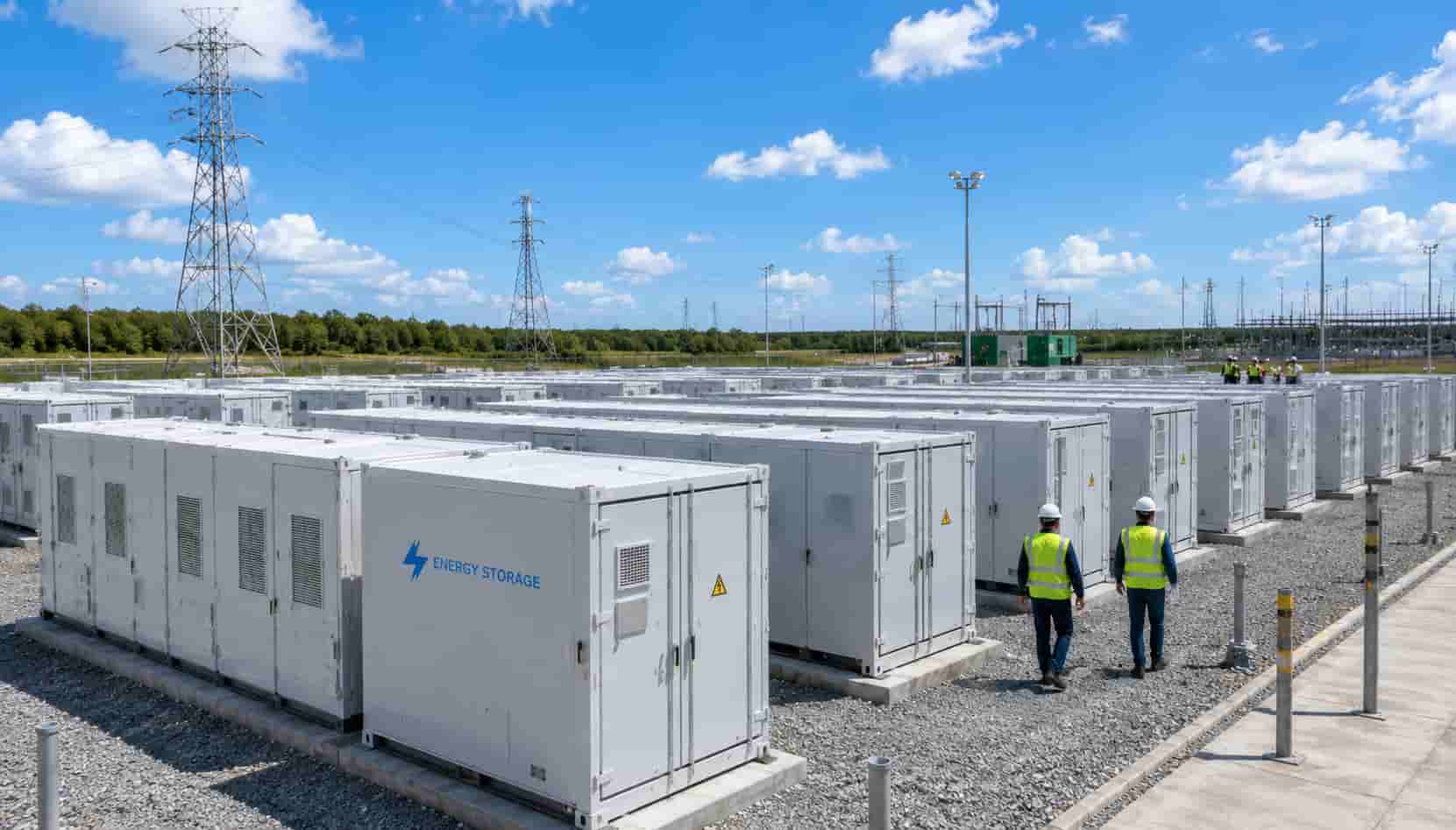
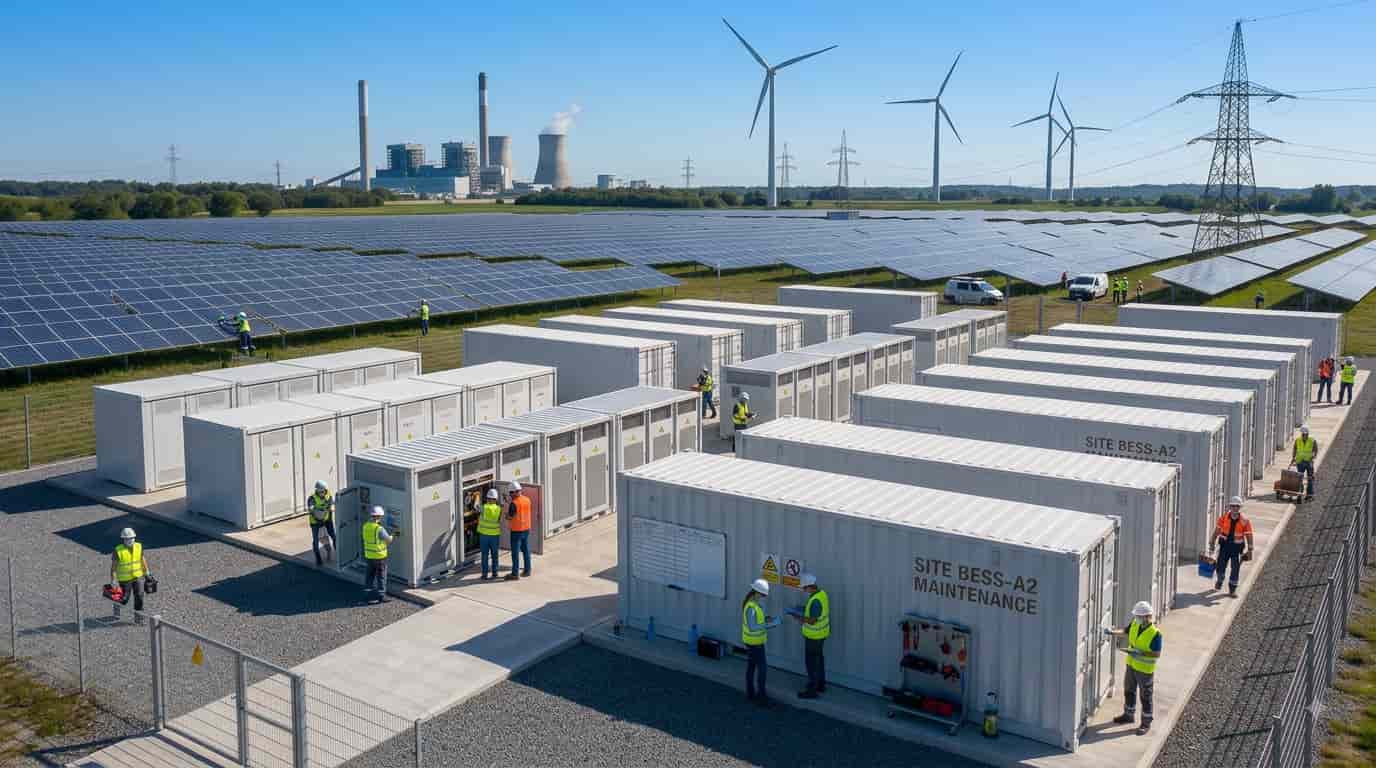
The Saudi Power Procurement Company has signed four 15-year storage service agreements worth more than US$1.16 billion for 2 GW, or 8 GWh, of grid-scale battery capacity. Two consortia — one led by Saudi Energy Company, ACWA Power and Al Sharif Contracting, the other by France’s Engie with Haji Abdullah Alireza & Co. — will build, own and operate the four sites under 15-year agreements with SPPC as the sole buyer.
This is the first tranche of a much larger pipeline. SPPC has already prequalified 27 companies, including Masdar, EDF, TotalEnergies and China Longyuan Power, for a second 3 GW/12 GWh round, with the Kingdom targeting 48 GWh of storage by 2030 under Vision 2030. The structure — a principal-buyer utility signing long-tenor service agreements with SPV-holding consortia — is a financing template, not just a procurement exercise.
That template carries a direct lesson for India. As DISCOMs and SECI scale up their own battery-storage tenders to firm up round-the-clock renewable supply, the build-own-operate-with-long-term-offtake model Saudi Arabia is now running at scale offers a tested reference point on tariff structuring, developer risk allocation and multinational participation.
The presence of the same global players — ACWA, Engie, EDF, TotalEnergies — who are also active or exploring entry into India’s renewable and storage market makes this more than an academic parallel; it signals where global storage capital is currently being put to work, and on what terms.
More broadly, the deal underlines how Gulf sovereigns are using oil-financed balance sheets to buy down the cost of grid flexibility years ahead of most emerging markets.
For India, competing for the same pool of international storage developers and financiers, Saudi Arabia’s terms — 15-year tenors, 100% SPV equity retained by developers — set a competitive benchmark that Indian tenders will increasingly be measured against.
US DOE commits US$500 million to critical mineral and battery supply chains, sharpening the race to dilute China’s dominance
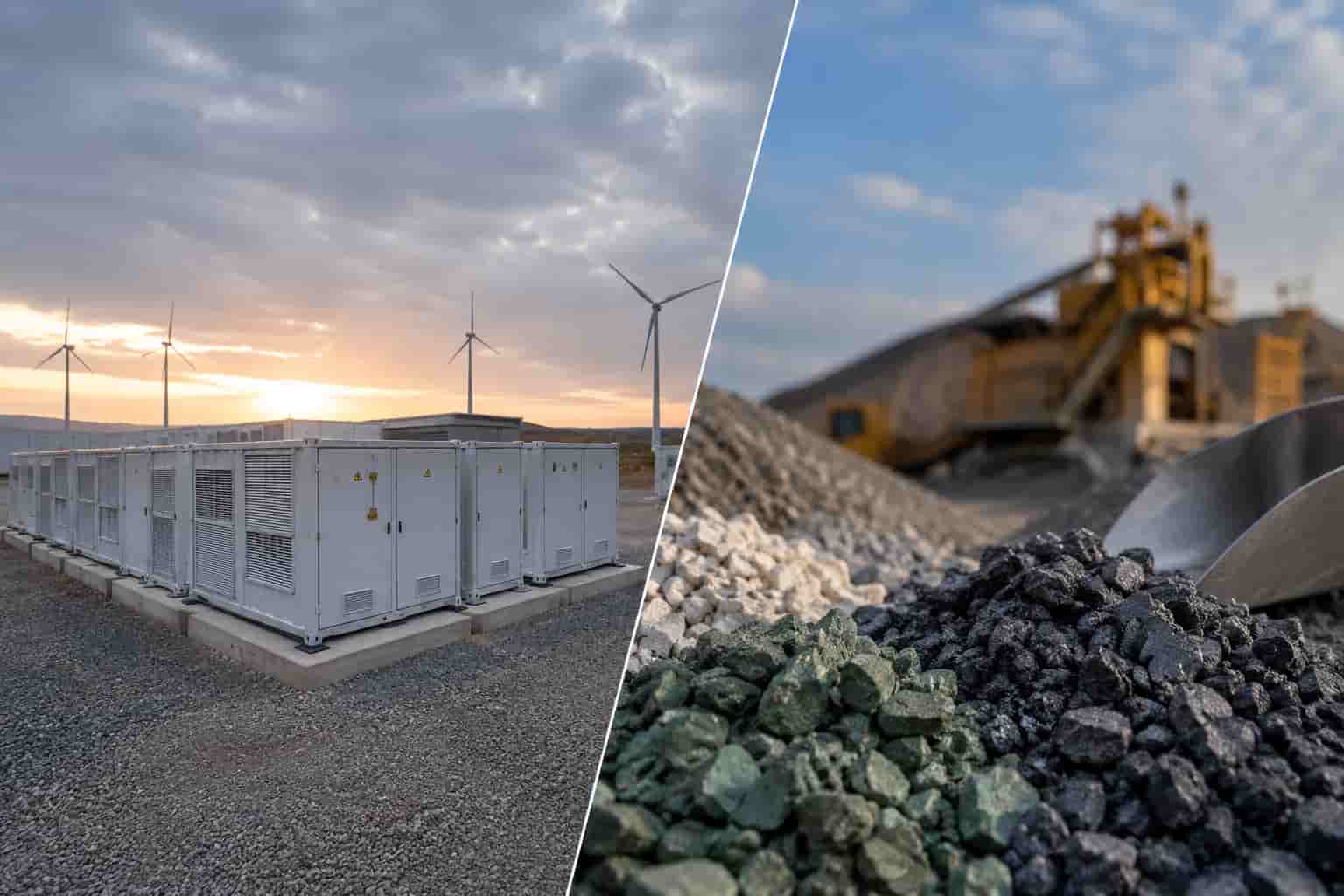
The US Department of Energy’s Office of Critical Minerals and Energy Innovation has selected seven projects for US$500 million in funding to expand domestic critical-mineral processing, battery manufacturing and recycling.
The round includes a US$100 million grant to Lilac Solutions’ Waterleaf P1 HoldCo for a lithium extraction and refining facility near Utah’s Great Salt Lake, alongside battery-recycling and cathode-material projects such as Nth Cycle and Princeton NuEnergy, and what is expected to become the country’s only cobalt refinery.
The funding is the third round under DOE’s Battery Materials Processing and Manufacturing and Recycling programmes, and it is explicitly framed around reducing dependence on China, which currently controls more than 90% of global refining capacity for several electronics-grade materials and roughly 70% of rare earth output.
Utah, where an estimated 80% of the US critical-minerals list occurs in-state, has become the geographic centre of this push, backed by state-level initiatives and a new university research institute.
The China-dependency problem this programme is trying to solve is the same one India is confronting through its own National Critical Minerals Mission and lithium exploration in Jammu and Kashmir.
As Washington deploys grant capital to accelerate domestic lithium, cobalt and rare-earth processing, it is effectively competing with India, the EU and others for the same finite pool of mining technology, processing expertise and offtake partnerships needed to build parallel, non-Chinese supply chains. Every dollar of US processing capacity that comes online marginally shifts global refining economics — and the terms on which India can access battery-grade materials.
There is also a template question for India here: DOE’s structure of stacking grants across extraction, refining, cathode recovery and recycling in a single funding round offers a model for sequencing incentives across an entire mineral value chain, rather than subsidising extraction alone — a gap that has been repeatedly flagged in India’s own critical-minerals policy discussions.
Follow us on : X | LinkedIn | Facebook | Bluesky