
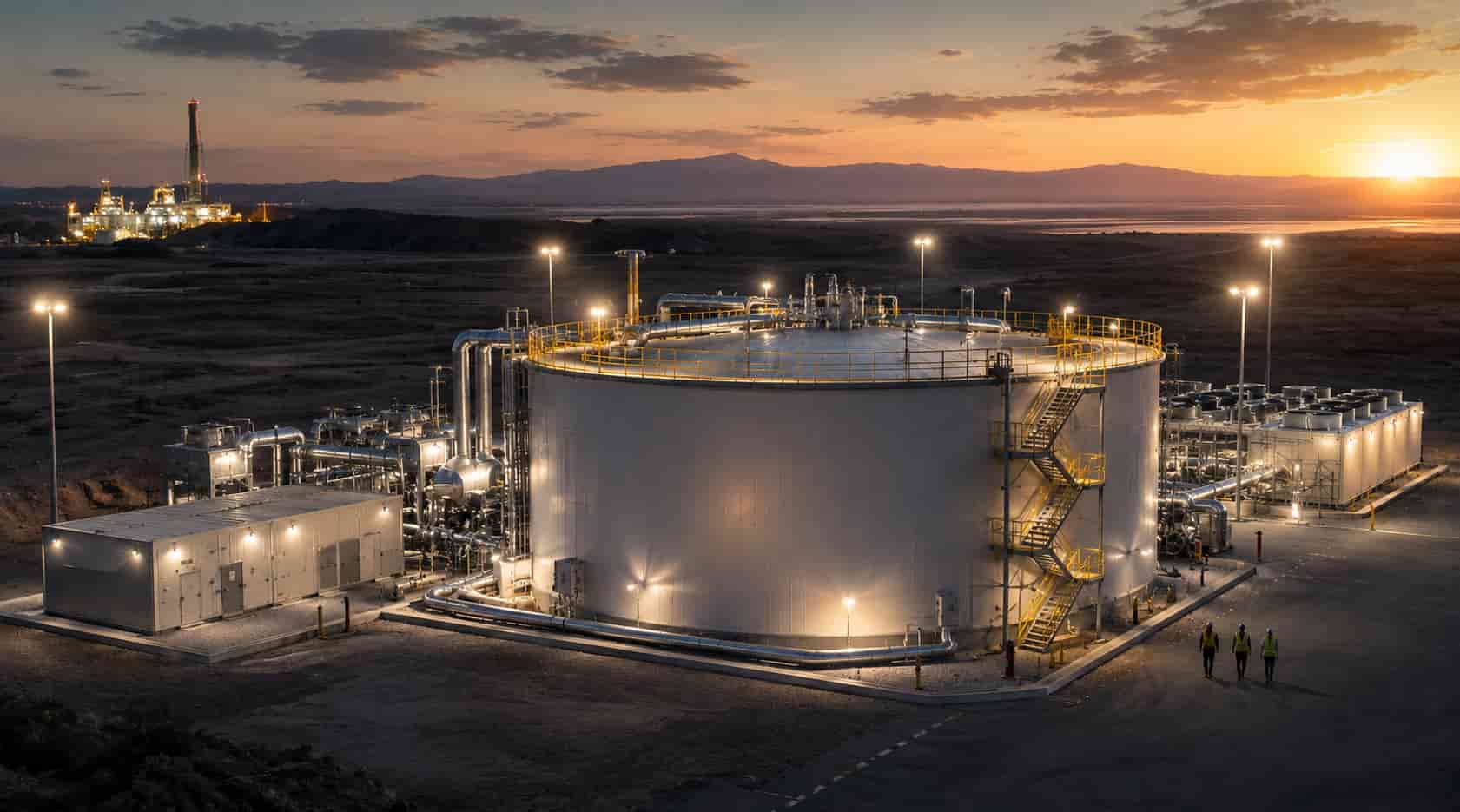
For years, India’s energy storage conversation has revolved almost entirely around lithium-ion batteries and pumped hydro. Quietly, though, a third contender is creeping into policy and boardroom discussions: storing energy not as charge but as heat itself.
Thermal energy storage, or TES, is based on a deceptively simple premise.
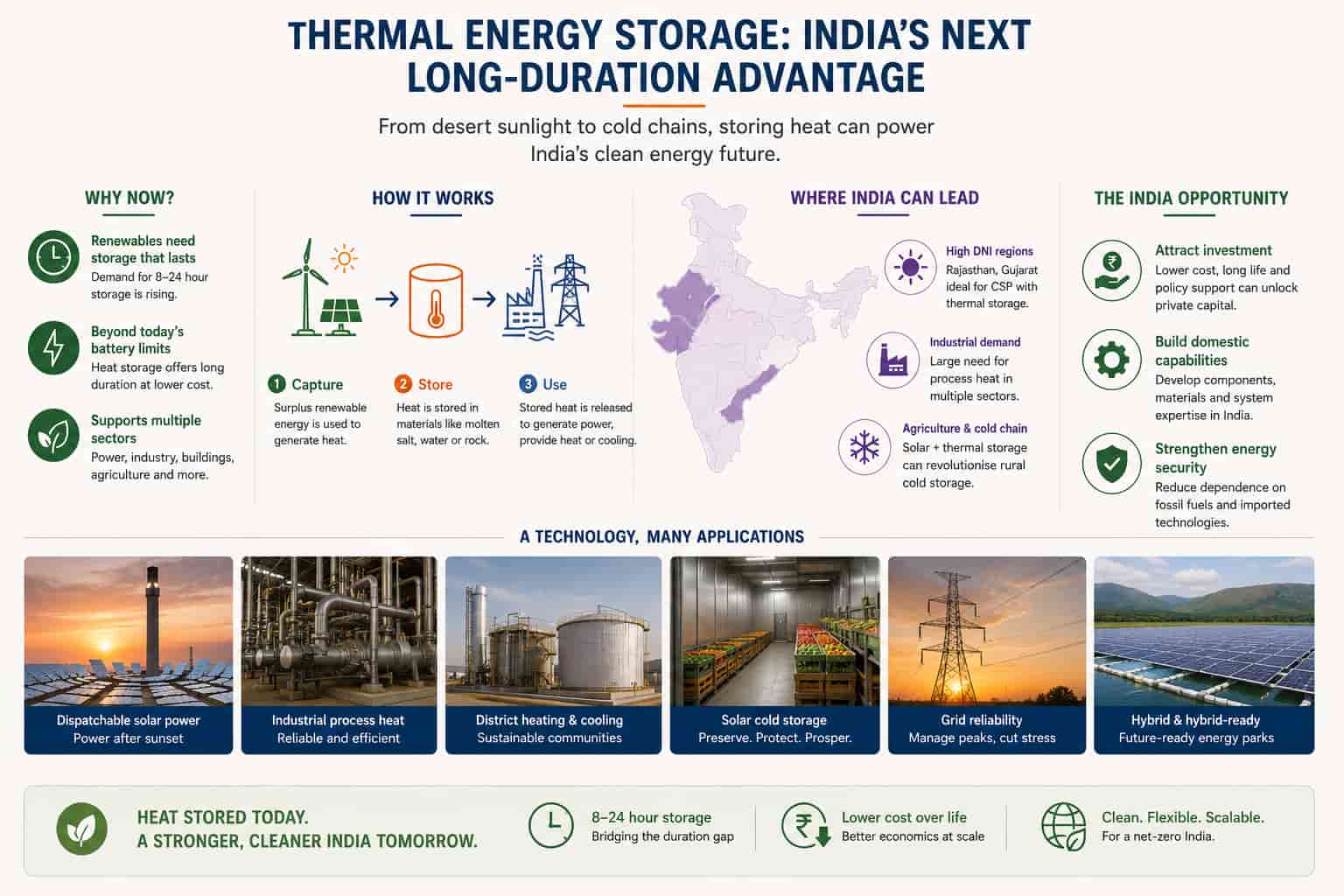
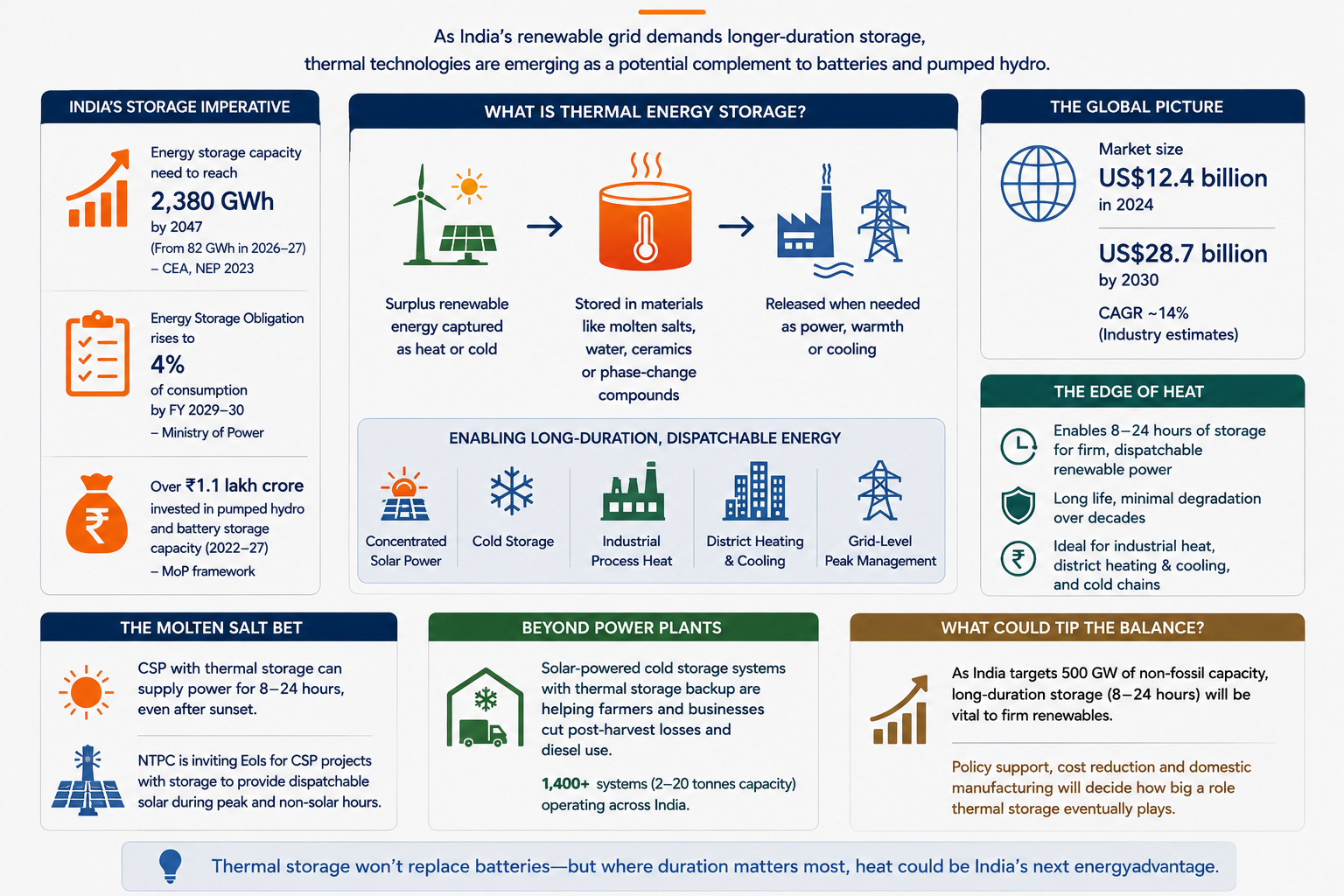
Rather than storing electricity directly, it captures surplus energy as heat or cold in materials such as molten salts, water, ceramics or phase-change compounds, and later releases it as power, warmth or cooling. Applications include concentrated solar power generation, renewable energy integration, district heating and cooling, industrial process heat, cold storage and grid-level peak management.
Globally, the market was estimated at close to US$12.4 billion in 2024 and is on course to nearly triple to about US$28.7 billion by 2030, growing at a compound annual rate of roughly 14%, according to industry estimates.
Other research houses put the figure lower — Straits Research, for instance, sizes the market at US$5.85 billion in 2023, rising to US$13.79 billion by 2032 — a reminder that TES market-sizing varies widely depending on how narrowly or broadly analysts define the category. What the estimates agree on is the direction: sustained double-digit growth through the decade.
A recognisable cast of companies is pursuing this opportunity.
Spain’s Abengoa and America’s BrightSource Energy helped pioneer utility-scale molten-salt and tower technology years ago; newer entrants such as Malta Inc and Rondo Energy in the United States, Brenmiller Energy in Israel, and EnergyNest in Norway are now competing to further reduce costs, with the certification body DNV increasingly called in to validate performance claims as investors grow more cautious about unproven storage bets.
Most installations today use what engineers call sensible heat storage — essentially heating a cheap, stable material such as water, molten salt, or rock and drawing the heat back out later — because it remains the most cost-effective option at scale, even as newer phase-change and thermochemical methods promise higher energy density.
 Where India’s numbers actually point
India’s own storage arithmetic makes the case starkly. According to the National Electricity Plan 2023, prepared by the Central Electricity Authority, the country’s energy storage capacity requirement is projected to rise from about 82 gigawatt-hours in 2026–27 to roughly 411 gigawatt-hours by 2031–32, and then to an eye-widening 2,380 gigawatt-hours by 2047, as the grid absorbs ever larger shares of renewable generation.
To ensure obligated entities build this capacity, the Ministry of Power has notified an increase in the Energy Storage Obligation, from 1% of consumption in FY 2023–24 to 4% by FY 2029–30. Funding this build-out is not trivial: the same framework estimates a combined requirement of over ₹ 1.1 lakh crore (US$11.5 billion) for pumped hydro and battery storage capacity between 2022 and 2027 alone.
Thermal storage does not yet have a precise national target, but it is increasingly featured alongside batteries and pumped hydro in official planning documents as a technology India will need to develop at scale. The Union Budget for 2026 - 27 extended a basic customs duty exemption on capital goods used in storage-cell manufacturing, a move the renewable energy ministry described as intended to lower costs and accelerate the broader domestic deployment of storage.
The molten salt bet: concentrated solar’s dispatchable promise
The clearest expression of India’s thermal storage ambitions lies in concentrated solar power (CSP), where mirrors focus sunlight to heat a fluid — often molten salt — that can later generate steam and electricity long after sunset. NTPC, India’s largest power utility, has invited expressions of interest for CSP projects paired with thermal energy storage systems capable of supplying power for eight to twenty-four hours during peak and non-solar hours.
The utility’s push follows a renewables tender that reserved more than half its capacity for CSP-with-storage bids, a move intended to give dispatchable solar a foothold it has struggled to gain elsewhere. “The 50%-plus carveout is designed to finally scale up CSP with thermal storage,” said Rajan Varshney, NTPC’s deputy general manager, of the tender.
Unlike batteries, molten salt tanks do not degrade significantly over decades of cycling, which is part of their appeal for utility-scale, long-duration storage. The renewable energy ministry also estimates that concentrated solar thermal technologies have an industrial market potential of around 6.45 gigawatts-thermal in India, largely across sectors such as dairy, food processing, textiles and pharmaceuticals that require steady process heat rather than electricity.
Beyond power plants: Cold chains and factory floors
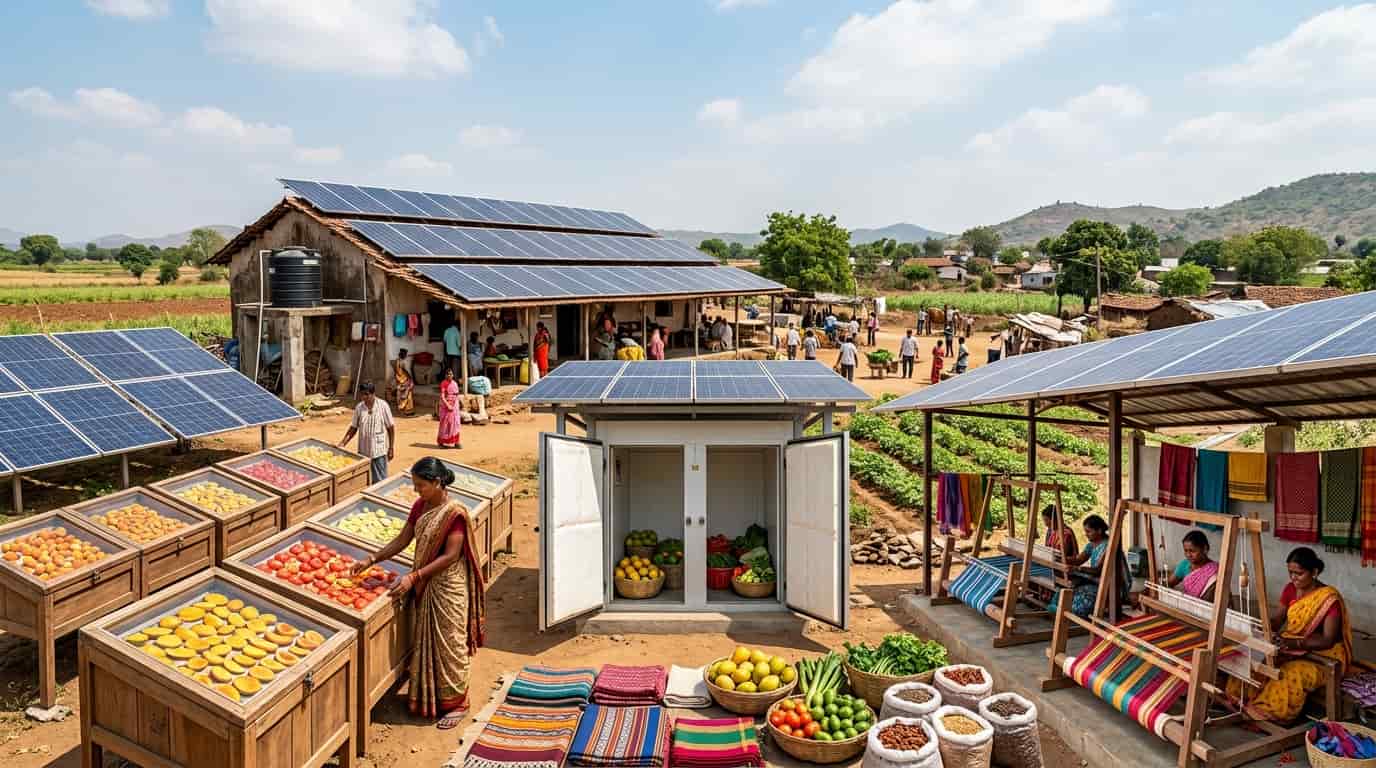
Thermal storage’s quieter but more immediate impact in India may lie beyond utility-scale power altogether. The renewable energy ministry has issued detailed guidelines for solar-powered cold storage systems with thermal energy storage backup, aimed at farmers and small agri-businesses that handle perishables such as fruit, dairy, and fish. More than 1,400 such systems, ranging from two to twenty tonnes in capacity, are already operating across the country.
This is thermal storage doing unglamorous yet useful work: keeping produce cold during power cuts, reducing diesel dependence in rural cold chains, and cutting post-harvest losses that have long plagued Indian agriculture. It is a reminder that TES is not a single technology chasing a single market, but a family of solutions serving needs as varied as a round-the-clock solar power plant and a two-tonne cold room in a district town.
That range matters for India’s wider power sector, which is entering a new capacity-expansion cycle after a decade of subdued investment. A recent KPMG review of the country’s thermal power delivery ecosystem noted that execution capacity — engineering depth, contractor availability, manufacturing readiness — has not kept pace with the scale of the planned expansion, even as thermal generation continues to anchor grid reliability. Storage technologies, whether thermal or otherwise, will be only as useful as the broader ecosystem’s ability to build, connect and maintain them on schedule.
 Why this is a harder sell than batteries
Despite its promise, thermal storage faces significant headwinds. Battery costs have fallen sharply over the past five years, and lithium-ion systems benefit from manufacturing scale, standardisation and a well-understood supply chain that thermal technologies, particularly molten-salt and CSP, still lack in India. Upfront capital costs for large thermal systems remain high, project timelines are longer, and the domestic ecosystem for specialised components such as receivers, heat exchangers and high-temperature salts is underdeveloped.
“Thermal storage will not replace batteries in India’s near-term storage mix; it will complement them where duration, not just capacity, is the constraint,” said a senior official at the Ministry of New and Renewable Energy, describing the technology as a tool among several rather than a silver bullet.
There is also the question of land and location. CSP plants require high direct normal irradiance and large tracts of contiguous land, both of which are abundant in Rajasthan and Gujarat but scarce elsewhere, limiting where such projects make commercial sense.
It is worth remembering why firm, dispatchable capacity still matters so much to Indian planners, even as renewable installations dominate headlines.
Coal continues to meet nearly 55% of the country’s primary energy needs and underpins more than 70% of electricity generation, a reminder that the transition away from fossil fuels is likely to be measured in decades rather than years. Every technology that helps renewable power behave more like a firm, round-the-clock source — whether a battery, a pumped hydro scheme or a tank of molten salt — chips away at that dependence a little further.
What could tip the balance?
Even so, the structural case for thermal storage is not going away.
As renewable capacity climbs towards India’s target of 500 gigawatts of non-fossil-fuel capacity, and as the storage durations needed to firm that capacity stretch well beyond what batteries alone can provide economically, technologies that hold energy for eight, twelve or twenty-four hours become harder to ignore.
India’s non-fossil capacity already stands above 300 gigawatts, more than half of total installed capacity, with newer schemes such as the Pradhan Mantri Surya Sarovar Yojana adding floating solar projects with co-located storage to the pipeline.
Whether thermal storage becomes a meaningful pillar of that pipeline or remains a niche technology confined to a handful of CSP tenders and cold-storage units will depend less on the physics, which is well proven, and more on whether India’s policy and manufacturing ecosystem treats it with the same urgency as is now being applied to batteries and pumped hydro.
Follow us on : X | LinkedIn | Facebook | Bluesky