
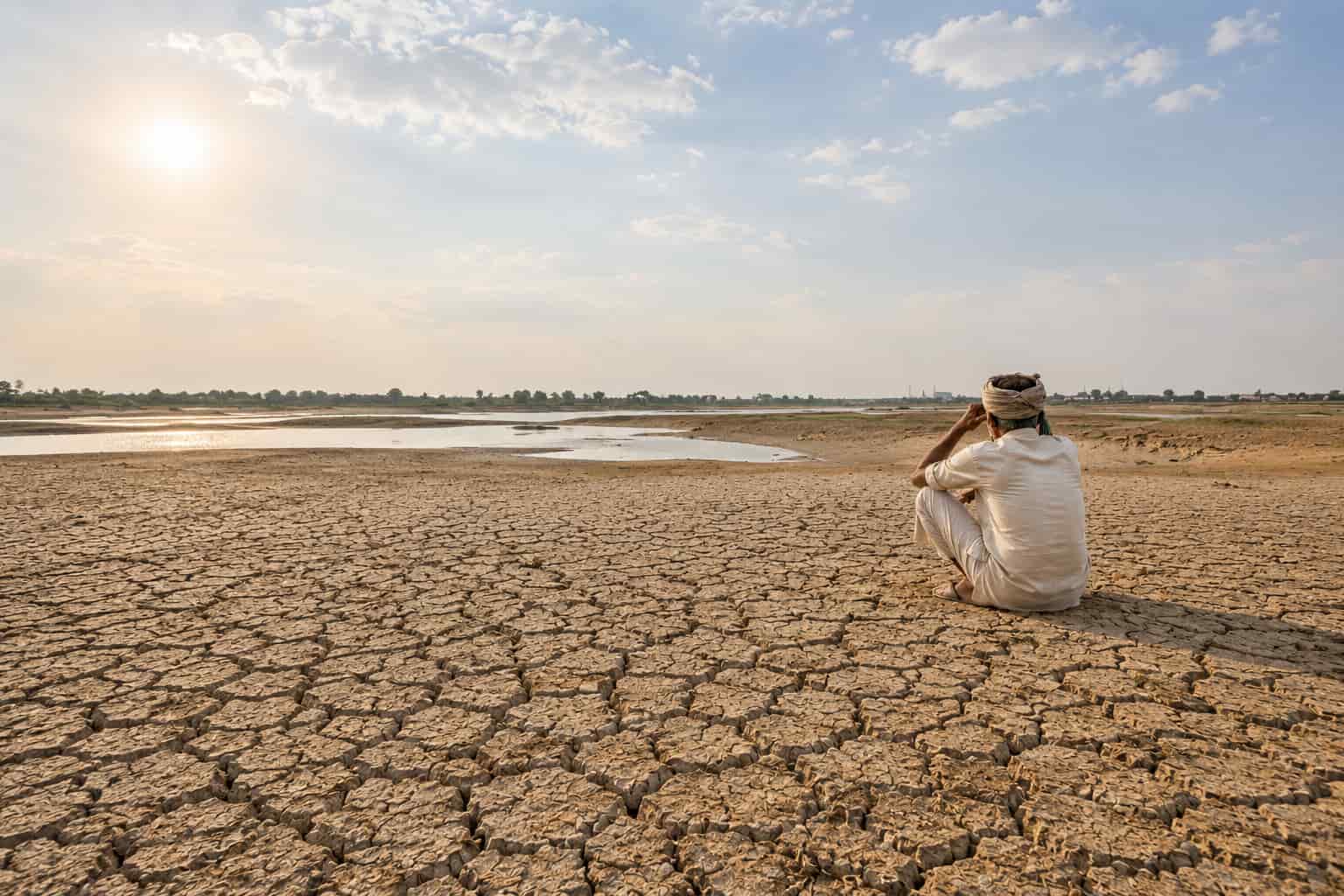
As temperatures soar across India and heatwaves become longer, deadlier and more economically disruptive, the country finds itself at the centre of an increasingly complex climate paradox.
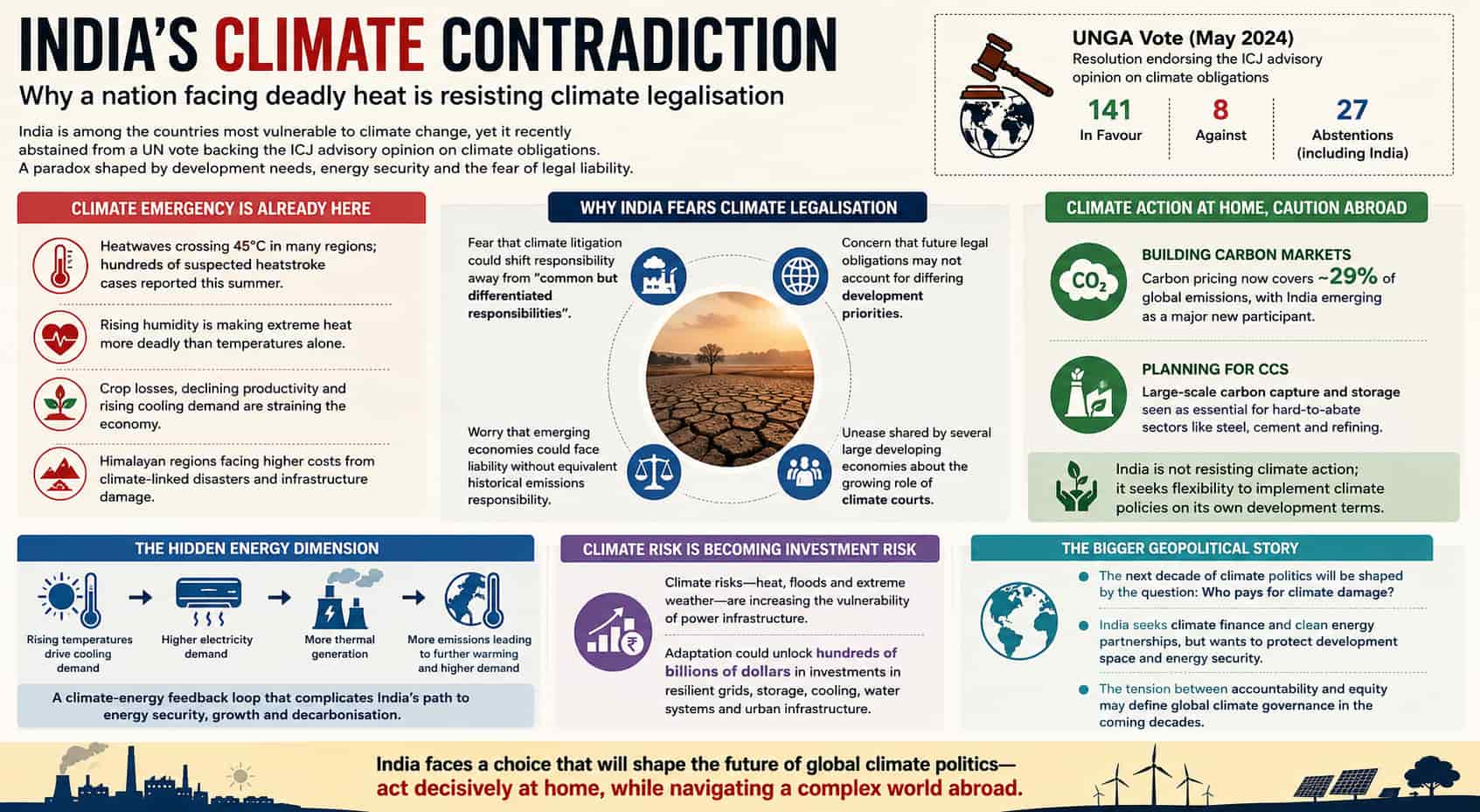
Few nations are experiencing the immediate impacts of climate change as intensely as India. Yet when the United Nations General Assembly recently voted overwhelmingly to endorse the advisory opinion of the International Court of Justice (ICJ) on climate obligations, India joined 27 other countries in abstaining.
The decision has reignited a debate that extends far beyond diplomacy. Why would a country facing rising heat stress, growing climate risks and mounting adaptation costs hesitate to support stronger international legal mechanisms on climate responsibility?
The answer lies at the intersection of development, energy security, climate finance and geopolitical power.
India's position reflects a broader global fault line emerging within climate politics: nations most vulnerable to climate change increasingly want accountability, but large emerging economies remain cautious about allowing climate action to become a matter of international legal enforcement.
The climate emergency is already here
India's caution comes at a time when climate impacts are becoming impossible to ignore.
Recent heatwaves have pushed temperatures beyond 45°C across several regions. Authorities reported hundreds of suspected heatstroke cases this summer, while health experts warn that rising humidity is making extreme heat more dangerous than temperature records alone suggest.
Scientists increasingly argue that India is entering an era in which heatwaves become not merely weather events but structural economic risks. Research suggests that warming patterns are altering the nature of heat exposure itself, increasing nighttime temperatures and reducing recovery periods for both people and infrastructure.
The consequences extend well beyond public health.
Agricultural productivity is coming under growing pressure. Crop losses, declining labour productivity and rising cooling demand are beginning to reshape economic planning. In the Himalayas, climate-linked disasters are imposing increasing costs on communities, infrastructure and tourism-dependent economies.
Why India fears climate legalisation
At first glance, India's abstention appears contradictory.
The country has repeatedly called for stronger global climate action, climate finance and technology transfer. It has also invested heavily in renewable energy expansion, green hydrogen development and emissions reduction initiatives.
However, New Delhi's concern is less about climate action and more about the legal architecture surrounding it.
Indian policymakers worry that climate litigation could gradually shift responsibility away from the principle of "common but differentiated responsibilities" that has underpinned international climate negotiations for decades.
Under this principle, developed nations bear greater responsibility because they contributed the majority of historical greenhouse gas emissions.
The fear among many developing countries is that future climate litigation could blur these distinctions and expose emerging economies to legal obligations that fail to account for differing stages of development.
This concern is not unique to India. Several large developing economies have privately expressed unease about the growing role of international courts in climate governance.
A country building carbon markets while resisting climate courts
The apparent contradiction becomes even more striking when viewed through the lens of domestic policy.
India is rapidly building one of the world's largest carbon market frameworks. Recent assessments suggest that carbon pricing mechanisms now cover nearly 29% of global emissions, with India emerging as one of the most significant new participants in the evolving carbon market ecosystem.
At the same time, policymakers are exploring large-scale carbon capture and storage (CCS) deployment. Industry experts argue that CCS could become essential for decarbonising hard-to-abate sectors such as steel, cement and refining.
India's proposed carbon storage roadmap reflects a growing recognition that renewable energy alone may not be sufficient to meet long-term climate goals while maintaining industrial growth.
This reveals a crucial distinction.
India is not resisting climate action. It is attempting to retain flexibility over how climate action is implemented.
The country wants climate policies shaped through national development priorities rather than through potentially binding international legal interpretations.
The hidden energy dimension
Perhaps the most overlooked aspect of the debate is energy security. India's climate vulnerability is increasingly becoming an electricity challenge.
As highlighted in recent analyses, rising temperatures are driving unprecedented growth in cooling demand. Air-conditioning adoption is accelerating across urban and semi-urban India, creating new pressure on the power system.
The result is a climate-energy feedback loop.
Hotter weather drives higher electricity demand. Higher demand often requires increased thermal generation. Increased emissions contribute to further warming, which then increases cooling demand even more.
This dynamic helps explain why climate policy debates in India cannot be separated from questions of economic growth and energy availability.
Unlike many advanced economies, India must simultaneously expand energy access, support industrialisation and decarbonise its economy.
That balancing act creates tensions that are often misunderstood in international climate discussions.
Climate risk is becoming an investment risk
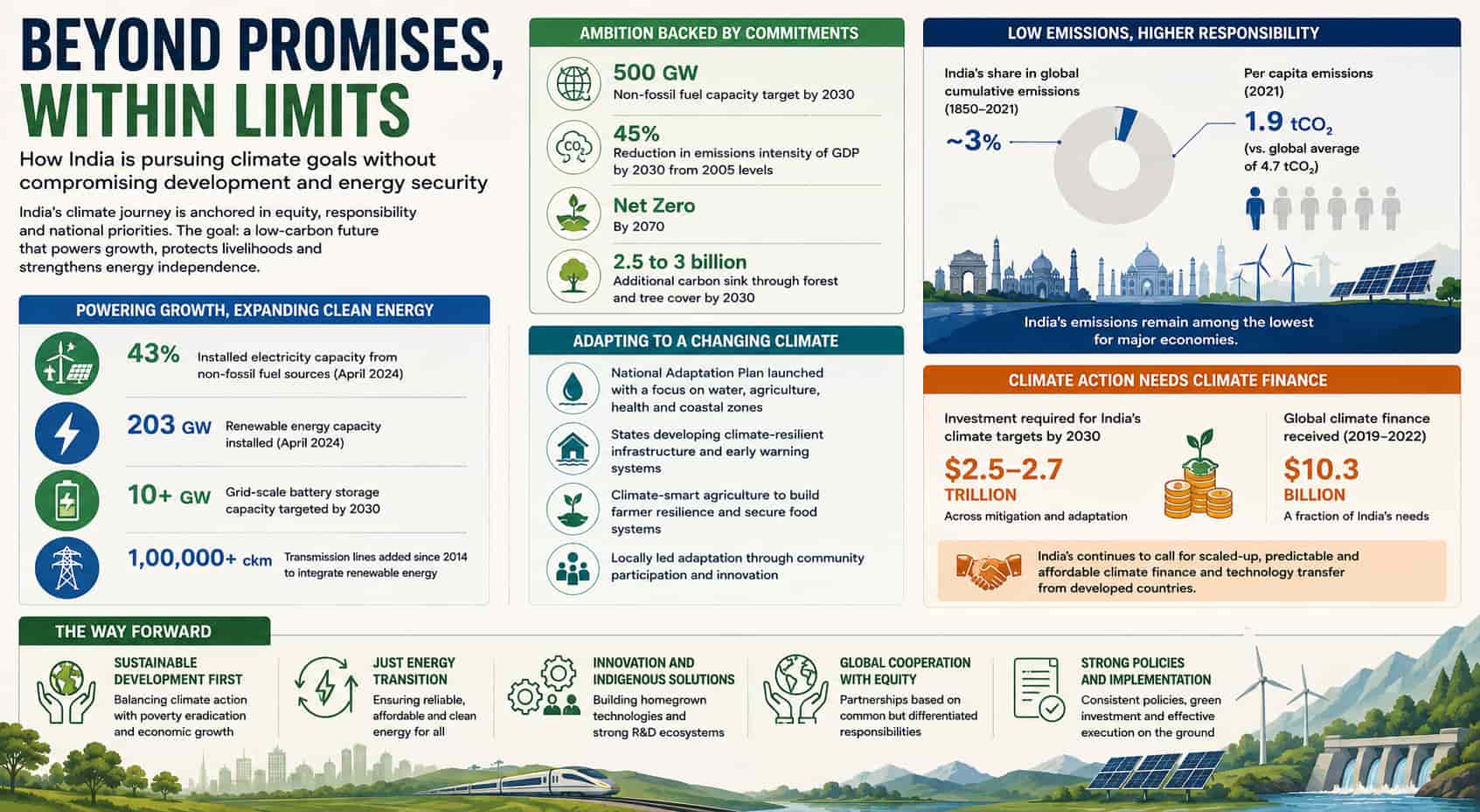
Another important shift is underway. Climate risk is increasingly being treated as a financial risk. A recent assessment by Climate Policy Initiative highlighted the growing exposure of India's power infrastructure to climate-related threats, including floods, extreme temperatures and changing weather patterns.
Investors, lenders and insurers are paying increasing attention to these risks.
This has profound implications. Climate adaptation may soon become one of India's largest infrastructure investment themes.
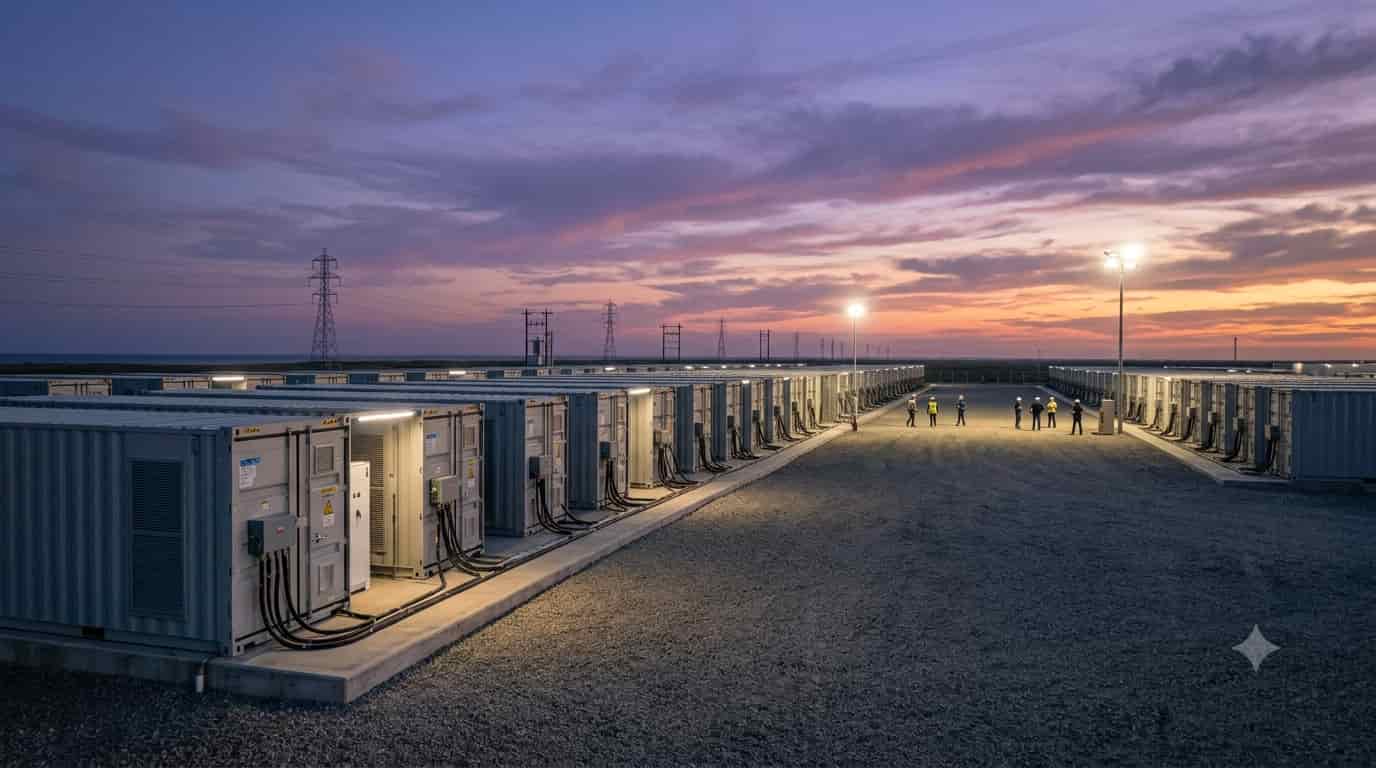
Transmission networks, cooling technologies, grid resilience systems, battery storage, water management infrastructure and climate-resilient urban planning could collectively attract hundreds of billions of dollars in investment over the coming decades.
That trend is already visible globally as institutional investors shift capital towards climate resilience rather than focusing solely on emissions reduction.
The bigger geopolitical story
The deeper significance of India's abstention lies in what it reveals about the future of climate politics. For much of the past decade, climate debates focused on emissions targets.
The next decade may be dominated by a different question: who pays for climate damage?
That question is becoming increasingly urgent as climate disasters intensify and vulnerable nations seek compensation mechanisms.
Some legal scholars believe the ICJ opinion could strengthen future claims for climate accountability.
Others argue that such developments risk creating geopolitical tensions precisely when greater international cooperation is needed.
India finds itself navigating between these competing pressures. It wants stronger climate action. It wants climate finance. It wants clean energy investment.
But it also wants to preserve policy space for economic development and energy security.
That balancing act may increasingly define not only India's climate strategy but also the future trajectory of global climate governance itself.
The irony is striking. A country confronting some of the world's most severe climate impacts is simultaneously helping shape the resistance to turning climate responsibility into international law. As climate damages rise and legal activism expands, that contradiction may become one of the defining fault lines of the global energy transition.
Related Indoen reading: India’s climate finance blueprint: A snail’s pace or a fast gallop?