
India’s energy transition is often measured in gigawatts, billion-dollar investments and industrial ambitions. Solar parks, battery factories and green hydrogen projects dominate policy discussions. Yet one of the country’s most important energy vulnerabilities may now be emerging in a far more ordinary place — the household kitchen.
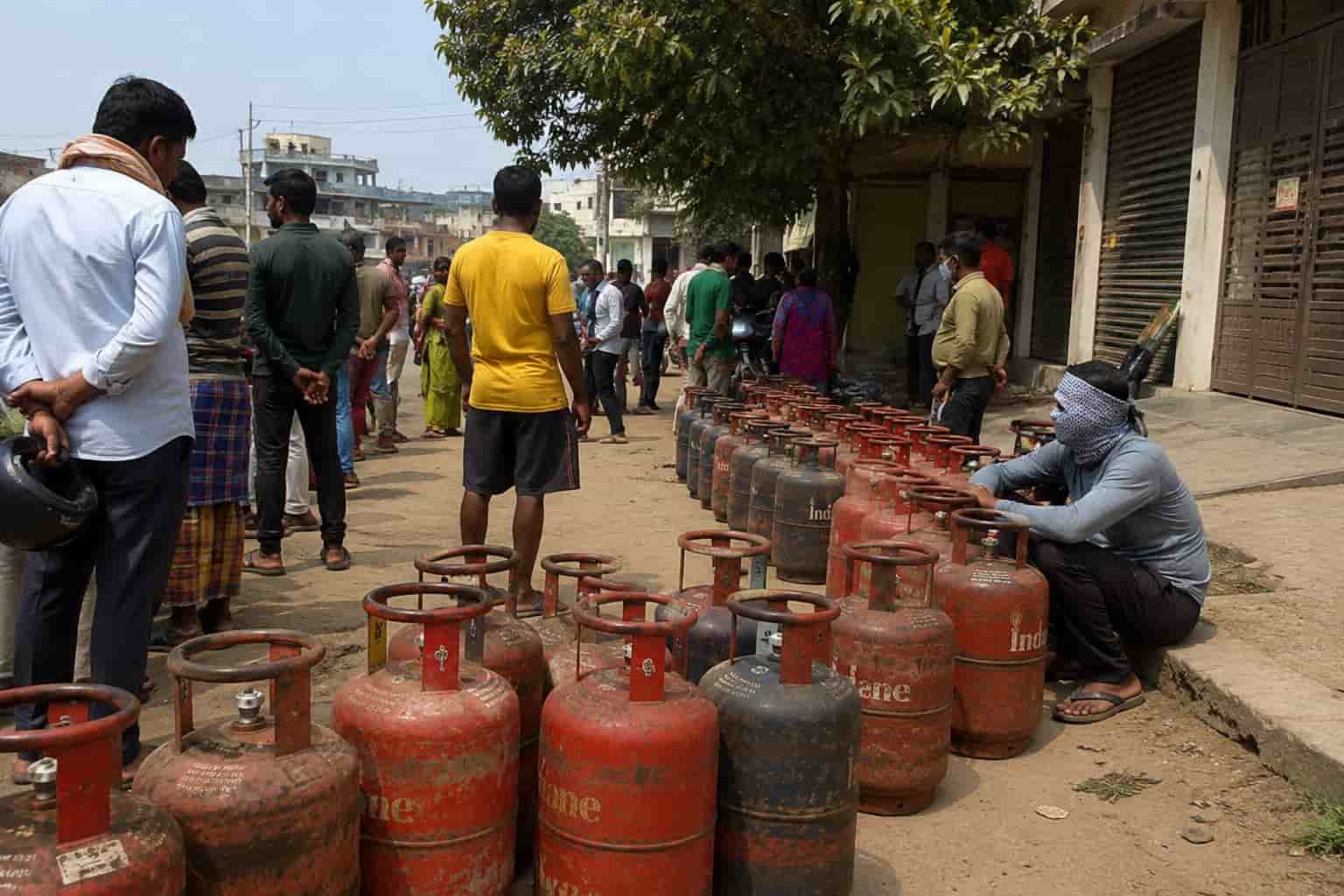
Recent LPG shortages in Chennai and nearby suburbs offered a glimpse of the strain building beneath India’s clean cooking transition. Households reportedly waited more than three weeks for cylinder deliveries, while eateries raised the prices of tea and snacks after supply disruptions pushed up operational costs.
The immediate trigger may have been logistical disruptions and tighter international supply conditions. But the episode has also exposed a larger structural issue: India’s clean cooking ecosystem is becoming increasingly dependent on imported LPG at a time when affordability pressures and geopolitical risks are rising simultaneously.
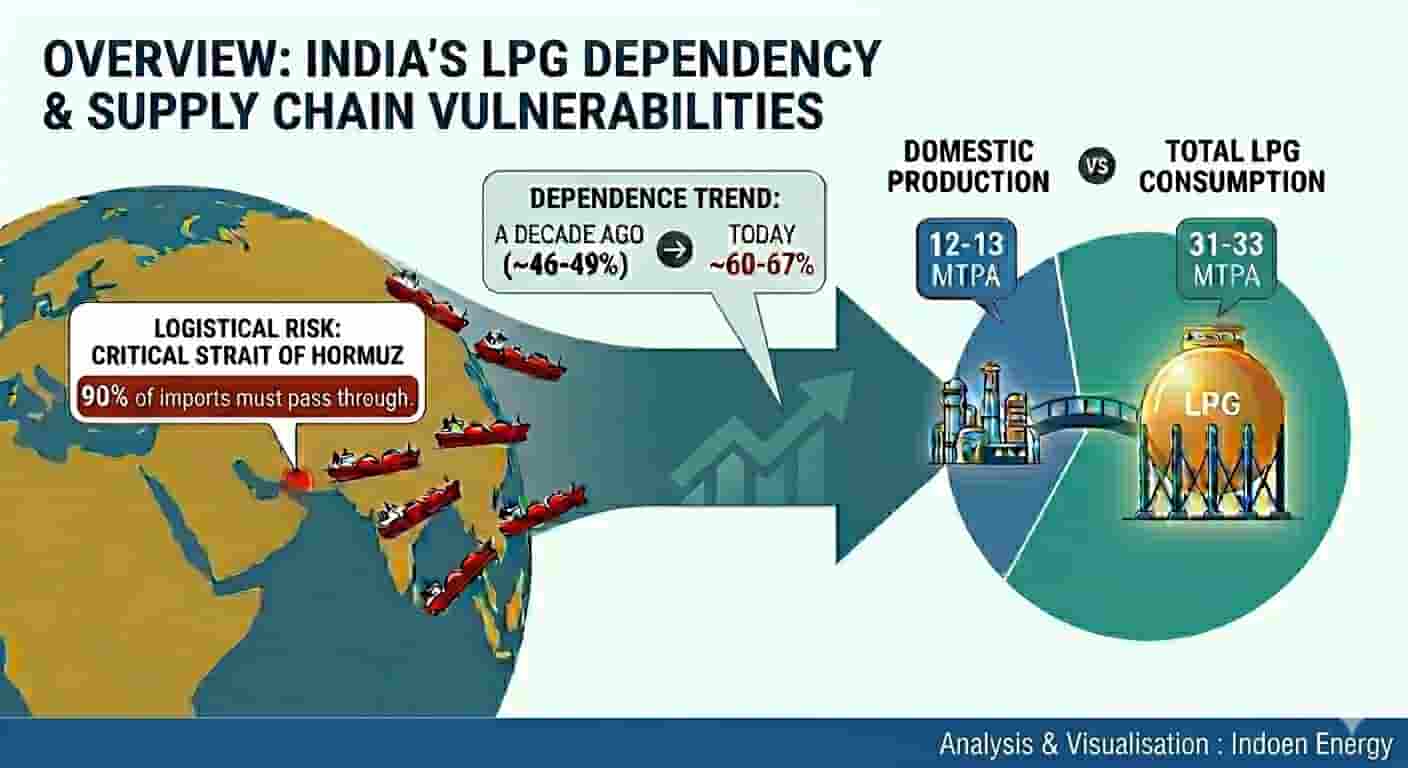
That dependency is no longer marginal. India now consumes roughly 31-33 million tonnes of LPG annually while domestic production remains only around 12-13 million tonnes, forcing the country to rely heavily on imports to bridge the gap.
According to industry estimates, India’s LPG import dependence has risen from around 46-49% a decade ago to nearly 60-67% today as household consumption expanded rapidly under welfare-led clean cooking programmes.
That means one of India’s most celebrated household energy transitions is now deeply intertwined with global shipping routes, Middle Eastern supply dynamics and international fuel-price volatility.
The success story that became more complicated
India’s clean cooking expansion under the Pradhan Mantri Ujjwala Yojana transformed the country’s household energy landscape over the past decade.
Government data presented in Parliament shows LPG coverage rising from around 62% in 2016 to near-universal access in recent years.
But researchers increasingly argue that the clean cooking transition is entering a more difficult second phase.
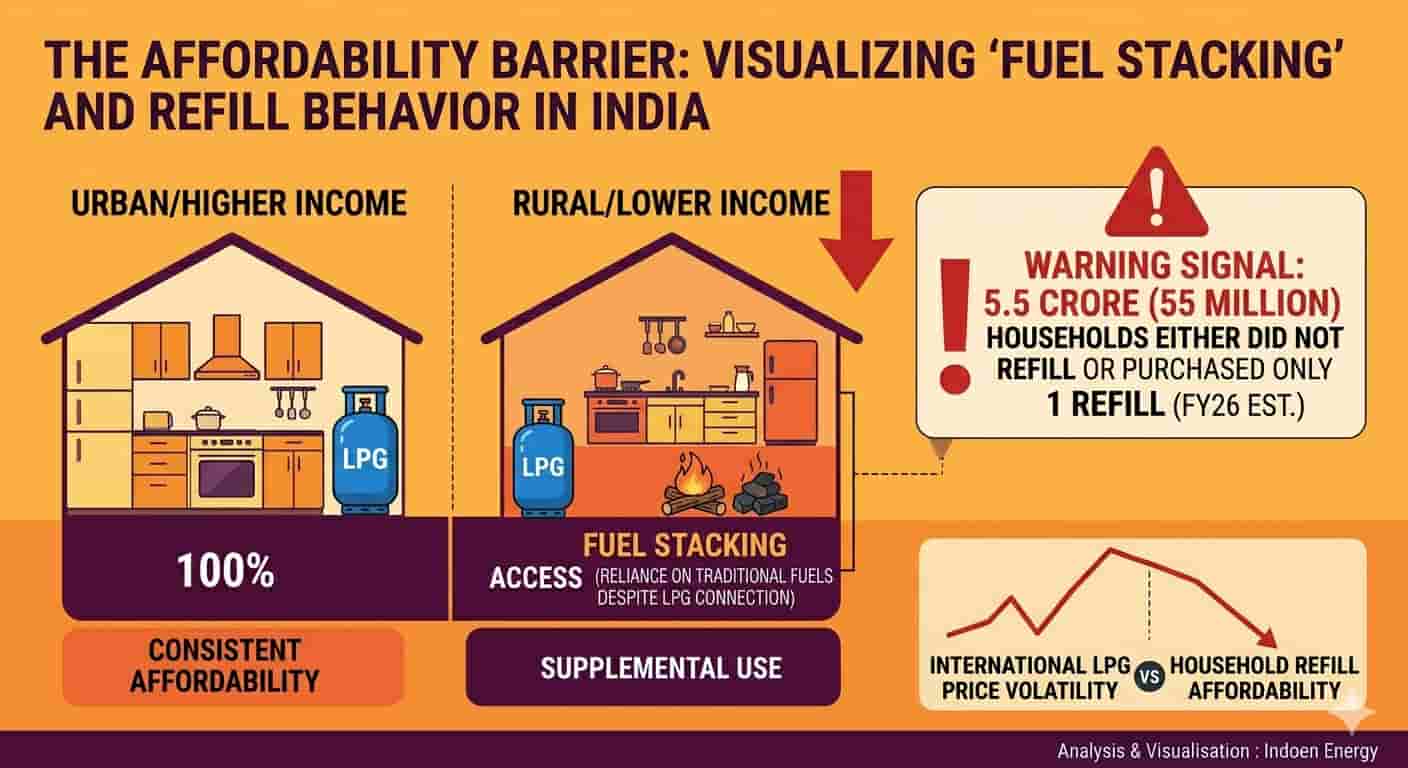
Studies by the Council on Energy, Environment and Water show that many lower-income households continue to rely partly on firewood, charcoal or kerosene despite possessing LPG connections.
This phenomenon, known as ‘fuel stacking,’ reflects a critical distinction between access and sustained affordability.
A recent RTI-based report cited by media suggested that more than 5.5 crore (55 million) Indian households either did not refill their LPG cylinders or purchased only one refill during FY26.
That statistic may represent one of the most underappreciated energy-transition signals in India today.
It suggests that the challenge is no longer merely distributing LPG connections. The larger issue may now be whether millions of households can consistently afford to remain within the formal clean cooking economy.
Cooking fuel is becoming a strategic economic issue
The affordability problem has intensified because LPG prices remain exposed to international market fluctuations.
India imported roughly 23 million tonnes of LPG in 2025, making it one of the world’s largest LPG importers. Nearly 90% of those imports reportedly pass through or originate from the strategically sensitive West Asian region and the Strait of Hormuz.
The vulnerability became more visible this year after geopolitical tensions in West Asia disrupted energy shipping sentiment and tightened regional gas markets. French newspaper Le Monde reported that conflict-linked supply disruptions contributed to fears of a broader gas shortage affecting India.
The economic strain is now reaching state-owned energy companies as well.
According to media reports, Indian Oil Corporation was reportedly losing around ₹617 (US$6.5) per subsidised domestic LPG cylinder in May 2026 due to elevated international prices.
That creates a difficult balancing act for policymakers.
Maintaining subsidies supports household affordability and public-health goals. But sustaining large-scale subsidy systems during periods of volatile global fuel prices could place growing pressure on public finances and oil-marketing companies.
Why India may need a post-LPG clean cooking strategy
The emerging policy debate is no longer simply about expanding LPG penetration. Increasingly, analysts are asking whether India’s clean cooking transition has become overly dependent on a single fuel.
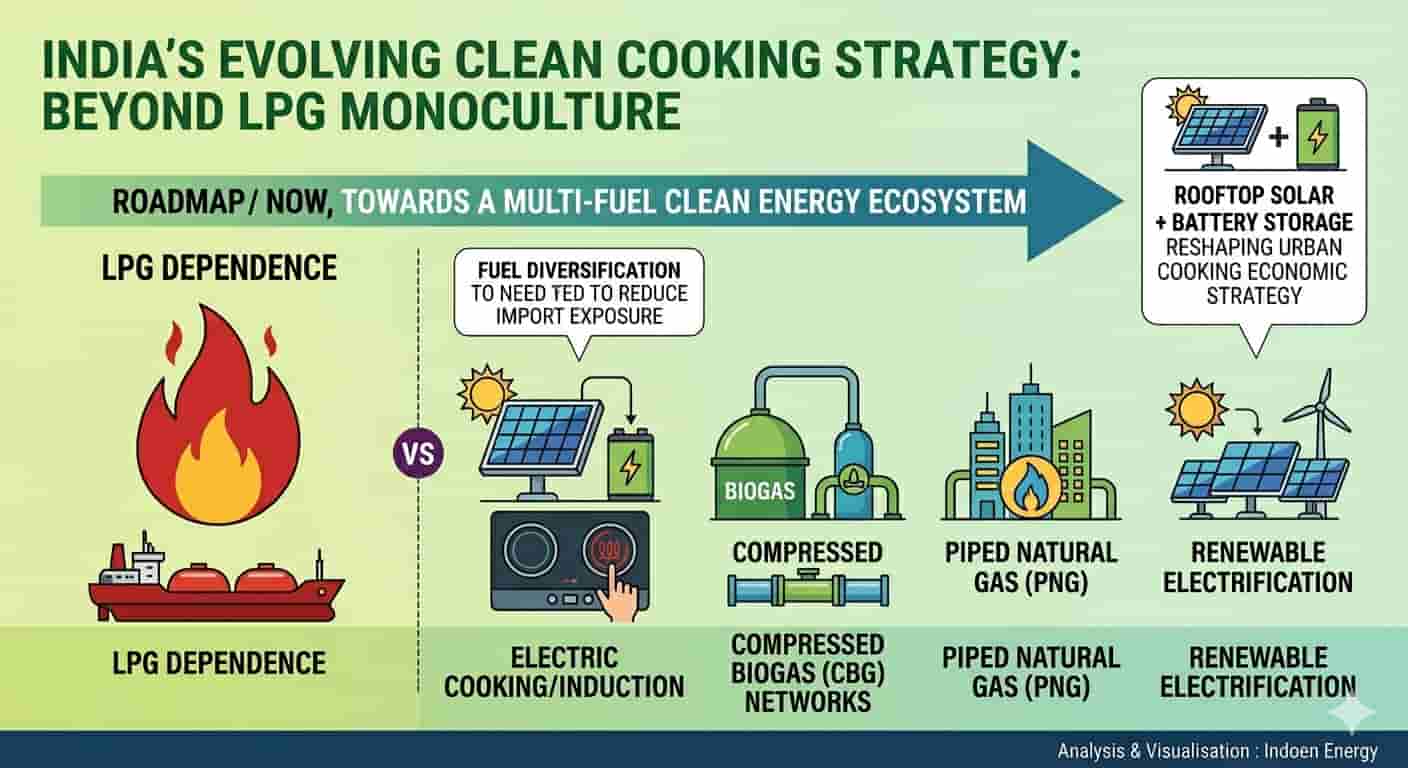
The Institute for Energy Economics and Financial Analysis recently argued that India may need a broader ‘multi-fuel clean energy strategy’ rather than excessive dependence on LPG alone.
Similarly, the Takshashila Institution warned that India’s LPG vulnerabilities may worsen unless the country diversifies cooking-energy systems and reduces import-linked exposure.
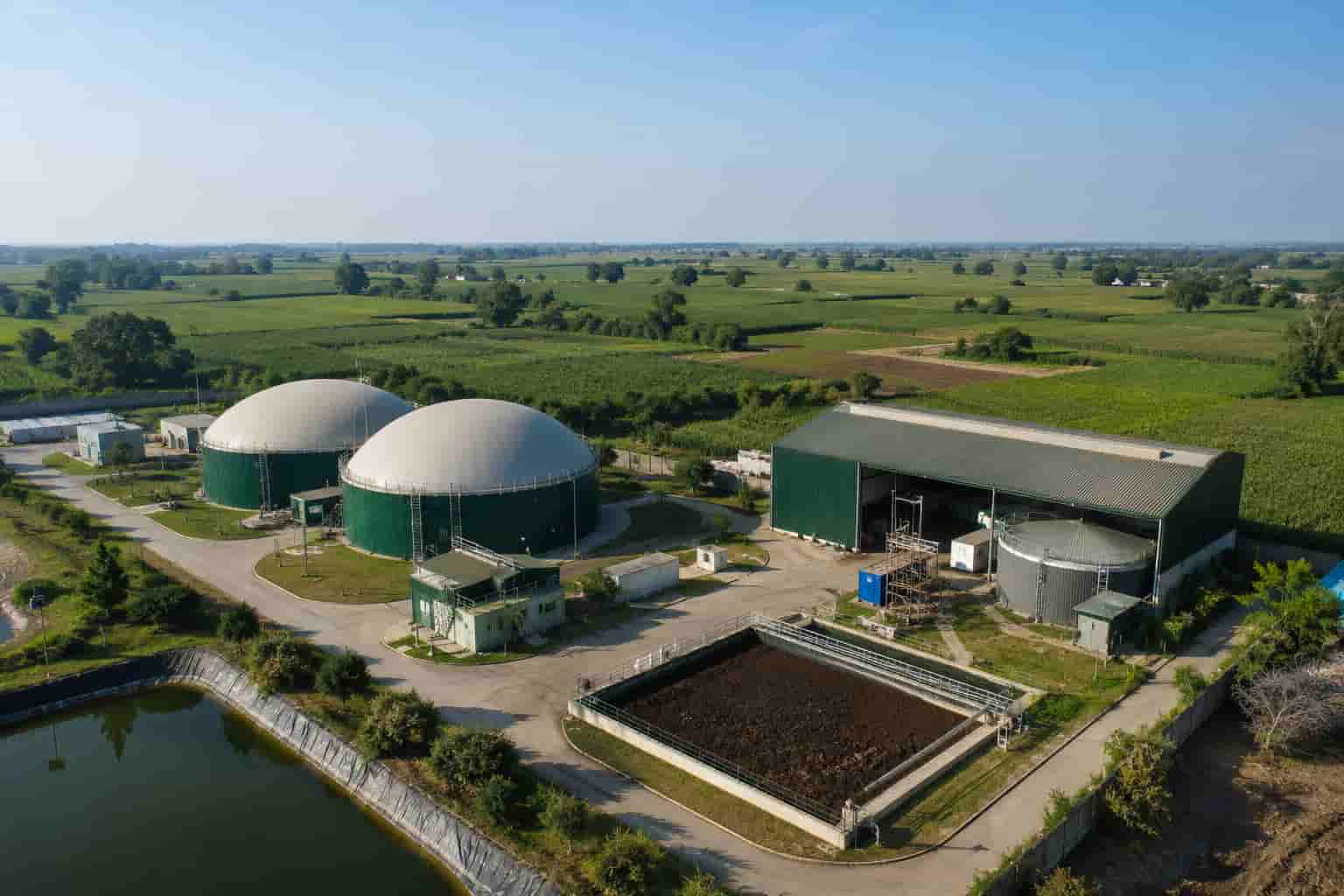
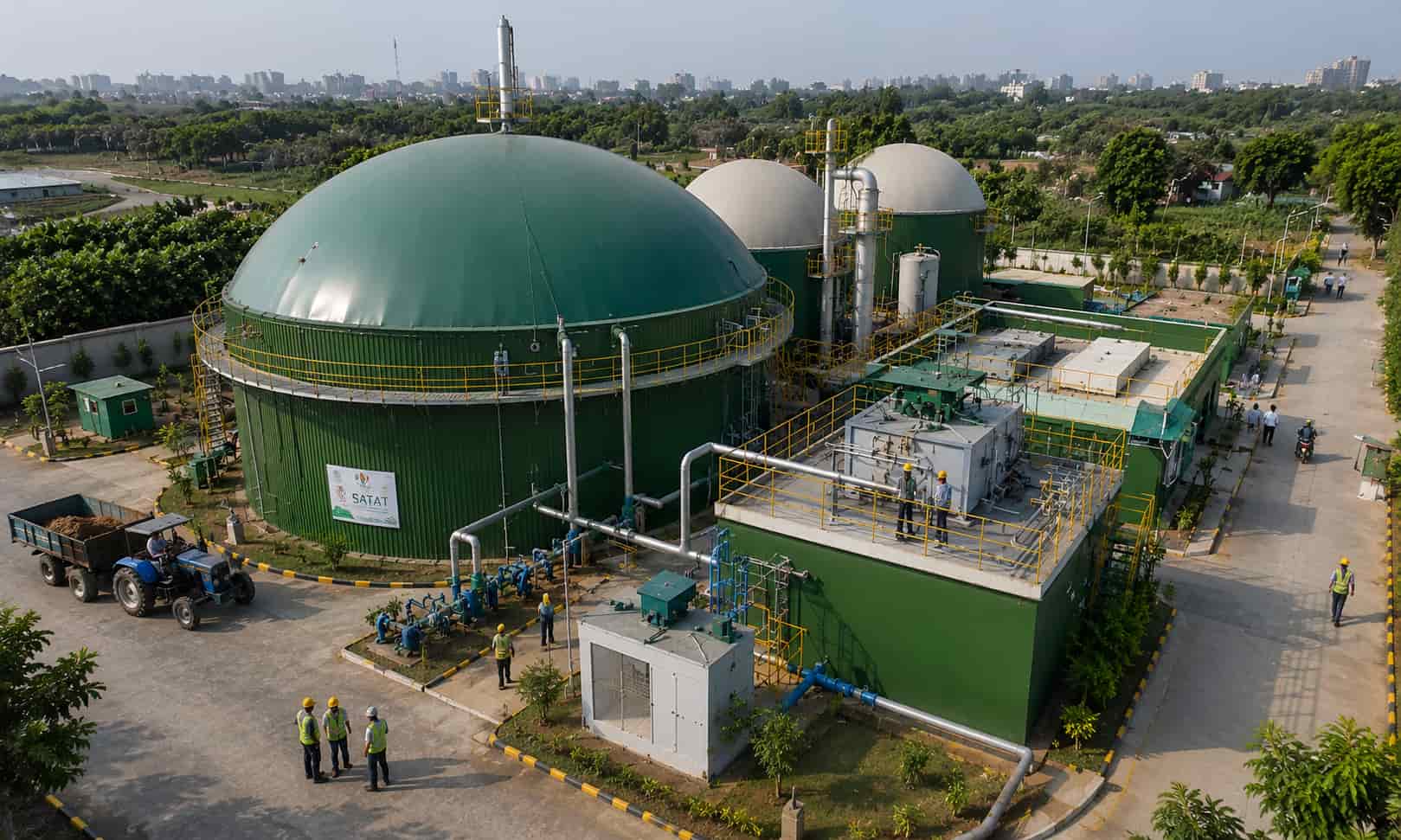
That diversification could eventually include induction cooking, decentralised biogas systems, compressed biogas networks, piped gas infrastructure and renewable-electricity-linked household cooking technologies.
One of the more surprising trends globally is that household electrification is increasingly being treated as an energy-security strategy rather than merely a climate measure.
China’s rapid expansion of induction cooking systems, Europe’s electrification push after the gas crisis and growing investment in battery-backed residential energy systems are beginning to influence energy planners elsewhere.
India may gradually move in a similar direction, particularly as renewable electricity costs continue falling.
Industry analysts say rooftop solar combined with battery storage could eventually reshape urban cooking economics for middle-income households. Municipal waste-to-energy systems and compressed biogas infrastructure are also attracting increasing policy attention as India attempts to build a domestic bioenergy ecosystem.
The irony is striking. India may have created one of the world’s largest LPG-based welfare transitions just as the global energy system begins shifting towards decentralised electrification and diversified household energy models.
The next energy transition battle may happen inside kitchens
India’s cooking fuel dilemma exposes a deeper contradiction inside global energy-transition debates.
Much of the conversation around decarbonisation focuses on industrial emissions, utility-scale renewables and electric mobility. But for millions of households, the energy transition remains fundamentally about affordability and reliability.
The real question is not whether clean energy technologies exist. It is whether households can continue using them consistently during periods of economic stress.
That is why cooking fuel may quietly become one of India’s most politically sensitive energy issues over the next decade.
If refill affordability weakens further, the country risks creating a two-speed energy transition — one where affluent consumers move towards electrified and decentralised energy systems while lower-income households remain vulnerable to fuel-price shocks and periodic reversions to polluting alternatives.
In that sense, India’s kitchens are emerging as an unexpected testing ground for the social resilience of the country’s broader energy transition.