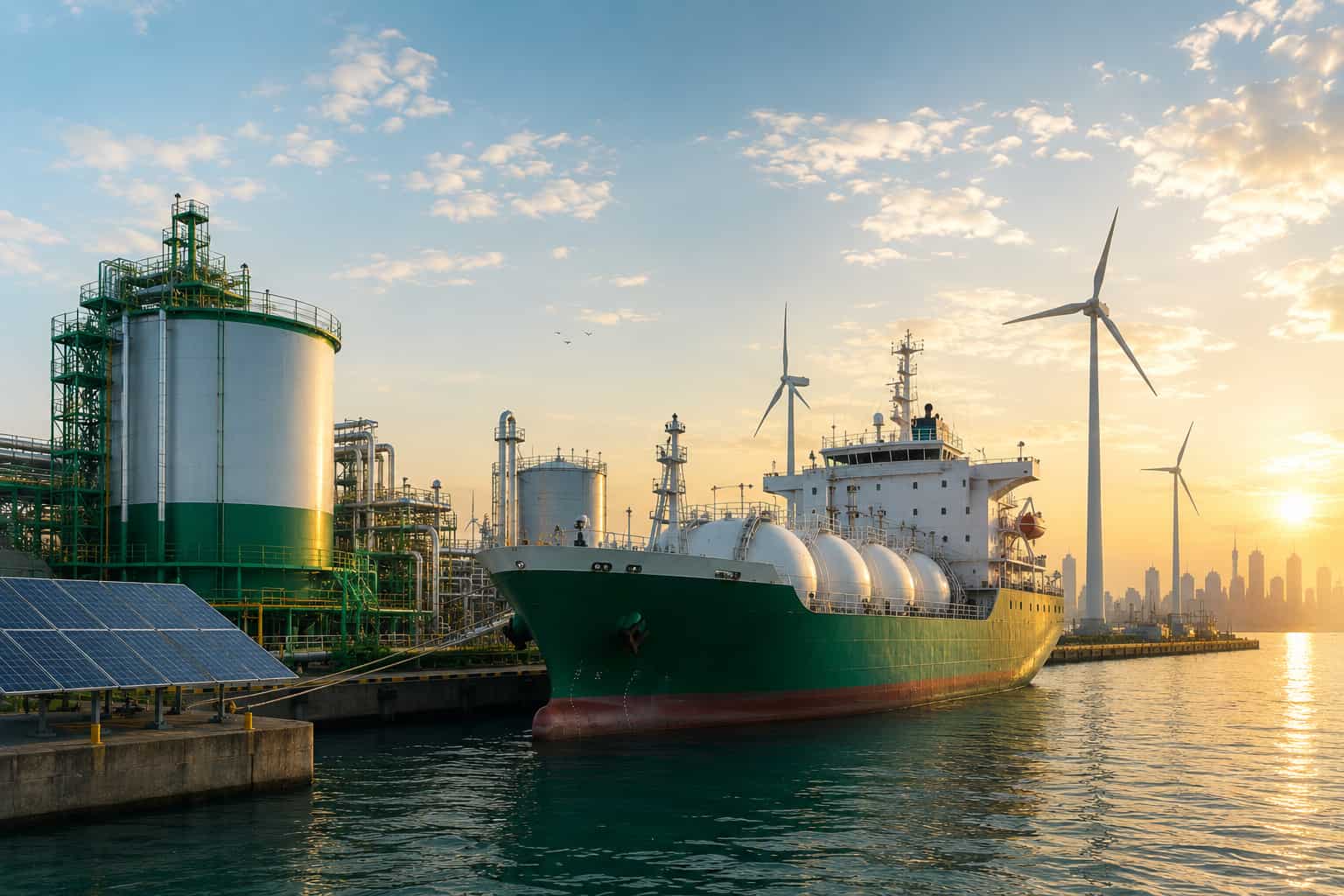

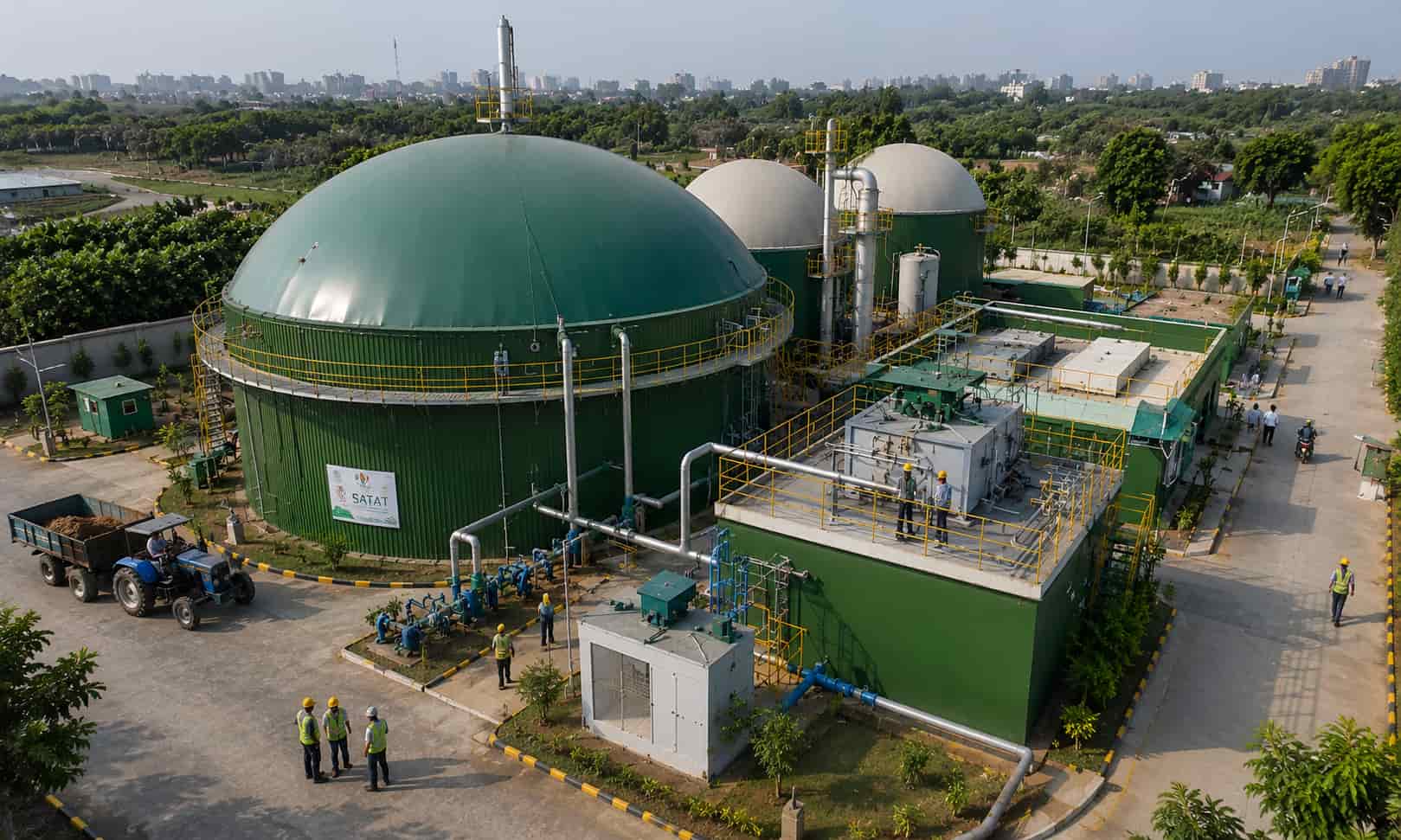
On the outskirts of Kochi, where vegetable waste from the markets mingles with food leftovers, agricultural residue and municipal garbage, a new form of energy conversion is underway. For years, these waste streams were seen primarily as sanitation and disposal challenges. Today, they are increasingly discussed as part of India’s broader clean energy and circular economy ambitions.
Biogas was once largely confined to rural cooking and small community projects. Today, it is gradually entering a much broader national conversation around urban waste management, energy security, transport fuels, industrial decarbonisation and rural income generation. Once considered a peripheral segment of renewable energy, it is now a strategically important component of India’s clean energy transition.
The shift reflects a deeper reality facing India’s energy ecosystem. As India pursues rapid economic growth while seeking to reduce fossil fuel dependence and urban pollution, policymakers are increasingly turning to renewable solutions that address multiple challenges at once. Biogas and compressed biogas (CBG) are emerging as options because they sit at the intersection of energy, agriculture, sanitation, and infrastructure.
The opportunity is particularly relevant for India, as the country generates enormous quantities of organic waste every year.
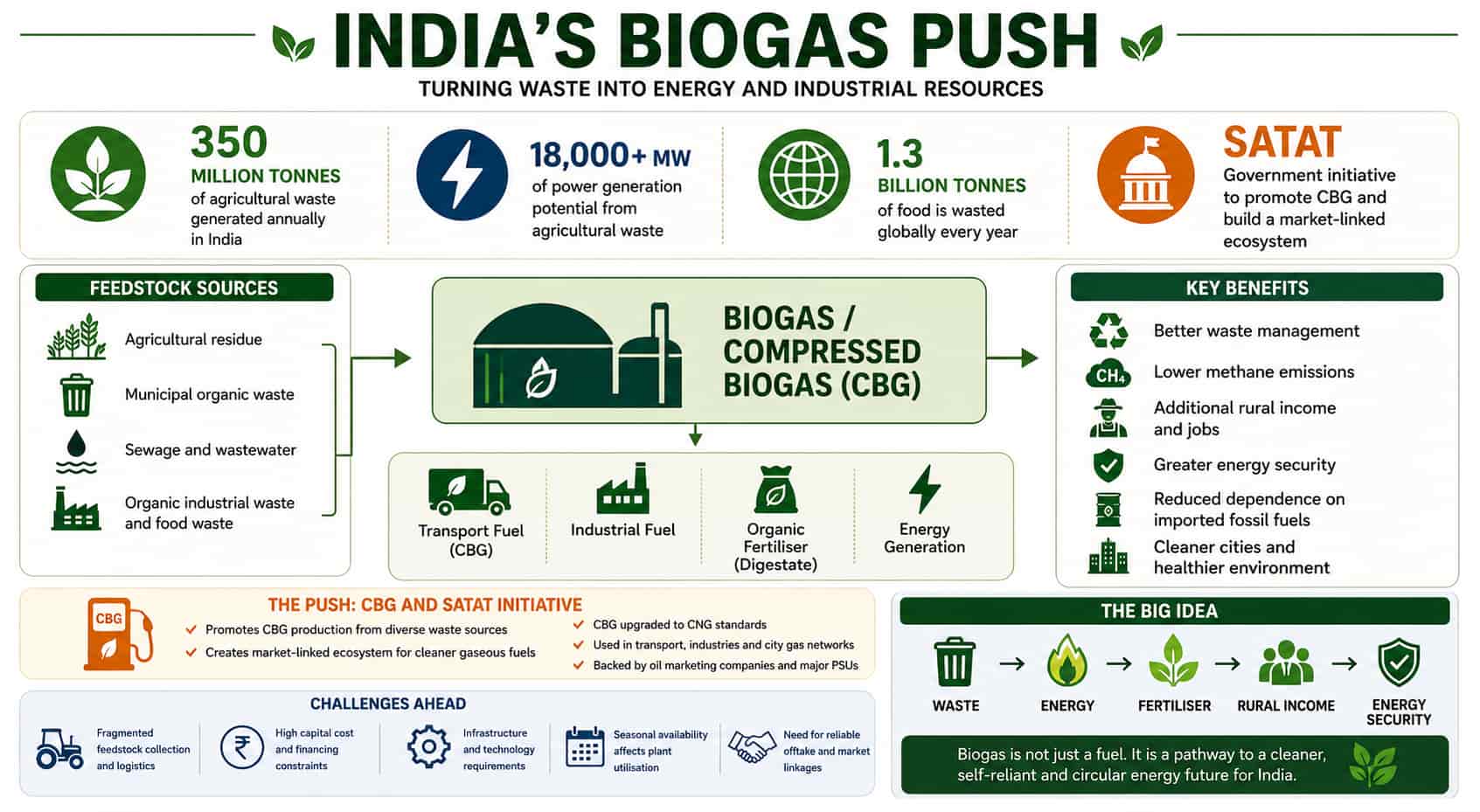
According to the Government of India's estimates, India generates 350 million tonnes of agricultural waste annually and has the potential to generate over 18,000 MW of power. Industry estimates suggest that India has one of the world’s largest biomass bases, creating long-term potential for bioenergy development if collection and processing ecosystems improve at scale.
Globally, an estimated 1.3 billion tonnes of food produced for human consumption are wasted annually, and nearly one-third of biodegradable municipal solid waste is generated in household kitchens.
For years, however, much of this waste generated in India either remained underutilised or posed environmental risks through open dumping, methane emissions and crop burning. The growing focus on biogas now reflects efforts to convert these liabilities into usable energy and industrial inputs.
From waste management to energy infrastructure
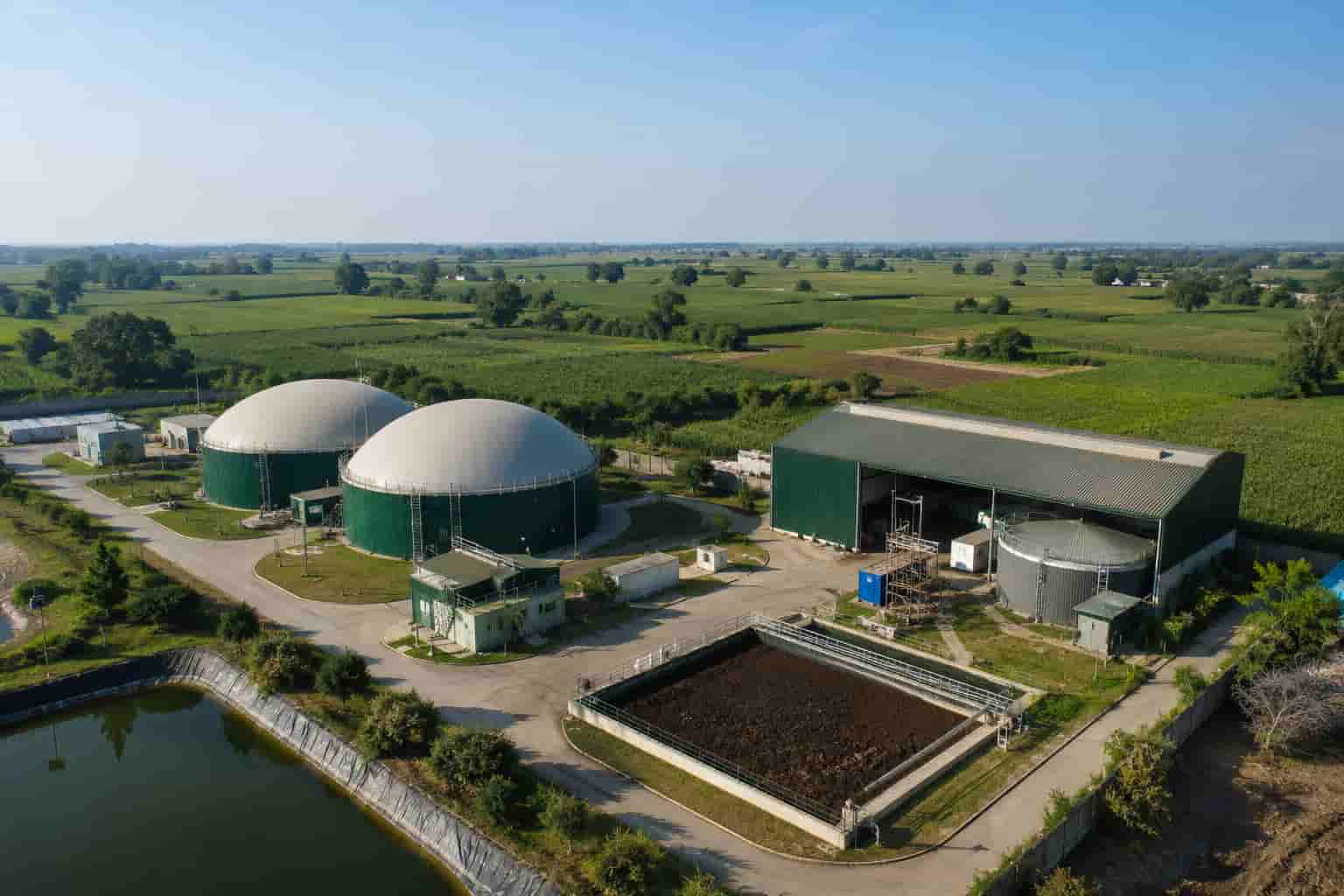
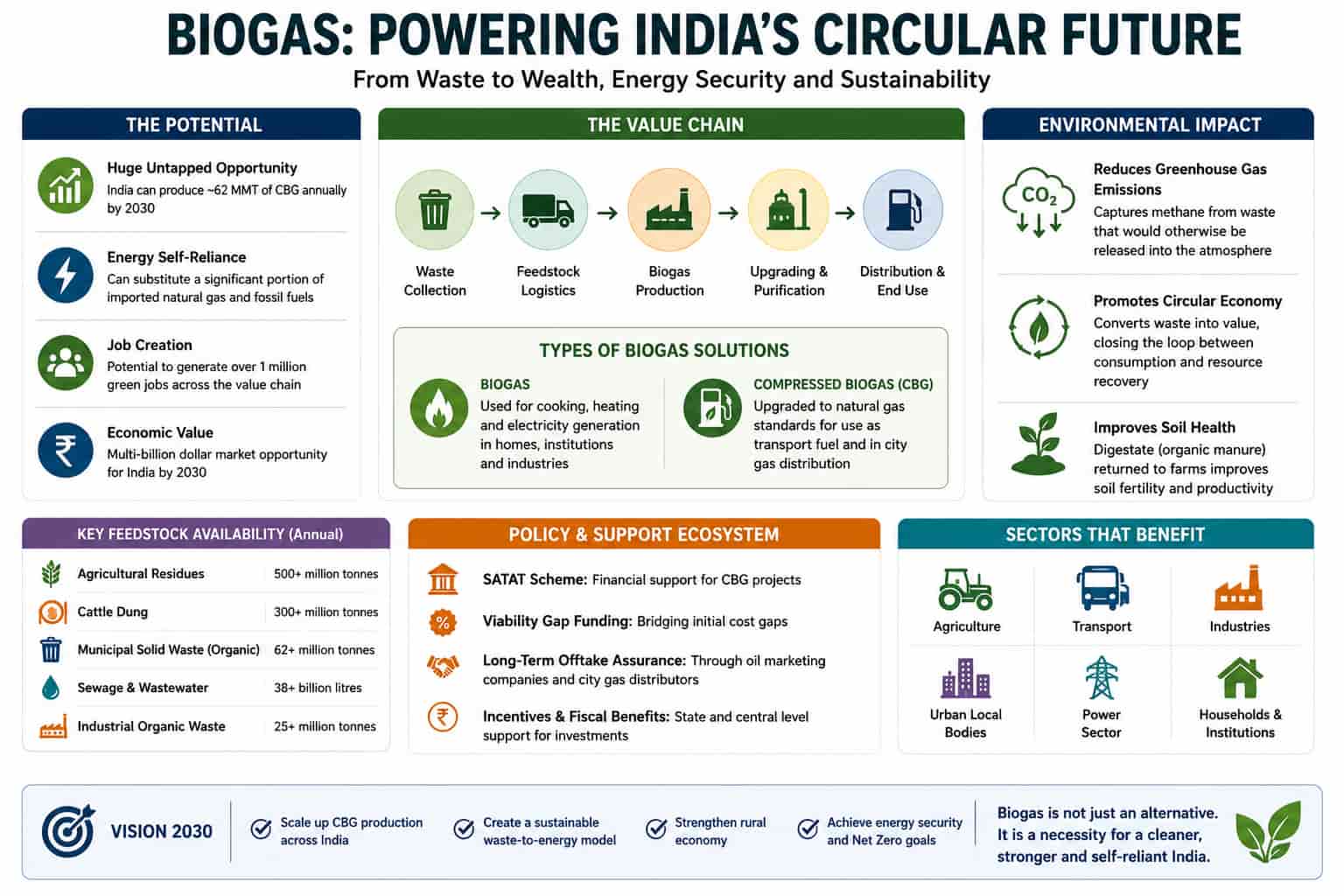
India’s biogas ecosystem is increasingly shifting from small, decentralised digesters to larger commercial and industrial projects. The government’s Sustainable Alternative Towards Affordable Transportation (SATAT) initiative, launched in partnership with oil marketing companies, aims to promote CBG production and build a market-linked ecosystem for cleaner gaseous fuels. Under the initiative, companies are encouraged to set up CBG plants using agricultural residue, municipal waste, sewage treatment output, and organic industrial waste.
The broader objective goes beyond fuel substitution alone. Policymakers increasingly view biogas as a means to reduce dependence on imported fossil fuels, improve waste management systems, lower urban pollution, generate rural employment and support circular-economy models.
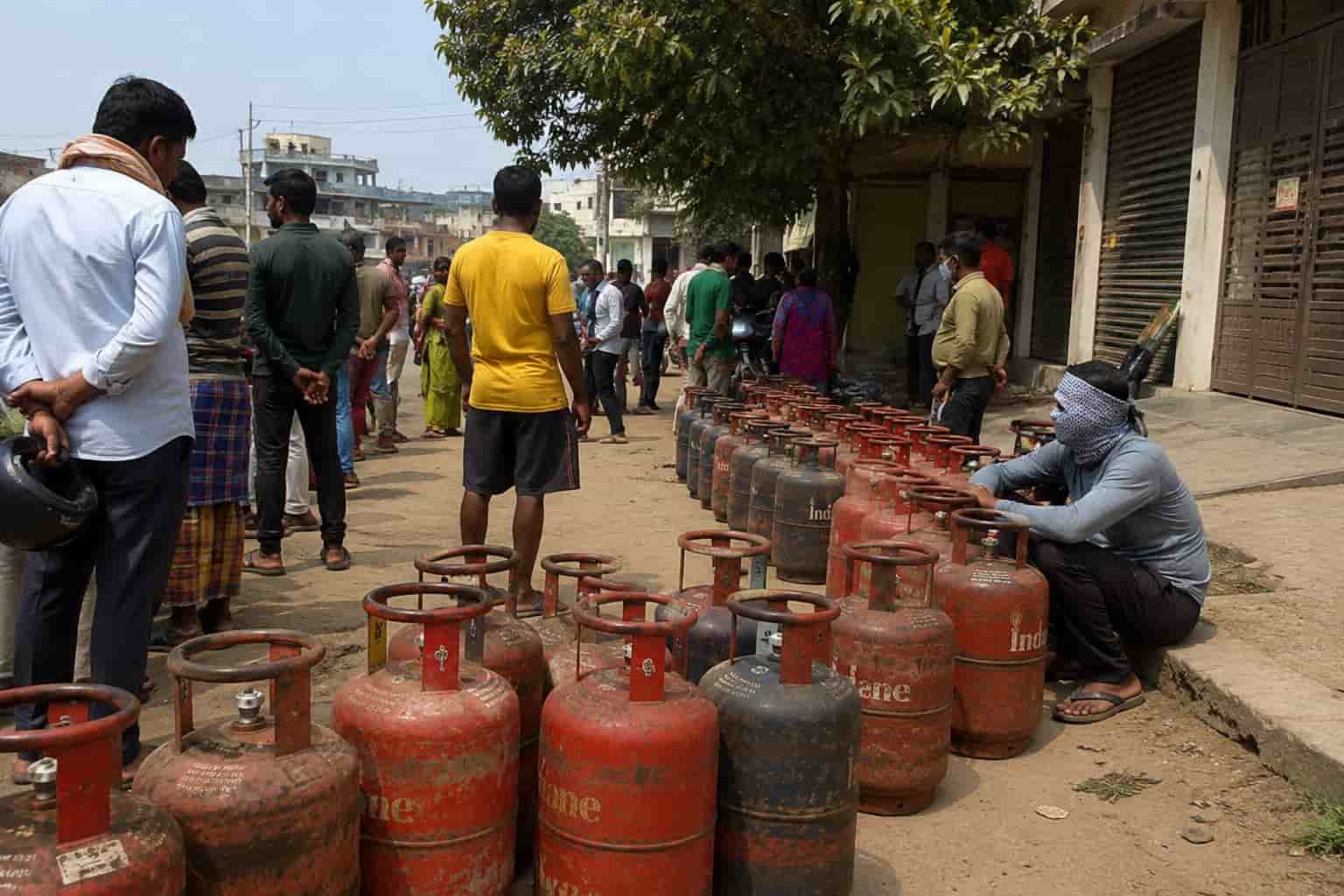
According to official government estimates, India continues to import substantial volumes of liquefied natural gas (LNG) and crude oil to meet rising energy demand. Replacing even a fraction of these imports with domestic biofuels could carry strategic value over time.
“Biogas is attractive because it addresses multiple problems simultaneously,” observed an energy-transition analyst associated with biofuel infrastructure projects. “It is not just about fuel production. It is also about waste management, methane reduction, farmers’ economics and decentralised energy systems.” This systems-level positioning is increasingly shaping policy thinking.
The push towards compressed biogas
The current momentum within the sector is increasingly centred around compressed biogas rather than conventional biogas alone.
CBG is purified biogas upgraded to standards comparable to compressed natural gas (CNG), making it suitable for transport and industrial applications. Once purified, it can be integrated into city gas distribution networks, industrial fuel systems, and commercial mobility infrastructure, significantly expanding the sector’s commercial relevance.
Major public-sector companies such as Indian Oil Corporation, Bharat Petroleum Corporation Limited, GAIL (India) Limited, and Adani Total Gas Limited have either announced investments or formed partnerships to develop compressed biogas infrastructure.
The participation of large energy companies is important because it signals that biogas is increasingly seen not merely as a rural-development initiative but as part of India’s evolving energy infrastructure ecosystem. Several city gas distribution operators are also exploring how CBG can gradually supplement natural gas supply systems.
Industry observers believe this transition is critical for biogas to evolve from scattered projects into a commercially scalable energy segment. “The sector is entering a phase where integration with mainstream energy infrastructure becomes essential,” noted an industrial analyst tracking gas-distribution ecosystems. “Without aggregation, logistics and guaranteed offtake systems, scaling biogas remains difficult.”
Agriculture could become central to the story
One of the most important dimensions of India’s biogas expansion lies in agriculture. Large quantities of crop residue continue to be burned across parts of northern India, contributing significantly to seasonal air pollution. Agricultural waste collection for biogas production could potentially create alternative revenue streams for farmers while reducing open-field burning.
This is especially relevant in states where residue disposal remains a recurring challenge. States such as Uttar Pradesh, Maharashtra and Punjab generate high volumes of agricultural residue.
Biogas proponents argue that organised biomass collection systems could gradually create rural supply chains covering crop residue procurement, waste segregation, transportation networks, and decentralised processing infrastructure. The digestate produced after biogas generation can also be used as an organic fertiliser, potentially improving soil health and reducing dependence on chemical inputs in some regions.
“India’s bioenergy story may ultimately depend as much on rural logistics as on energy technology,” said a consultant working on agricultural waste-management projects. “The challenge is not merely producing biogas but building reliable feedstock ecosystems.”
Infrastructure and economics remain the real test
Despite growing policy support, India’s biogas ecosystem continues to face significant structural constraints. Feedstock collection remains fragmented and inconsistent in many regions. Transporting agricultural residue and organic waste over long distances can quickly weaken project economics. Plant utilisation rates often depend heavily on seasonal waste availability and the efficiency of local logistics.
Biogas projects also remain capital-intensive relative to their scale, particularly when purification, compression, and distribution systems are included. Energy analysts argue that financing smaller and mid-sized projects remains difficult because lenders are often cautious about feedstock reliability and revenue visibility.
Infrastructure development is another major hurdle. Unlike solar or wind projects, bioenergy systems require continuous operational supply chains spanning waste collection, segregation, storage, transportation, and processing.
“There is a tendency to compare biogas with other renewable sectors purely on installed capacity,” observed a renewable-energy economist. “But biogas is fundamentally an infrastructure and logistics business as much as an energy business.” The distinction is important because it shapes the pace at which the sector can realistically scale.
Kerala and the urban waste opportunity
Kerala is increasingly emerging as one of the states aggressively experimenting with decentralised biogas systems, particularly in urban and semi-urban areas.
Cities such as Kochi have expanded biogas-linked waste management initiatives to reduce dependence on landfills and improve decentralised processing of organic waste. Municipal authorities, private operators, and technology providers are increasingly exploring smaller, distributed models capable of handling food and urban organic waste streams.
The state’s high population density and recurring waste-management challenges have made decentralised waste-to-energy solutions particularly relevant. Industry analysts believe that urban India could eventually become a major growth driver for biogas if municipal systems improve waste-segregation efficiency and strengthen collection infrastructure.
“Indian cities generate enormous quantities of organic waste every day,” noted an urban infrastructure consultant. “The long-term question is whether cities can efficiently transform that waste burden into a usable energy resource.”
The answer may ultimately depend on governance, segregation, discipline, and long-term operational planning rather than technology alone.
India’s energy transition is becoming more layered
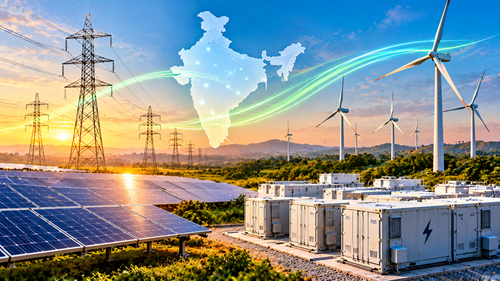
India’s clean-energy transition is no longer driven solely by solar parks, wind farms, and electric mobility. Increasingly, the transition is becoming more layered and interconnected, encompassing fuels, storage systems, waste ecosystems, industrial decarbonisation and circular-economy infrastructure.
Biogas occupies an interesting position within this evolving landscape because it connects agriculture, urban sanitation, transport fuels, energy security and emissions reduction.
At a time when countries globally are reassessing energy resilience and domestic resource utilisation, India’s growing focus on bioenergy reflects efforts to build cleaner energy systems that rely on locally available resources rather than imported fuels alone.
The significance of biogas, therefore, extends beyond renewable fuel production. It reflects a broader attempt to integrate waste streams into India’s evolving clean-energy economy.
Beyond fuel alone
India’s biogas expansion remains in its early stages relative to the scale of the opportunity. Several operational and commercial challenges still need to be addressed before the sector can achieve large-scale transformation. Yet the broader direction appears increasingly clear.
The country is gradually working to move biogas from the margins of renewable policy into mainstream energy and infrastructure planning. If successful, the sector could contribute not only to cleaner mobility and reduced emissions but also to waste management reform, rural income generation and domestic energy resilience.
For now, biogas may still seem secondary to the rapid expansion of solar energy, batteries, and electric vehicles. But transitions within energy systems are often shaped not only by headline technologies but also by the quieter infrastructure layers that support them.
India’s growing interest in biogas may therefore signal more than a search for another renewable fuel. It may be an early sign that the country is attempting to build a more circular and locally anchored clean-energy economy — one where yesterday’s waste gradually becomes tomorrow’s infrastructure.
Follow us on : X | LinkedIn | Facebook | Bluesky