
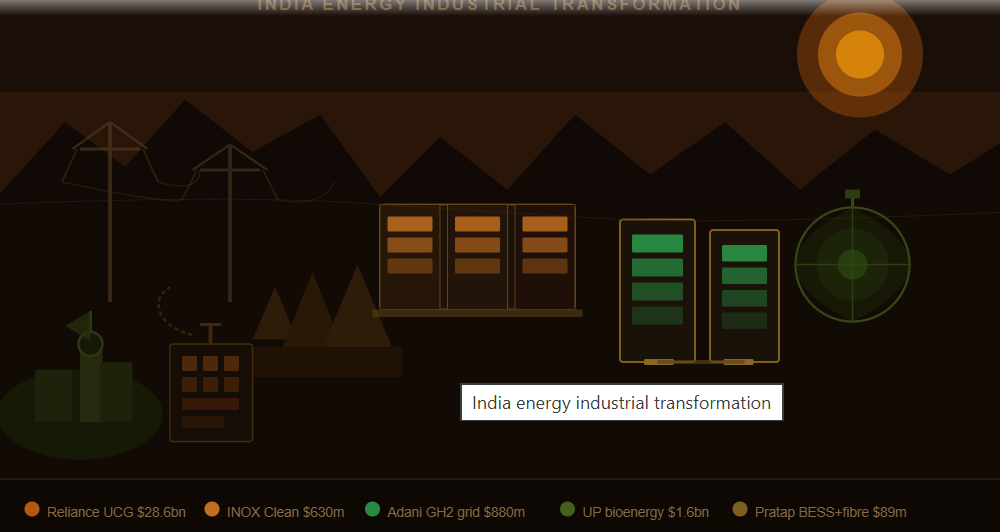
Reliance proposes $28.6bn underground coal gasification complex in Andhra Pradesh
Reliance Industries has proposed an investment of approximately ₹2.73 lakh crore (US$28.6bn) over 30 years to develop India's first integrated underground coal gasification (UCG) complex in Eluru district, Andhra Pradesh, using the Chintalapudi and Recherla coal blocks in coastal Andhra Pradesh recently secured through a Ministry of Coal e-auction.
The project will be developed across three phases, with the initial exploration and pilot phase scheduled from Q3 FY 2026-27 to Q4 FY 2027-28 at an investment of up to ₹3,000 crore ($314m).
The full investment remains subject to commercial viability following exploration results, an important qualifier that distinguishes this from a committed capital deployment. UCG involves injecting oxidants into underground coal seams to initiate in-situ combustion and gasification, with the resulting syngas — a mixture of hydrogen, carbon monoxide and methane — piped to the surface for industrial use without conventional mining.
The $28.6bn headline figure is the largest energy investment proposal India has seen in years, but the strategic logic matters more than the scale. Reliance's interest in coal gasification is not primarily about power generation — it is about industrial feedstock.
Syngas derived from UCG can be converted into methanol, ammonia, hydrogen and a wide range of petrochemical feedstocks that are directly adjacent to Reliance's core business in refining and petrochemicals.
India currently imports approximately 90% of its methanol requirements and a substantial share of its ammonia and urea, making coal-derived syngas a potential import-substitution feedstock at massive scale. The choice of coastal Andhra Pradesh — with access to the ports of Visakhapatnam and Kakinada — also creates optionality for export of syngas derivatives, particularly ammonia and methanol, should domestic demand not absorb full production.
UCG carries distinct technical and environmental risks that surface gasification does not. Subsurface combustion is harder to control, and groundwater contamination from uncontrolled burning or leakage of syngas constituents is the primary environmental concern — an issue that has constrained UCG development in Australia, South Africa and the United States despite favourable coal geology. India's high-ash coal adds further process complexity.
The 30-year investment horizon and Phase 1 focus on exploration and pilot work suggest that RIL is approaching this with appropriate commercial caution, making the US$314m Phase 1 commitment the more meaningful near-term signal than the US$28.6bn headline.
India's Ministry of Coal has established an ₹85 billion government incentive scheme for coal gasification projects, and with 300 billion tonnes of coal reserves — much of it too deep or sensitive for conventional mining — UCG has long been identified as a strategic pathway to utilise India's coal endowment more cleanly. Reliance's entry as a proponent of scale gives the technology's prospects in India meaningful industrial credibility for the first time.
INOX Clean Energy completes $630m Vena deal, building toward a 4GW operating base and 12 GW pipeline
INOX Clean Energy Limited, part of the INOXGFL Group, has completed the acquisition of Vena Energy India Holdings Pte Ltd for approximately ₹6,000 crore (US$630m), funded entirely through internal equity and refinancing without external debt.
The acquired platform — formerly part of Vena Group, a company backed by BlackRock-owned Global Infrastructure Partners — brings approximately 1 GW of operational renewable energy capacity alongside 1.7 GW of solar and wind capacity and 1.2 GWh of battery storage at advanced development stages, plus a further 2.7 GW solar and wind and 1.3 GWh BESS development pipeline.
Following the transaction, INOX Clean's operating and near-operational portfolio reaches approximately 4 GW, with a development pipeline exceeding 12 GW and 2.5 GWh of BESS capacity.
The transaction is structurally notable on two counts beyond its size. First, it represents a GIP-BlackRock exit from Indian renewable energy — a signal that global infrastructure funds that entered India's clean energy market during the 2015–2020 window are now finding liquidity by selling to domestic industrial conglomerates rather than through public markets or secondary fund transactions.
This ownership transition pattern — global capital building assets, Indian industrials consolidating them — is becoming a recognisable feature of India's renewable M&A landscape, with implications for how future developers structure their exit assumptions as they enter the Indian market. Second, the decision to fund a ₹6,000 crore acquisition entirely from internal resources signals INOXGFL Group's balance sheet confidence and strategic conviction at a level that many mid-sized industrial groups cannot match, and removes the refinancing risk and lender covenants that typically accompany leveraged acquisitions of this scale.
For INOX Clean, the Vena portfolio adds depth at multiple maturity stages simultaneously — operational cash flows from 1 GW, near-term revenue from 1.7 GW under advanced development, and a large pipeline from which to build an order book.
The 2.5 GWh total BESS pipeline is strategically important as India's grid-scale storage tender market accelerates; companies that combine operating renewable capacity with BESS development pipelines are better positioned for integrated FDRE and storage tenders than pure-play solar or wind developers.
INOXGFL's broader industrial background in cryogenic equipment and industrial gases also creates potential synergies with future hydrogen storage and handling applications — a longer-term option value embedded in this renewable energy expansion.
Adani Energy Solutions wins $880m Vizag green hydrogen transmission project
RECPDCL has handed over the Vizag Power Transmission SPV to Adani Energy Solutions following the company's success in a Tariff-Based Competitive Bidding process for the development of a ₹8,386 crore (US$880m) inter-state transmission system designed to serve proposed green hydrogen and green ammonia facilities in the Vizag area of Andhra Pradesh.
The project will be executed on a Build, Own, Operate and Transfer (BOOT) basis over a 30-month implementation schedule, and encompasses four 1,500 MVA 765/400 kV GIS substations at Pendurthi and Khammam-II, along with approximately 777 km of new 765 kV and 400 kV double-circuit transmission lines connecting Pendurthi to Srikakulam, Khammam-II to Warangal New, Khammam-II to Pendurthi, and Khammam-II to the existing Khammam substation. The SPV handover took place on 14 August 2026.
The strategic significance of this project extends well beyond the contract value. India's green hydrogen programme has generated an extensive landscape of investment commitments, policy targets and SECI offtake agreements, but enabling infrastructure — the transmission capacity needed to evacuate power at the scale required for large electrolysis-based hydrogen facilities — has remained largely absent from actual investment pipelines.
The award of a ₹8,386 crore transmission contract specifically designed for GH2/green ammonia load at Vizag means that enabling grid infrastructure is now progressing in parallel with planned production facilities — the first time this infrastructure sequence has been demonstrably locked in at scale in India. The 765 kV GIS substation specification is significant: GIS (Gas-Insulated Switchgear) substations require much less land than conventional air-insulated facilities, addressing one of the major land-constraint bottlenecks for transmission infrastructure in coastal Andhra Pradesh.
Andhra Pradesh is positioning itself as India's primary green hydrogen export hub, with planned facilities targeting combined production capacity exceeding 1 million tonnes per year of green ammonia and derivatives, linked to port infrastructure at Visakhapatnam and Krishnapatnam.
For that scale of production to be credible, the corresponding power evacuation infrastructure must be in place — and at electrolysis efficiencies of approximately 50–55 kWh per kilogram of hydrogen, 1 million tonnes of annual GH2 production would require roughly 50–60 GW of dedicated renewable generation, making the transmission question foundational.
Adani Energy Solutions' success in the TBCB process — a competitive mechanism that determines the developer on tariff grounds — also confirms that transmission investment for green hydrogen infrastructure is attracting genuine competitive interest from India's T&D sector, a necessary precondition for the GH2 ecosystem to scale without transmission becoming a binding bottleneck.
UP's $1.6bn bioenergy MoU haul signals India's largest CBG state finding its stride
The India Bioenergy & Tech Expo 2026 (IBET), organised by the Indian Federation of Green Energy in partnership with UPNEDA, concluded with investment commitments and MoUs worth ₹15,000 crore (US$1.6bn), spanning compressed biogas (CBG), ethanol, biomass, biodiesel, bio-mobility, biomaterials and sustainable aviation fuel.
The headline MoU figure arrives against a backdrop of real operational traction: approximately ₹3,500 crore (US$367m) has already been committed to Uttar Pradesh's CBG sector, generating around 25,000 jobs, with 70-80 more CBG plants expected to come up in the state.
Agriculture Minister Surya Pratap Shahi and Energy Minister AK Sharma anchored the proceedings, with Sharma emphasising CBG's potential to convert agricultural residues into productive economic assets at village level.
The UP bioenergy story is among the least-reported structural developments in India's energy transition, yet it is substantively more advanced than most comparable state-level energy investment narratives.
The combination of India's largest agricultural output base — with extensive paddy straw, sugarcane bagasse and dairy-sector feedstocks — with an active state government that has used UPNEDA to create a functional project facilitation mechanism has produced a CBG sector that is operational at scale, not merely aspirational.
IFGE Director General Sanjay Ganjoo characterised India's bioenergy opportunity as having moved from policy ambition to real investment and enterprise opportunity, with the next phase centred on scaling projects, strengthening feedstock supply chains and building bankable business models — a maturity of framing that reflects genuine sector development rather than promotional optimism.
The broadening of the expo's scope beyond CBG into biomaterials and sustainable aviation fuel is analytically significant. CBG has been UP's bioenergy anchor product — a CNG substitute that fits neatly into existing gas distribution and transport infrastructure.
The emergence of SAF and biomaterials as expo themes indicates that the state's bioenergy ecosystem is beginning to diversify toward higher-value derivative products, consistent with global bioenergy industry evolution where primary bioenergy products (biogas, bioethanol) increasingly serve as feedstocks for chemical and materials applications rather than end products in themselves.
The farmer-centred session on income opportunities also reflects a policy maturation: bioenergy in India has historically been developer- and investor-centric; embedding the farmer as feedstock supplier and income beneficiary within the commercial model is the structural adaptation that determines whether rural bioenergy scales sustainably or remains fragile.
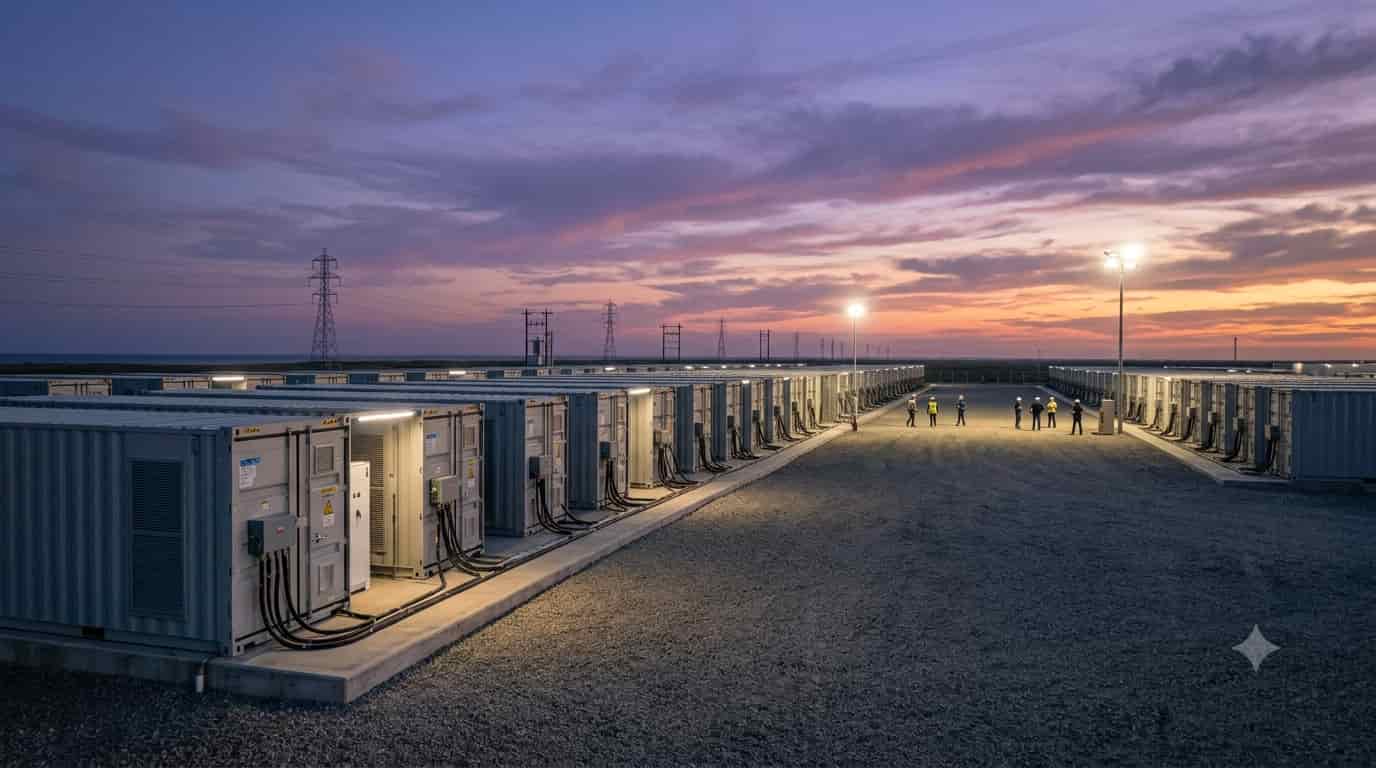
Pratap Group opens $89m dual BESS and optical fibre complex at Pithampur
Pratap Group has inaugurated two state-of-the-art manufacturing facilities at Pithampur's Smart Industrial Park in Madhya Pradesh, with a combined investment of approximately ₹850 crore ($89m) and total proposed investment of ₹1,140 crore (US$119m), inaugurated jointly by Madhya Pradesh Chief Minister Dr. Mohan Yadav and Union Minister Gajendra Singh Shekhawat.
The first facility, operated by Corsis Industries, is an advanced optical fibre manufacturing plant with annual capacity of 5.5 million fibre kilometres, built with German technology collaboration and targeting broadband, 5G, FTTH, data-centre and defence connectivity markets. The second, operated by Voltters Technologies, is a 3 GWh Battery Energy Storage Systems and lithium-ion battery manufacturing facility built with Industry 4.0 automation and robotic assembly, also developed with German technology. Together, the two facilities are creating 800–1,000 direct and indirect employment opportunities.
The co-location of optical fibre and BESS manufacturing in the same industrial park is more deliberate than incidental.
The infrastructure requirements of digital India — 5G deployment, data centres, smart cities and AI computing clusters — and the energy infrastructure requirements of India's renewable transition are structurally interdependent: data centres need reliable power storage; 5G base stations need both connectivity backhaul and backup power; renewable generation requires both BESS for grid integration and fibre-based SCADA and monitoring systems.
A manufacturer that can supply both from a single production base has a supply-chain co-ordination advantage in bundled infrastructure contracts, particularly as large government procurement programmes — BharatNet Phase III, PM-WANI, and state-level smart city programmes — increasingly package connectivity and power infrastructure together.
The German technology collaboration for both facilities — in optical fibre manufacturing, where German precision equipment makers lead in draw-tower and cabling technologies, and in BESS, where German industrial automation and battery assembly expertise is well-regarded — brings a quality and process-validation credential that distinguishes this investment from more generic domestic manufacturing announcements.
Pithampur itself is one of India's better-positioned industrial clusters: located near Indore with established auto, pharma and manufacturing ecosystems, good road connectivity, and MPIDC infrastructure support.
The Pratap Group's total proposed investment of ₹1,140 crore at Pithampur suggests further phases beyond the two facilities now commissioned — a commitment that positions the group as a significant mid-scale industrial anchor in MP's clean energy and digital manufacturing landscape.