
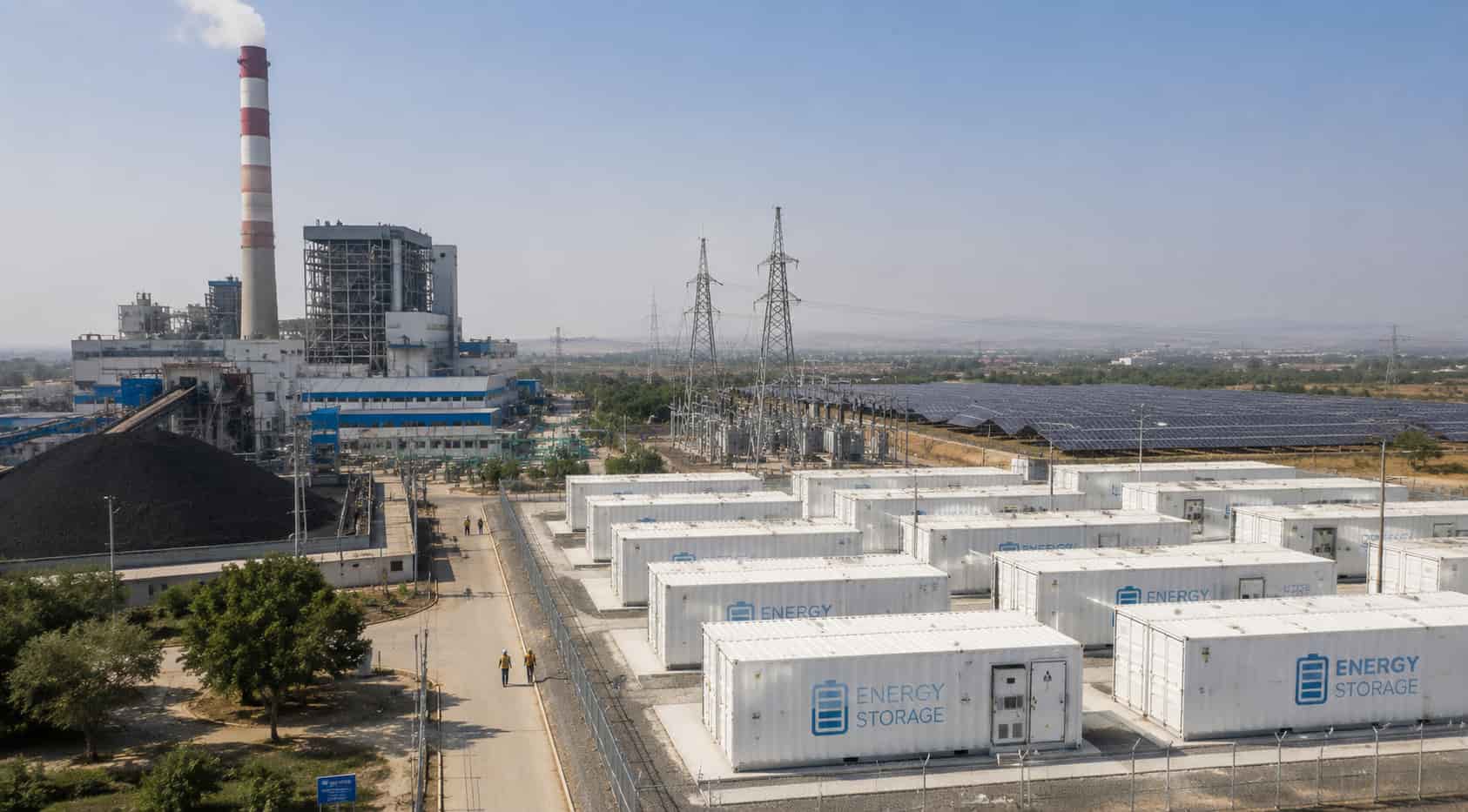
India's renewable energy expansion is confronting a structural barrier that has little to do with panels, turbines or financing. The obstacle is coal — or rather, the physical limits of what coal-fired power stations can do.
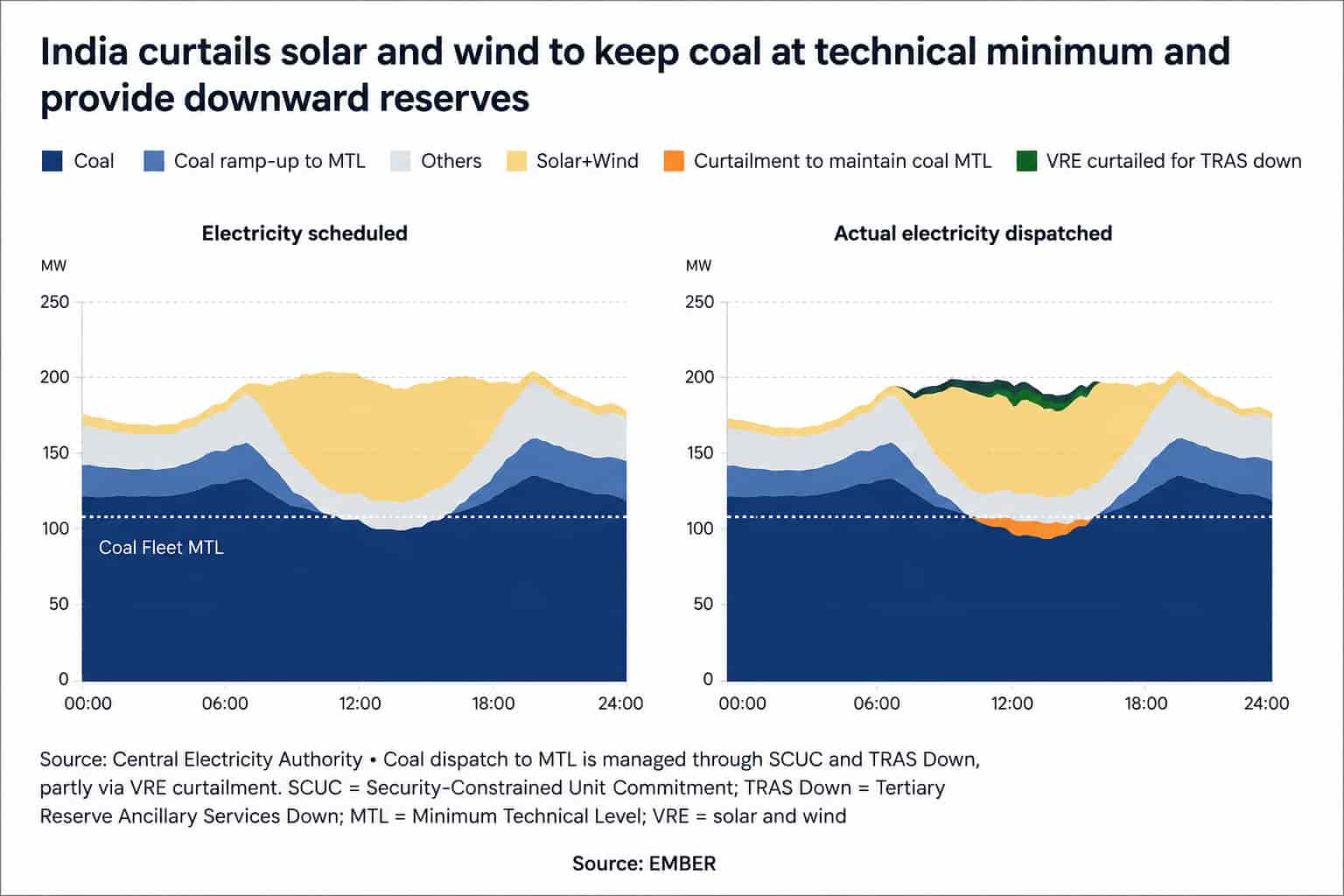
As solar output surges through midday hours, India's thermal fleet is being pushed toward an operating floor below which it cannot safely go. When it reaches that floor, the only way to keep the grid stable is to waste the very clean electricity the country has invested billions to produce.
A midday problem hiding inside annual averages
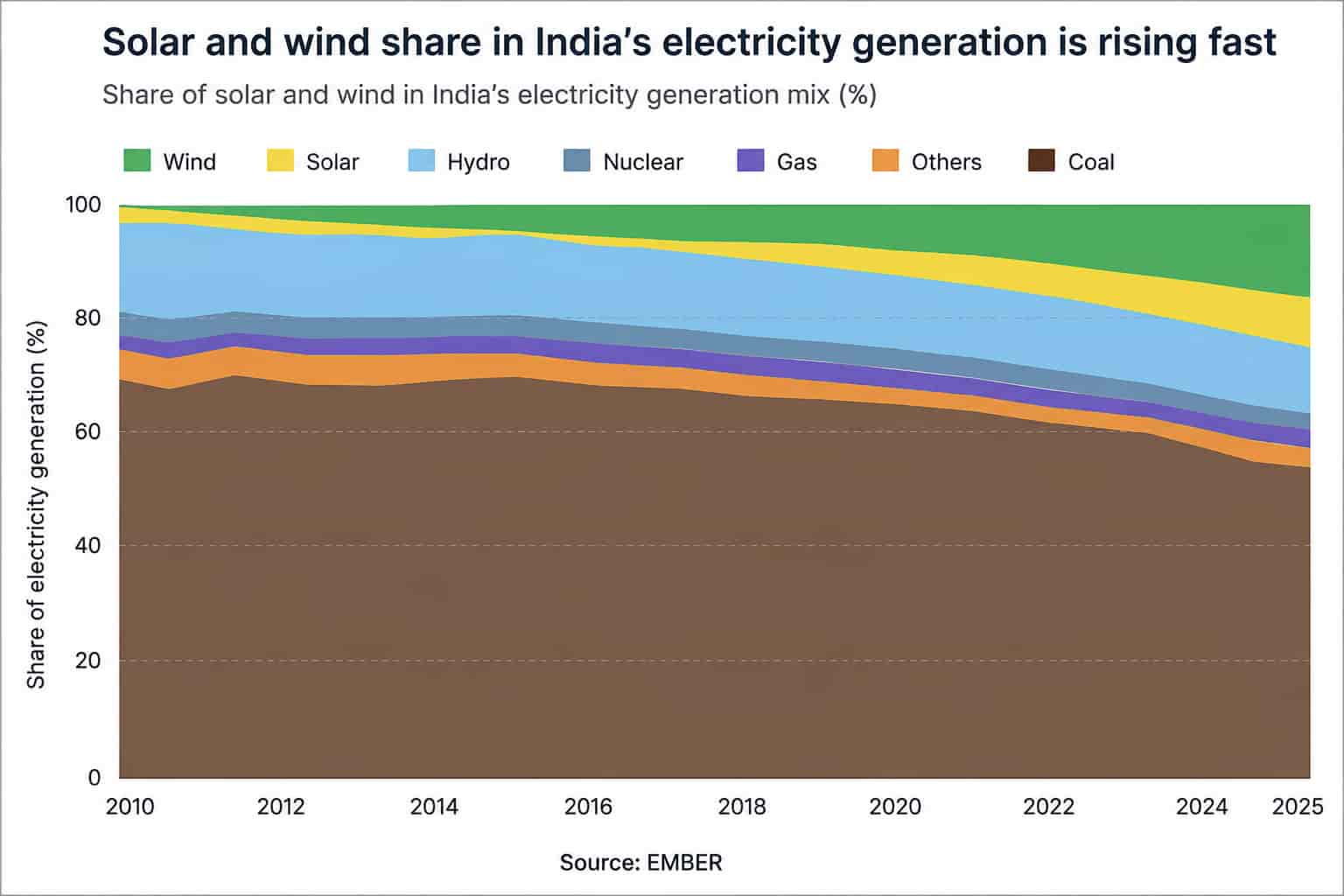
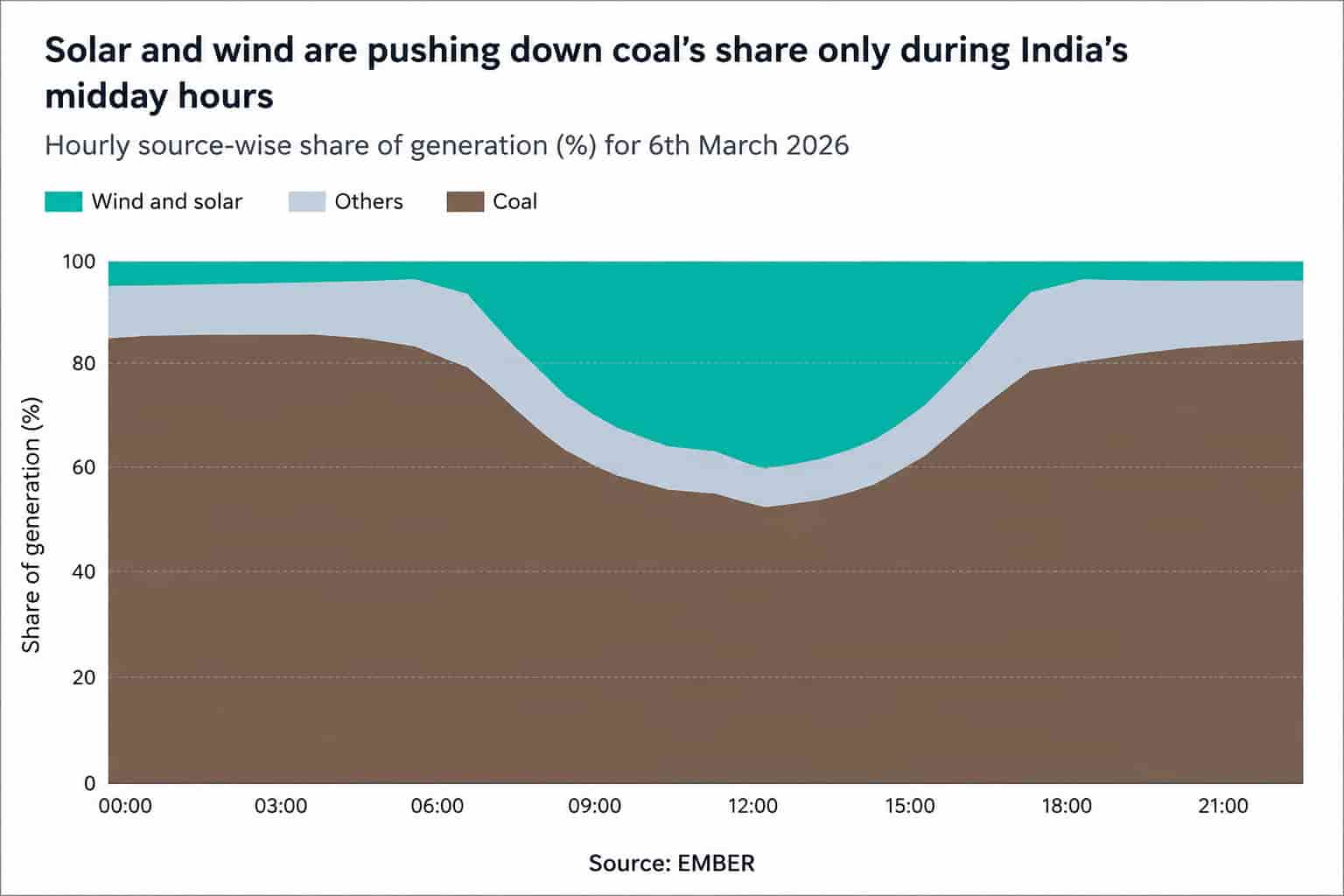
Solar and wind together supplied around 17% of India's electricity on an annual average basis in 2025, a figure that can appear manageable. But annual averages obscure the real stress point. At peak midday output, solar and wind's combined share of total generation reached 41% in March 2026 — up six percentage points in a single year, driven by roughly 46 GW of solar capacity added in that period. The grid is not designed around averages; it is designed around moments, and those moments are becoming more demanding every year.
The operational pattern that results is stark. On 6 March 2026, coal supplied 87% of India's electricity at midnight. Six hours later, as solar output peaked, coal's share had fallen to 54% — a reduction of around 49 GW. By evening, as solar collapsed and demand held firm, coal had to climb back to 85%, a recovery of 51 GW in just three hours.
Coal, a technology built for stable, high-output operation, is now being cycled up and down every single day at speeds and depths that approach its mechanical limits.
When the floor becomes a ceiling
Under India's grid code, coal plants are not required to operate below 55% of their rated capacity. This minimum technical load is a physical constraint: below that threshold, stable combustion cannot be maintained.
 As solar has grown, more and more coal plants are being scheduled at or near that floor during midday hours. By April 2026, coal was breaching its collective minimum technical load in more than half of all midday dispatch intervals.
The consequences are twofold. First, once coal reaches its floor, it can no longer provide downward flexibility — the reserve capacity the grid uses to absorb unexpected surges in renewable generation. Second, to bring coal back up to its minimum operating level when scheduled below it, the grid operator must cut something else. That something is solar and wind.
An analysis published by Ember, the energy research organisation, quantifies the cost.
Across FY 2025–26, coal minimum technical load constraints created around 2.1 TWh of renewable curtailment — equivalent to 1.3% of total renewable generation and roughly ₹629 crore ($7 million) in foregone electricity value.
By April 2026, renewable curtailment was meeting 37% of total down-regulation requirements, measured at 816 million units, up from near zero just twelve months earlier. On individual days the volumes are already striking: on 21 March 2026, Ember estimates that more than 7 GW of solar and wind was curtailed at a single point simply to bring coal back above its technical minimum.
"Solar and wind curtailment is becoming a visible part of India's real-time grid balancing," a senior energy analyst at Ember has noted. "The volumes are already noticeable and rising. Without sufficient flexibility, including storage, this could become a constraint on the next phase of renewable energy growth."
This is not merely an operational inconvenience. The curtailment is concentrated entirely within the solar window — typically between 09:00 and 15:30. It does not reflect congestion or weak demand. It reflects a structural mismatch between the pace of solar addition and the flexibility of the thermal fleet being asked to accommodate it.
The 10 GWh gap
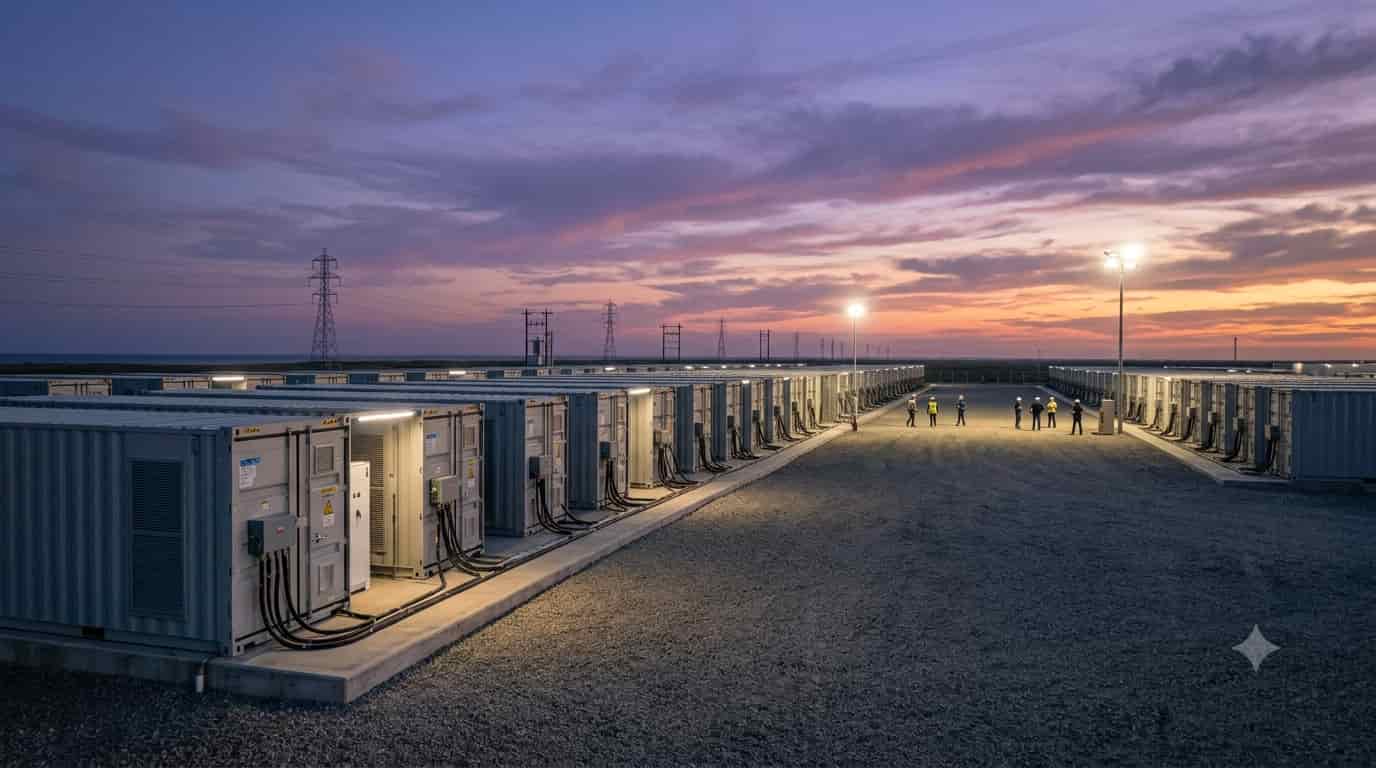
The analysis estimates that around 10 GWh of battery storage, charging during the midday surplus window, would have been sufficient to prevent most of the curtailment observed in the most constrained months of FY 2025–26.
Battery energy storage systems (BESS) serve two functions here that no other technology currently provides simultaneously.
During surplus solar hours, they absorb generation that would otherwise be curtailed, effectively creating synthetic demand. Once coal has reached its minimum technical level, they provide the downward reserves that coal can no longer supply, absorbing further surges without requiring renewable generation to be backed down.
 As Indoen Energy has previously reported in its coverage of India's solar boom entering a new phase of storage and grid challenges, the gap between renewable ambition and grid flexibility has been widening for some time. The Ember analysis now provides granular data confirming that the problem has moved from theoretical concern to operational reality.
India has already demonstrated that large-scale BESS can be built rapidly. Adani Green Energy commissioned a 3.37 GWh battery storage project at Khavda in Gujarat in May 2026, completing construction within ten months of commencement on site.
India's first regulated utility-scale standalone BESS, a 20 MW / 40 MWh facility at Kilokari in Delhi, was commissioned in April 2025 and placed under automatic generation control within weeks. The technology pipeline is real. Physical deployment is not the constraint.
Connectivity rules are the new bottleneck
What is constraining the most valuable deployment of BESS is the regulatory framework governing how storage projects connect to the inter-state transmission system.
Under the General Network Access framework, BESS projects seeking access to transmission capacity during non-solar hours are required to install commensurate co-located renewable generation before long-term grid charging is permitted. Until that generation is commissioned, grid charging is treated as a temporary concession rather than a standard operating mode.
This condition creates a practical paradox. A battery that charges from grid surplus during solar hours — precisely the operation that reduces curtailment and provides downward reserves — is treated under the same restriction as a battery drawing power through a constrained line at night. The two operations are categorically different in their impact on the grid, but the current rules treat them as equivalent.
"The rules being written now will decide whether the battery pipeline becomes useful operational storage or gets constrained by a framework designed for generation evacuation rather than flexible grid operation," a policy adviser familiar with the sector observed. The concern is not hypothetical: requiring developers to commission additional renewable generation before BESS can operate with full grid access adds months to project timelines — months during which curtailment worsens and system stress accumulates.
India's Day Ahead Market already provides a clear price signal.
 Electricity prices fall to around ₹0.1 per kWh (that's US$1.06 for 1,000 kWh) during midday surplus periods and rise to ₹10–20 per kWh (that's US$106 to US$212 for 1,000 kWh)during evening peaks. A battery free to charge from grid surplus at noon and discharge at peak can earn a commercial return while simultaneously solving a grid problem.
The current connectivity condition, by tying grid charging to co-located generation, reduces a battery's ability to respond to system-wide signals and weakens the investment case for merchant storage at scale.
The coming crunch
The pressure will not ease on its own. When October and November 2026 arrive — seasonally the most constrained months, when post-monsoon solar coincides with reduced demand — the solar fleet will be larger still.
If battery storage does not come online at scale before then, curtailment volumes will exceed what was seen in 2025. The structural problem has not changed; only the scale of the solar generation pressing against coal's operating floor has grown.
Resolving it requires not just deploying batteries but ensuring that the connectivity rules allow them to operate as the grid needs them to.