
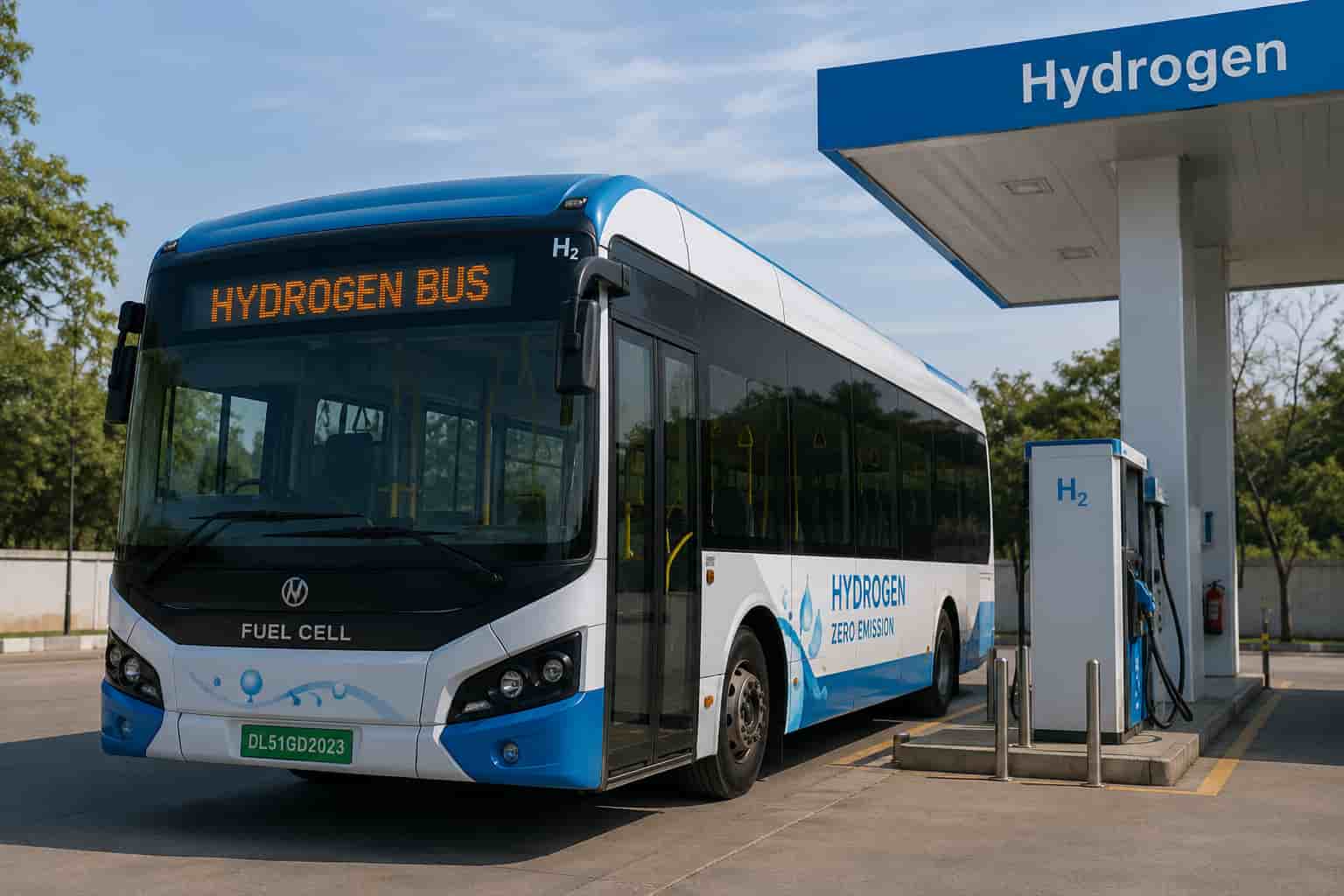
On a recent visit to Delhi, I found myself waiting at a busy bus terminal when a vehicle pulled in with something missing. There was no familiar diesel rumble, no plume of exhaust smoke and none of the vibrations usually associated with large city buses. Most passengers appeared not to notice, but the bus represented a glimpse of a technology that India hopes could play a larger role in its transport future.
The vehicle was powered by hydrogen fuel cells, one of a growing number of pilot projects that are bringing hydrogen mobility from policy papers to Indian roads. At the same time, Indian Railways is preparing to introduce hydrogen-powered trains on selected routes, broadening the country's clean transport ambitions beyond battery-electric vehicles.
What makes these vehicles different is largely invisible to passengers. Rather than burning diesel, hydrogen fuel-cell buses produce electricity onboard through a chemical reaction between hydrogen and oxygen, emitting little more than water vapour. The vehicle I saw carried four roof-mounted hydrogen cylinders of nearly 30 kilograms each, enough to provide a range of about 350 kilometres. With refuelling taking roughly ten minutes, compared with much longer charging times for large battery-electric buses, proponents see hydrogen as a promising option for heavy-duty transport.
The timing is significant. As India seeks to improve urban air quality, reduce carbon emissions and cut dependence on imported fossil fuels, policymakers and industry leaders are exploring whether hydrogen can complement battery-electric mobility. While electric cars, scooters and metro systems have dominated the clean transport conversation, hydrogen is increasingly being considered for applications where long range, heavy loads and rapid turnaround times are critical.
The projects remain small in scale and face significant economic and infrastructure challenges. Yet their emergence signals that India's clean mobility transition is beginning to widen. The question is no longer whether hydrogen can power buses and trains, but whether it can do so at a cost and scale that makes commercial sense.
The rollout of hydrogen fuel cell buses in Delhi’s Central Vista area by Delhi Metro Rail Corporation (DMRC), in collaboration with Indian Oil Corporation Limited (IOCL) and Tata Motors, marks one of India’s earliest visible attempts to introduce hydrogen into mainstream public transport. The initiative arrives at a time when India is attempting to reduce urban pollution and fossil-fuel dependence while strengthening energy security and building domestic clean-energy industries.
According to a recent media interaction, hydrogen-powered vehicles are broadly classified into two categories — hydrogen internal combustion engine (ICE) vehicles and hydrogen fuel cell vehicles. While hydrogen ICE vehicles avoid carbon dioxide emissions, they still emit nitrogen oxides (NOx) and are therefore not considered fully zero-emission systems globally. Hydrogen fuel-cell vehicles, by contrast, generate electricity electrochemically and are widely regarded as zero-emission vehicles.
The larger question, however, is whether hydrogen mobility can eventually move beyond pilot programmes and evolve into commercially scalable transport infrastructure. The answer may shape not only India’s future mobility systems, but also the trajectory of its broader industrial and energy transition.
Energy analysts believe India’s hydrogen bus programme is less about immediate large-scale deployment and more about beginning the long process of ecosystem familiarisation.
“Hydrogen mobility in India is currently at the demonstration phase rather than the commercial scale phase,” said an energy-transition consultant associated with clean mobility projects. “However, demonstration projects are important as they help policymakers, operators, and energy companies understand real-world operational economics.”
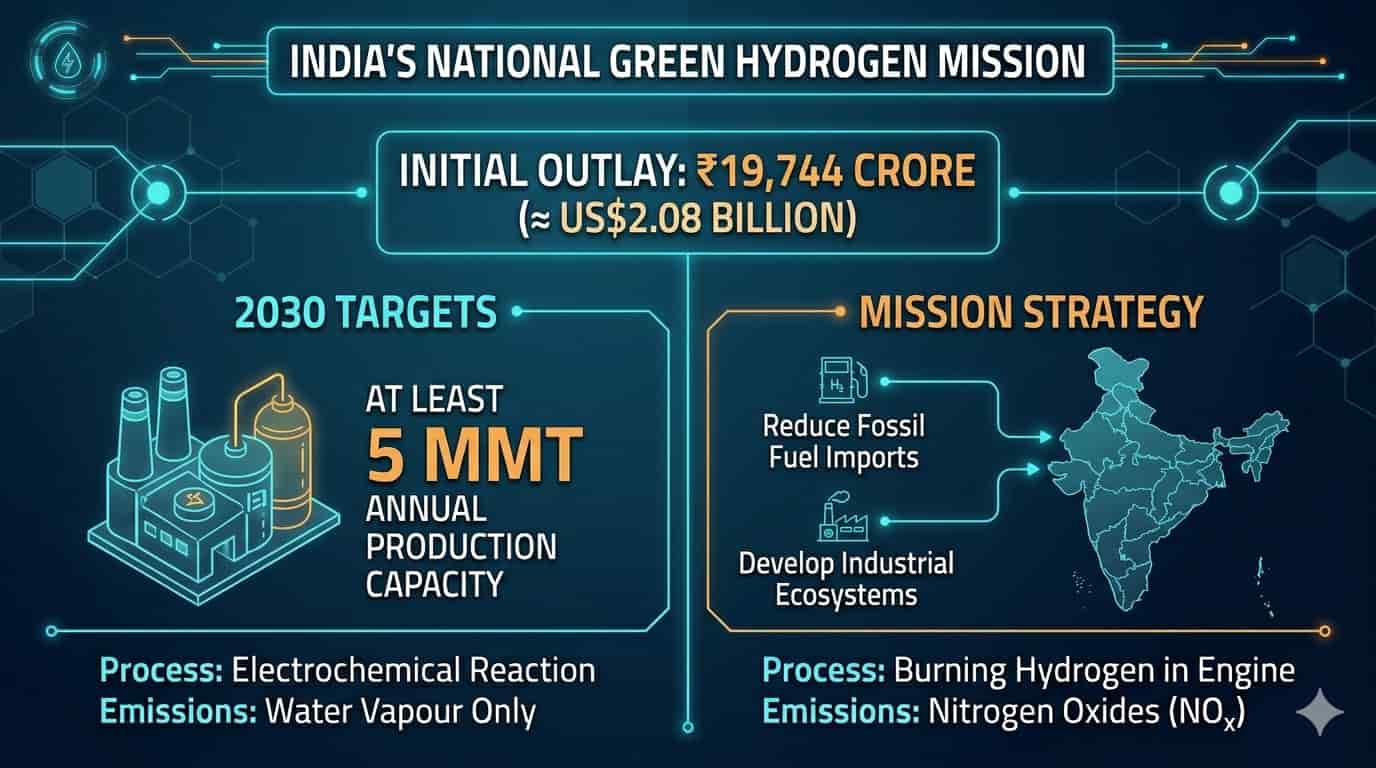
- India's hydrogen mobility mission: Driving energy security and decarbonisation.
India’s hydrogen push is linked to energy security
Importantly, the hydrogen bus initiative is unfolding alongside India’s broader push for green hydrogen development. In 2023, the Government of India formally launched the National Green Hydrogen Mission with an initial outlay of ₹19,744 crore (≈ US$2.08 billion) to position India as a major global hub for green hydrogen production, use, and export.
According to the Ministry of New and Renewable Energy (MNRE), the mission targets developing at least five million metric tonnes of annual green hydrogen production capacity by 2030 alongside associated renewable energy expansion. The larger motivation, however, extends beyond transport alone.
India remains heavily reliant on imported fossil fuels, particularly crude oil and natural gas. Policymakers increasingly view green hydrogen as a strategic tool to reduce long-term import dependence and support decarbonisation in difficult-to-abate sectors such as refining, fertilisers, steel, shipping, and heavy transport.
Hydrogen mobility is therefore one component of a much larger industrial and energy-security strategy. The ecosystem supporting Delhi’s hydrogen buses is also beginning to extend beyond the vehicles themselves.
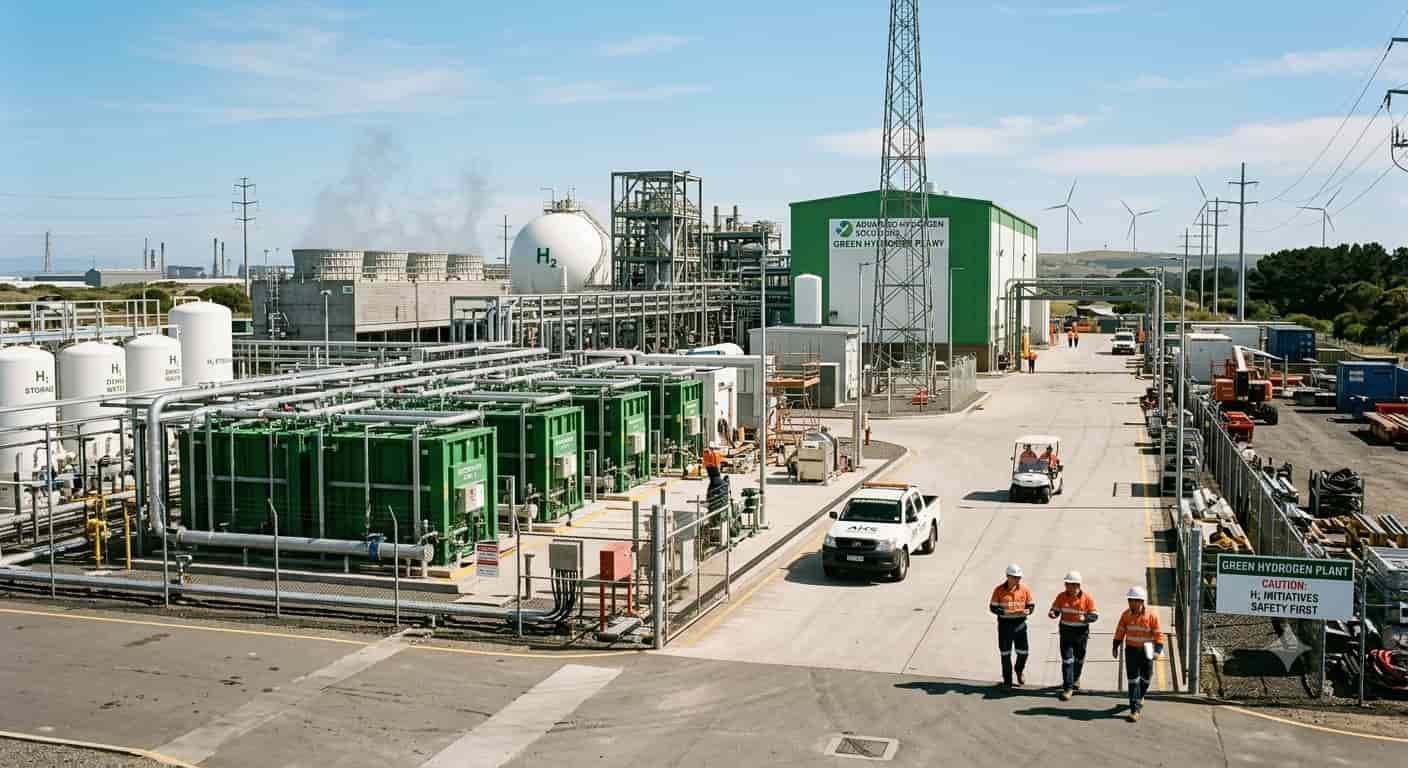
A hydrogen dispensing facility in Faridabad is producing green hydrogen through electrolysis powered by solar photovoltaic systems, reflecting early efforts to build an integrated clean-hydrogen supply chain. Industry estimates suggest that producing one kilogram of green hydrogen through electrolysis may require nearly 50 kWh of renewable electricity and roughly 9 litres of deionised water, underscoring the energy intensity and infrastructure requirements of hydrogen production.
At the same time, research institutions are exploring alternative pathways. Scientists at the Indian Institute of Science are developing technologies to produce hydrogen from biowaste, potentially opening new low-carbon production routes beyond conventional electrolysis.
“Hydrogen is not being positioned merely as a transport fuel,” noted an industrial policy analyst tracking clean energy developments. “The government increasingly views hydrogen as part of India’s broader clean-energy and industrial strategy.”
Why hydrogen buses garner attention
Battery-electric mobility has already gained visible momentum across India’s two-wheeler and three-wheeler segments as well as urban passenger vehicles. Yet hydrogen continues to attract attention because certain transport applications may require different technological solutions.
Heavy commercial vehicles, long-distance buses, mining trucks, and industrial freight systems often operate under demanding conditions, including long travel distances, continuous operating cycles, and limited tolerance for downtime.
Battery systems in such segments can become heavy, require long charging times, or create operational limitations, depending on route structures and payload requirements.
Hydrogen fuel cell vehicles may offer several advantages in these situations: faster refuelling, longer operating range, lower downtime, and lighter energy systems compared with those using extremely large battery packs.
Supporters therefore argue that hydrogen and battery-electric technologies may ultimately evolve into complementary rather than purely competing systems.
Indoen had earlier explored how hydrogen-powered passenger vehicles are gradually gaining traction in global clean mobility discussions, especially in regions where long driving ranges and rapid refuelling continue to offer strategic advantages.
“Battery-operated electric vehicles (EVs) may dominate urban passenger mobility,” said a mobility analyst associated with public transport projects. “But hydrogen could still emerge as an important solution for heavy-duty and continuous-use transport,” he added.
Delhi’s hydrogen bus pilot project is therefore closely monitored, as it may help identify where hydrogen is operationally and economically viable across India’s transport ecosystem.
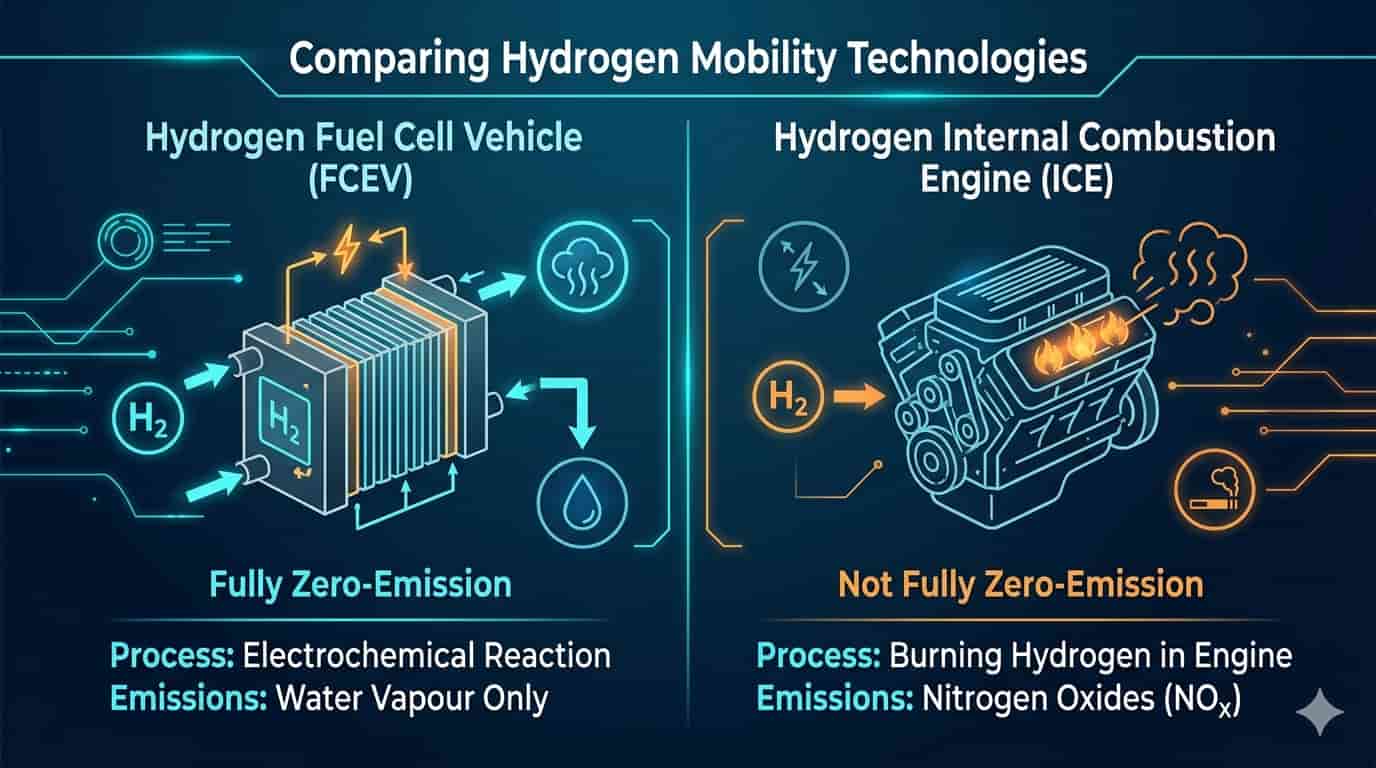
- Unlike other clean-energy pathways, hydrogen fuel cells produce no local NOₓ emissions.
Critics question the economics
Despite growing interest, hydrogen mobility continues to face serious economic and technological challenges. Green hydrogen production remains expensive compared to conventional fossil fuels. Producing hydrogen through electrolysis requires significant electricity input, and the economics improve only when affordable renewable energy becomes widely available.
Infrastructure remains one of hydrogen mobility’s biggest challenges. Unlike petrol stations or EV charging networks, hydrogen refuelling systems require specialised storage, transportation, dispensing, and safety infrastructure, making large-scale deployment capital intensive. Critics therefore argue that hydrogen mobility may remain commercially unviable for mass-market passenger transport in the near term.
Some analysts also note that battery-electric systems are already scaling rapidly, supported by falling battery prices, expanding charging infrastructure, and improving manufacturing ecosystems.
“Hydrogen mobility still faces a difficult commercial path,” observed an energy economist studying transport decarbonisation. “The challenge is not whether the technology works. It is whether it can compete economically at scale.”
Yet supporters counter that emerging technologies often seem expensive in their early deployment phases, before infrastructure and manufacturing ecosystems mature. They point out that solar power was once considered commercially unviable until scale, policy support, and manufacturing improvements dramatically transformed its economics.
International developments offer mixed signals
Globally, hydrogen mobility has yielded mixed yet important lessons. Japan and South Korea remain among the strongest proponents of hydrogen transport systems. Japan has invested heavily in hydrogen fuel cell vehicles and refuelling infrastructure as part of its long-term energy strategy. Companies such as Toyota Motor Corporation have continued to develop hydrogen fuel cell technologies despite global EV momentum.
South Korea has likewise positioned hydrogen as a strategic industrial sector, with Hyundai Motor Company actively developing hydrogen-powered trucks, buses, and mobility systems.
In Europe, hydrogen deployment has focused more on industrial decarbonisation and heavy transport rather than on passenger cars alone. Countries including Germany and the Netherlands have experimented with hydrogen trains, buses, and logistics applications alongside broader renewable hydrogen projects.
The United States has seen growing investor interest in hydrogen hubs linked to industrial and energy transition infrastructure under recent federal clean energy programmes. However, global hydrogen adoption has also been slower than some early projections anticipated.
High infrastructure costs, technological competition from battery-electric systems, and uncertain commercial economics continue to shape deployment decisions worldwide. India, therefore, enters the hydrogen sector at a time when the technology remains promising yet commercially unsettled globally.
While India currently lags behind countries such as Japan, South Korea, and parts of Europe in hydrogen mobility infrastructure, policymakers increasingly view the country’s scale of renewable energy and industrial ambitions as potential long-term advantages in building a domestic hydrogen economy.
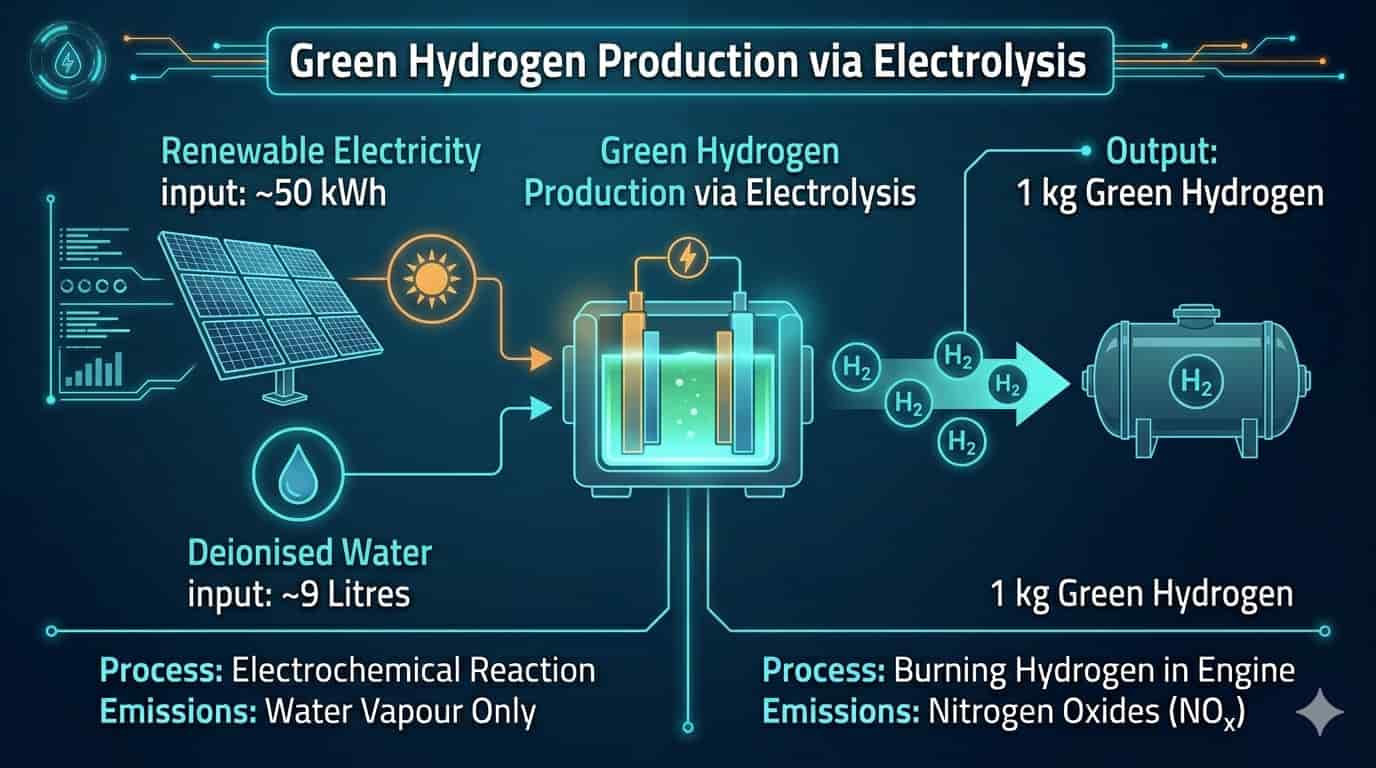
- The renewable electricity and water needed to produce one kilogram of green hydrogen.
Beyond buses to rail mobility
India’s hydrogen mobility experiments are also beginning to extend beyond road transport. In a recent development, the Railway Board approved the introduction of India’s first hydrogen-powered train on the Jind-Sonipat section under Northern Railway, signalling the country’s broader interest in exploring hydrogen-based public transport systems.
According to news reports, the 10-coach hydrogen fuel-cell train will run on a 1,200-kW propulsion system and is expected to be part of Indian Railways’ broader green mobility efforts. Like hydrogen buses, the train generates electricity on board through hydrogen fuel cells rather than relying on conventional diesel engines. The development signals that policymakers increasingly view hydrogen not merely as an automotive technology but as part of a larger clean-transport ecosystem spanning buses, railways, and industrial mobility.
The environmental debate
One of hydrogen mobility’s strongest advantages is its potential environmental benefits, provided the hydrogen is produced cleanly.
Hydrogen can be produced through multiple pathways: grey hydrogen from fossil fuels, blue hydrogen with carbon capture, or green hydrogen produced via electrolysis powered by renewable electricity. India’s current policy emphasis is primarily on green hydrogen, as it aligns with broader goals of renewable energy expansion.
According to the National Green Hydrogen Mission, the programme aims not only to reduce emissions but also to help India avoid substantial fossil-fuel imports while creating new industrial ecosystems.
Environmental analysts believe hydrogen could be particularly important in sectors where direct electrification remains difficult. Hydrogen buses, if powered by renewable-powered green hydrogen, could significantly reduce urban transport emissions and particulate pollution compared with diesel fleets in congested metropolitan areas. This is especially relevant for Indian cities, where air pollution remains a major public health concern.
Infrastructure will decide the future
Ultimately, hydrogen mobility’s future in India may depend less on technological viability and more on infrastructure development. The buses running in Delhi today remain part of a controlled ecosystem supported by dedicated hydrogen production and dispensing facilities. Scaling such systems nationwide would require: hydrogen production hubs, transport infrastructure, storage facilities, refuelling stations, safety protocols, and coordinated policy frameworks.
This means hydrogen mobility is unlikely to expand rapidly through market forces alone during the initial years. Instead, government support, industrial partnerships, pilot corridors, and strategic infrastructure investments may shape the pace of adoption. The role of public-sector companies could therefore remain significant during the sector’s formative stages.
India’s hydrogen journey is just beginning
The hydrogen buses may not immediately transform India’s transport landscape. Diesel buses will continue dominating public transport fleets for years. Battery-electric systems will likely expand much faster across several mobility categories. Yet the significance of hydrogen mobility may lie elsewhere.
These early deployments represent India testing technologies that could eventually become important within a diversified clean-mobility future. The country is effectively exploring whether hydrogen can occupy strategic niches within heavy transport, industrial logistics, and energy storage ecosystems.
More importantly, hydrogen mobility reflects a deeper shift within India’s energy transition. The conversation is gradually moving beyond simply replacing one vehicle type with another. Increasingly, it involves building entirely new industrial systems that link renewable energy, storage, fuels, manufacturing, infrastructure, and transport into interconnected clean-energy ecosystems.
Delhi’s hydrogen buses, therefore, represent more than a technological experiment on public roads. They may be among the earliest visible signs of India's efforts to lay the foundations for a broader clean-transport ecosystem whose implications could extend far beyond mobility alone.
For now, hydrogen buses moving through Delhi’s busy roads remain small experiments within a transport system still dominated by diesel and conventional fuels. Yet transitions often begin quietly before reshaping larger industrial realities. Much like solar power once seemed expensive and impractical before entering the mainstream, hydrogen mobility today stands at a similar crossroads between ambition and uncertainty. Whether it eventually transforms India’s transport ecosystem or remains confined to niche applications will depend not merely on technology, but on how effectively the country builds the infrastructure, economics, and policy frameworks needed to support hydrogen mobility at scale.