

Hitachi Energy's $209m transformer plant strengthens India's grid supply-chain ambitions
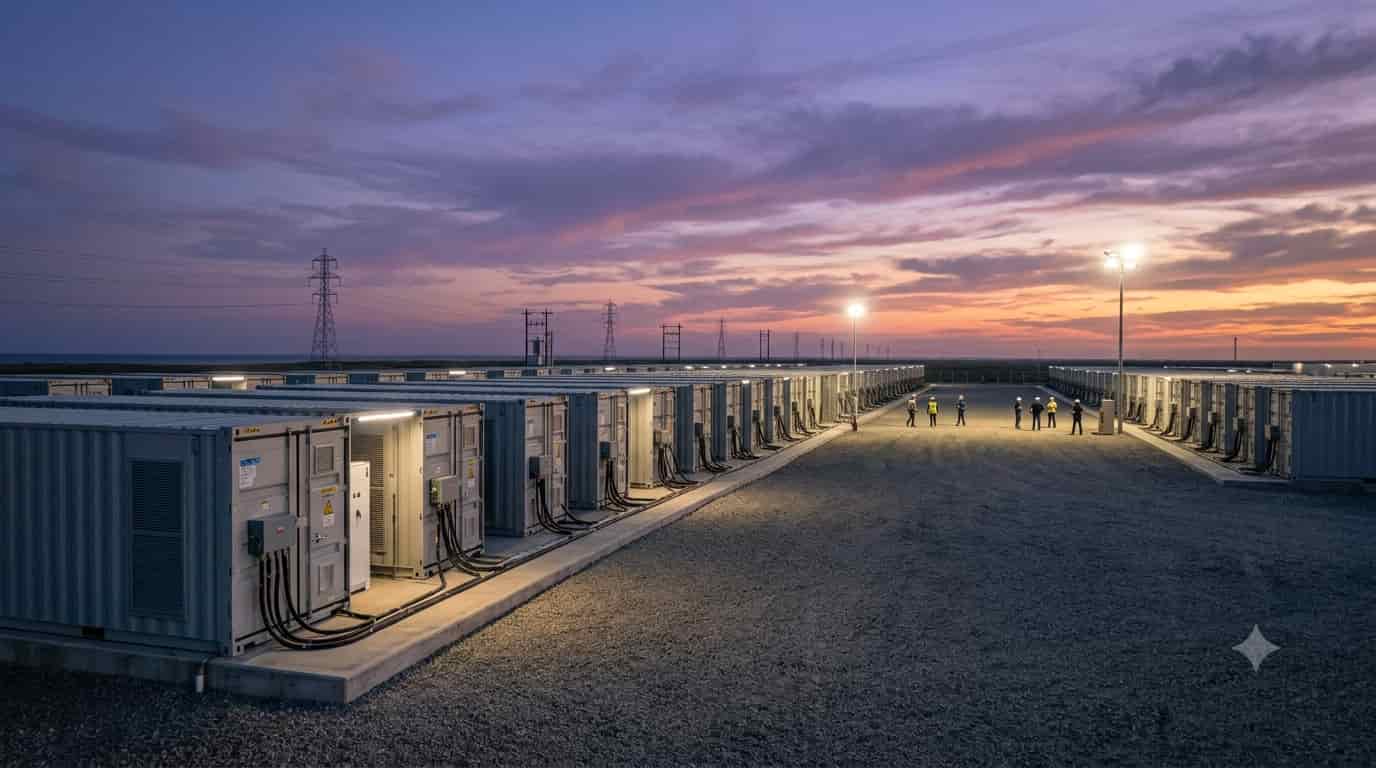
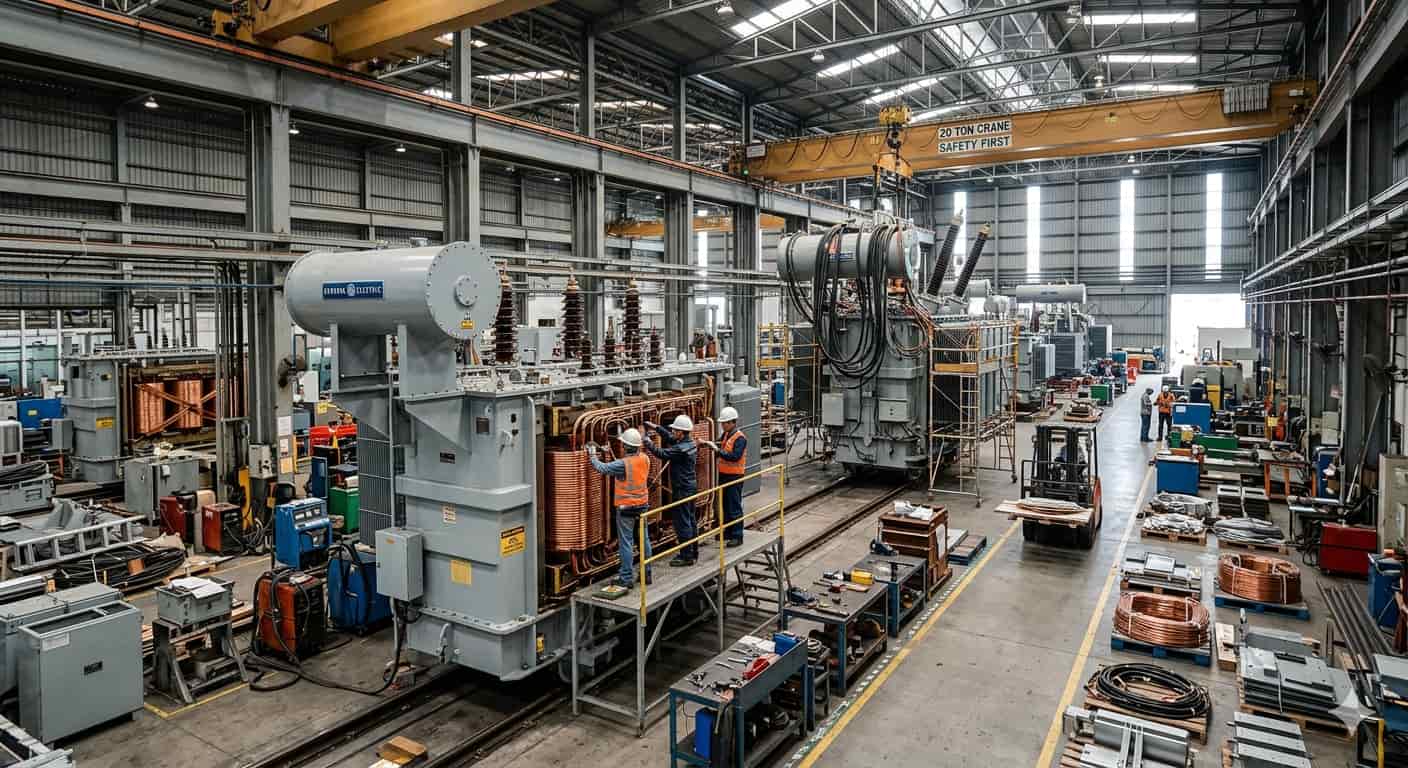
Hitachi Energy India's decision to invest approximately ₹2,000 crore (US$209 million) in a new large power transformer (LPT) factory at Karjan, Vadodara, is one of the most consequential manufacturing commitments made in India's energy equipment sector in recent years.
The investment — which takes Hitachi Energy India's cumulative capital expenditure to ₹4,000 crore ($419 million) — reflects a structural recalibration of global supply chains for high-voltage grid equipment, driven simultaneously by energy transition buildout, AI data centre demand, and the political economy of supply-chain localisation.
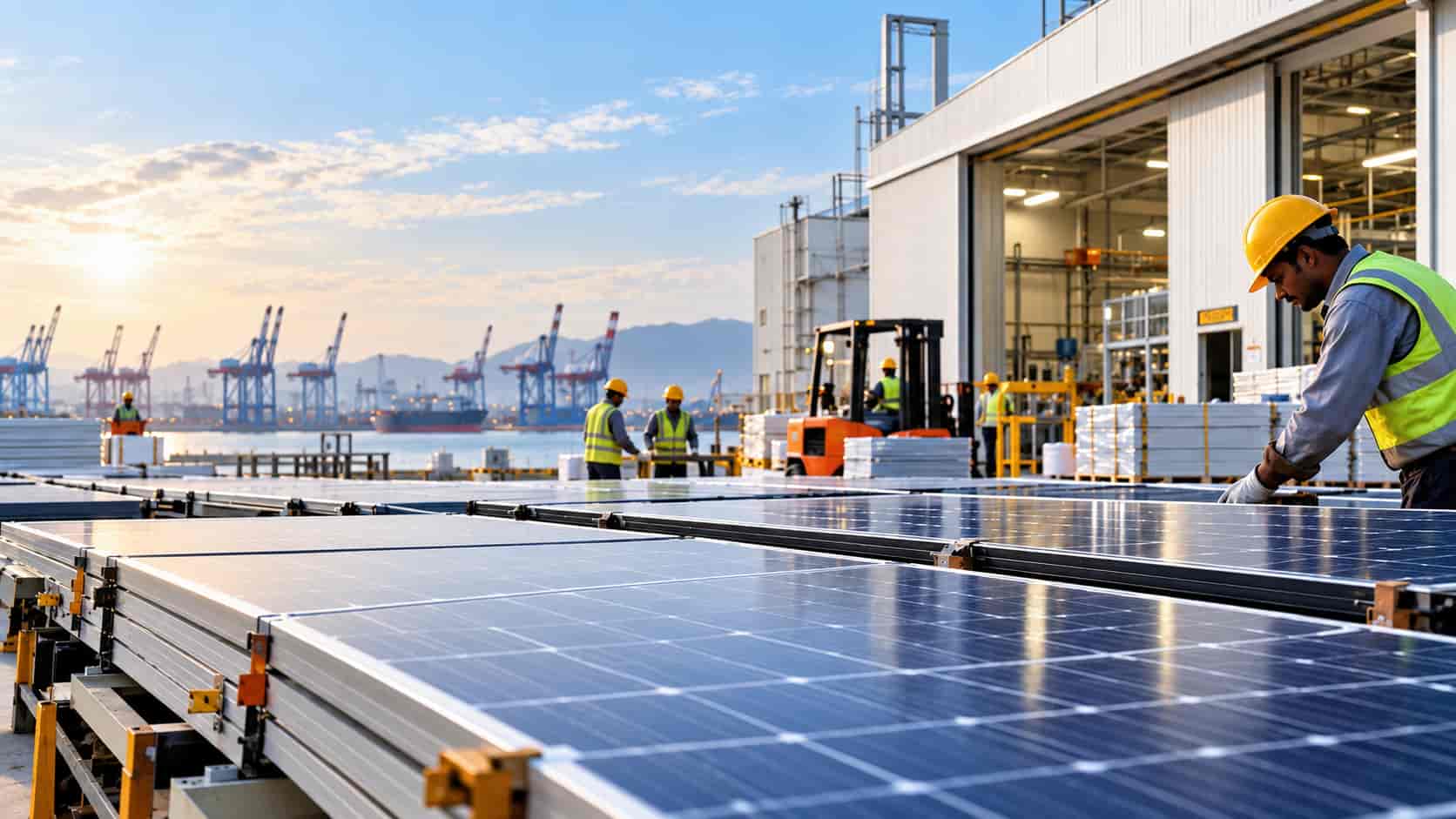
The new facility, scheduled for completion in FY28, will manufacture high-capacity power transformers to support applications including high-voltage transmission, HVDC systems, power generation, AI data centres, and large-scale industrial projects, and is expected to create over 1,000 direct and indirect jobs.
The demand context underpinning this investment is extraordinary in scale.
According to the Central Electricity Authority, India will require investments totalling ₹7.93 lakh crore (US$830 billion) in transmission infrastructure to integrate more than 900 GW of non-fossil fuel-based energy by 2035.
Large power transformers are the critical bottleneck in that buildout — long lead-time, technically complex, and historically subject to import dependence. A domestic manufacturing base of this scale reduces that vulnerability materially and supports the Make in India agenda at a point when it matters most.
The new factory will complement Hitachi Energy India's existing facilities producing power, dry distribution, and traction transformers in Gujarat, and transformer insulation and components factories in Mysore and Halol.
The strategic timing is equally notable. Hitachi Energy is executing a US$9 billion global manufacturing expansion programme, of which this Vadodara plant is the India node. Competing simultaneously for data centre grid equipment, renewable integration infrastructure, HVDC corridor components, and railway traction supply positions the company across virtually every vector of India's infrastructure acceleration.
For Indian policymakers and grid planners, a world-class transformer manufacturing cluster in Gujarat — combined with the state's emerging renewable energy and industrial corridor — offers the prospect of a genuinely integrated energy industrial ecosystem, reducing the chronic lag between generation capacity addition and transmission infrastructure readiness that has repeatedly constrained India's power sector development.
[With inputs from: Economic Times, Energetica India, Hitachi Energy Press Release, TND India]
Power Grid wins $314-m green hydrogen transmission mandate in Andhra Pradesh
Power Grid Corporation of India's receipt of a Letter of Intent for the transmission system supporting green hydrogen and green ammonia projects in the Kakinada area of Andhra Pradesh — valued at approximately ₹3,000 crore (US$314 million) — marks a significant institutional step in the development of India's nascent hydrogen economy.
The project will be executed under the Build, Own, Operate and Transfer (BOOT) model and involves establishing a new 765/400 kV GIS sub-station, installing STATCOM, and undertaking 765 kV transmission line works to serve proposed green hydrogen and green ammonia production facilities in the Kakinada zone.
The structural importance of this award lies in what it represents for the sequencing of India's hydrogen ambitions. Green hydrogen projects of industrial scale require dedicated, high-capacity transmission infrastructure before they can move toward financial close — and that infrastructure, given its long lead times and capital intensity, has historically been the missing link between policy announcement and industrial reality.
Power Grid's intervention via competitive bidding de-risks the upstream infrastructure layer, providing project developers in the Kakinada cluster with greater certainty over grid connectivity costs and timelines.
Andhra Pradesh's Kakinada coast has been positioned as a potential hub for green hydrogen export given its port access and proximity to industrial demand centres, making this transmission build-out a prerequisite rather than an afterthought.
For Power Grid, the win adds to a growing portfolio of energy-transition-linked infrastructure assets — diversifying its revenue base beyond conventional AC transmission into projects tied directly to the green fuels economy. The broader institutional signal is equally important: a state-owned transmission major anchoring dedicated infrastructure to green hydrogen clusters validates the seriousness of India's hydrogen industrial policy beyond the level of MoUs and announced targets, placing physical capital behind the ambition at a moment when the sector urgently needs exactly that.
[Source: Whalesbook / Power Grid Corporation exchange filing]
Meta's 900 MW CleanMax deal signals Big Tech's arrival as a driver of India's renewable buildout
A partnership between Meta Platforms and CleanMax Enviro Energy Solutions to develop over 900 MW of renewable capacity in India is not simply a corporate sustainability commitment — it is a structural signal of how global technology capital is beginning to shape the economics and geography of India's energy transition.
The collaboration will see CleanMax develop and operate 837 MW of new utility-scale solar and wind projects across Rajasthan and Karnataka, bringing the cumulative capacity tied to their partnership to over 900 MW.
Under the terms of the arrangement, Meta will purchase 100% of the environmental attributes generated by these projects, advancing its goal of matching all electricity consumption with clean and renewable energy.
The deal's significance extends beyond its headline scale. Meta has simultaneously announced a separate partnership with Reliance Industries to build a 168 MW AI-enabled data centre in Jamnagar, Gujarat — and has contracted nearly 1 GW of new clean energy in India in total, with CleanMax (837 MW) and Fourth Partner Energy (88 MW across Tamil Nadu, Karnataka, Maharashtra and Uttar Pradesh) as its two renewable partners.
Taken together, these announcements reveal a coordinated strategy in which Meta is simultaneously securing compute infrastructure and the clean power to run it — a model that effectively integrates digital and energy infrastructure planning in India for the first time at meaningful scale.
For India's renewable sector, the implications are material. Corporate power purchase agreements of this magnitude from global hyperscalers inject long-term offtake certainty into project pipelines that might otherwise struggle to secure financing.
CleanMax, as the developer and operator carrying balance-sheet exposure to these assets, benefits from a creditworthy, internationally-recognised counterparty.
As data centre demand in India accelerates on the back of AI infrastructure investment, this deal offers a template for how renewable developers can build durable revenue pipelines anchored to technology sector offtake rather than relying solely on state utility procurement — a financing model that could structurally alter how large-scale renewable projects are developed and bankrolled in India over the next decade.
[With inputs from: The Hindu BusinessLine, Business Standard, Domain-b, Saurenergy, Meta Newsroom]
JSW Energy's $148m acquisition of Maruti Clean Coal strengthens its thermal baseload strategy
JSW Energy's agreement to acquire the entire equity of Maruti Clean Coal and Power Limited (MCCPL) for an enterprise value of ₹1,410 crore (US$148 million) is the latest expression of its disciplined "build versus buy" strategy — and a concrete demonstration of how India's leading private power developers are consolidating thermal baseload even as they pursue aggressive renewable expansion targets.
The transaction involves a 300 MW operational thermal power plant in Chhattisgarh, which will become a wholly-owned subsidiary of JSW Energy upon completion, with a Long Stop Date of July 31, 2026. MCCPL has reported revenues from operations of ₹789 crore (US$83 million) in FY24, ₹754 crore (US$79 million) in FY25, and ₹787 crore (US$82 million) in FY26 (unaudited) — an asset with a demonstrated revenue track record being acquired at what appears to be an attractive valuation relative to replacement cost.
The transaction is structured to be both EBITDA and PAT-accretive for JSW Energy while reducing net leverage — a financially disciplined combination that distinguishes it from more speculative inorganic moves seen elsewhere in the sector.
Following closure, JSW Energy's total installed and locked-in thermal capacity will rise to 5,958 MW and 10,958 MW respectively, while its total locked-in generation capacity across all technologies stands at 32.1 GW, comprising 13.9 GW operational and 13.6 GW under construction.
The acquisition is subject to regulatory approvals, including consent from the Government of Chhattisgarh for land transfer and clearance from existing lenders — conditions that introduce short-term execution risk but are unlikely to be structurally prohibitive.
The deal also illuminates a broader structural dynamic in India's power sector: the coexistence of renewable ambition and thermal consolidation.
JSW Energy's 30 GW generation and 40 GWh storage target by 2030 is firmly renewables-oriented, yet the company continues to selectively acquire operational thermal assets where valuations are attractive and grid balancing needs are demonstrably real.
India's grid cannot yet be managed without flexible thermal capacity, and developers who understand this duality — building renewables aggressively while maintaining thermal optionality — are positioning themselves for a transition that will be measured in decades rather than years.
[With inputs from: ScanX / Dhan]
Follow us on : X | LinkedIn | Facebook | Bluesky