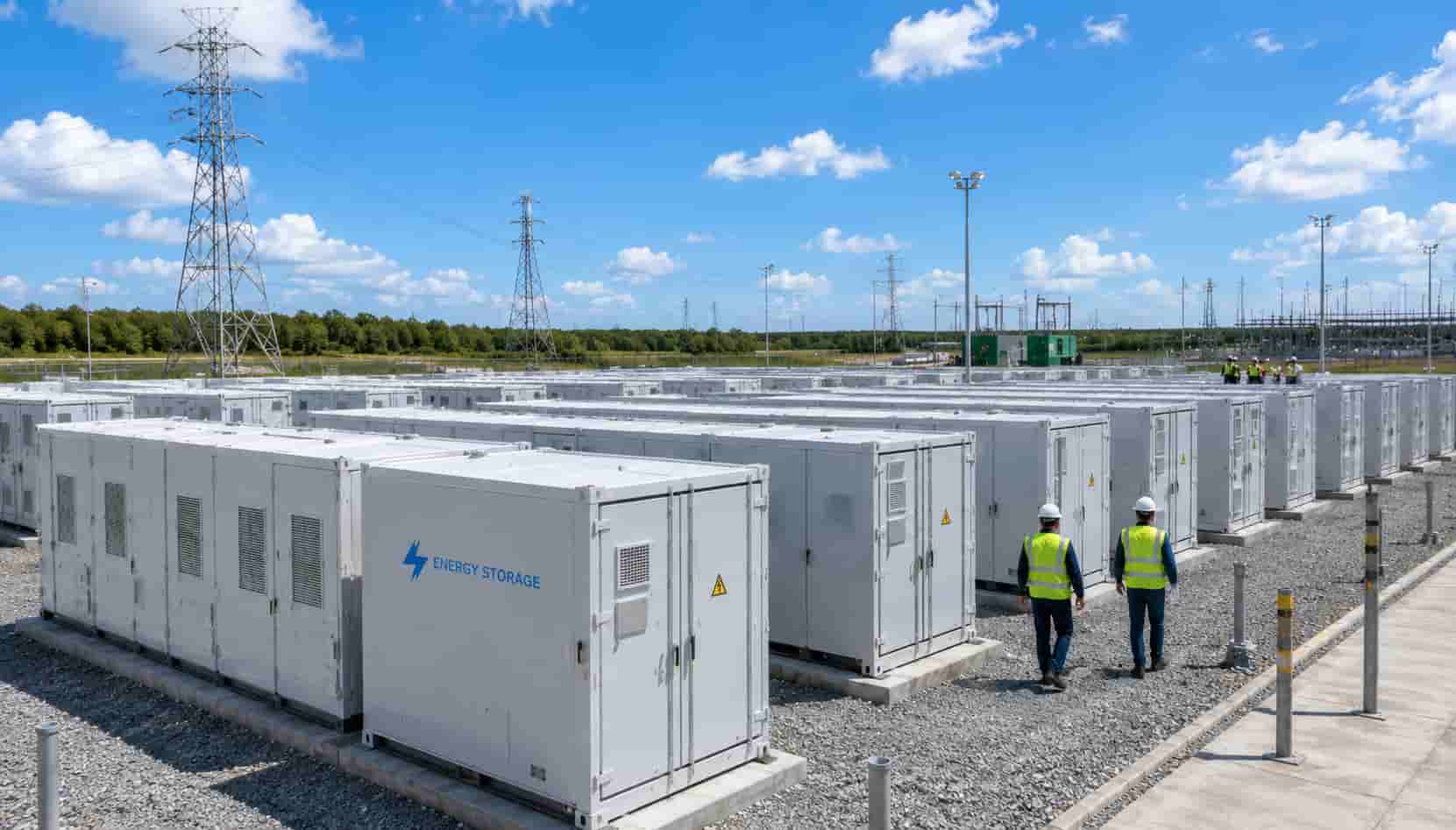

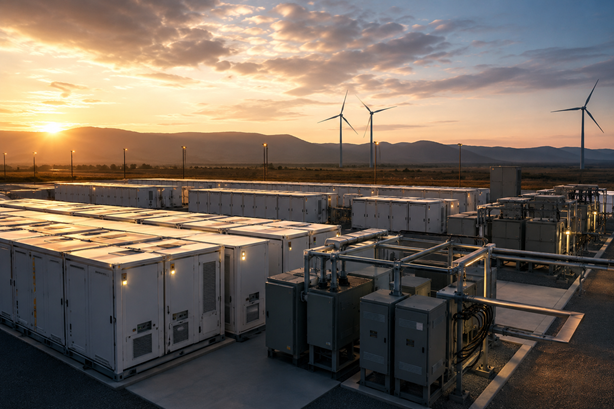

Saudi Arabia's state power procurer, the Saudi Power Procurement Company, has signed storage service agreements for four battery energy storage projects with a combined capacity of 2,000 MW and an eight-hour storage duration, in deals worth more than SR4.35 billion (US$1.16bn).
The four projects — Al-Muwyah and Haden in Makkah, Al-Kahafa in Hail, and Al-Khushaybi in Qassim — are each rated at 500 MW/2,000 MWh and mark the first batch of BESS initiatives to be developed under a build-own-operate model in the Kingdom.
Three projects were awarded to a consortium comprising Saudi Energy Co., ACWA Power and Al Sharif Contracting; the fourth, Al-Khushaybi in Qassim, was awarded to a consortium comprising France's Engie and Haji Abdullah Alireza & Co.
The projects are being developed under the Ministry of Energy's supervision to improve system reliability, flexibility and the Kingdom's ability to integrate renewable energy, in support of the 50% renewables-plus-storage target in the energy mix by 2030.
For India's energy analysts, the Saudi BOO BESS procurement signals three distinct structural shifts. First, the US$1.16bn transaction establishes a useful cost benchmark: US$580m per GW, or approximately US$145/kWh at the project-finance level for 4-hour BOO grid storage in a Gulf market — a reference point as India's grid-scale BESS procurement costs evolve through SECI and state-level auctions.
India's recent BESS tender award prices have ranged from ₹9,000 to ₹10,000 per kWh of storage capacity, implying US$94–$105/kWh — a gap that reflects lower Indian construction costs but also differences in storage duration (4-hour BOO in Saudi vs typically 2-hour tendered BESS in India), contract structure, and risk allocation.
Second, Engie's role as the consortium lead in the Qassim project confirms that the Gulf BESS market is attracting competition from major European energy groups, not just domestic state utilities — which will have supply chain and pricing implications, as the same technology and EPC contractors serve both the Gulf and Indian markets.
Third, and most broadly, Saudi Arabia and India are now moving in parallel on large-scale grid storage procurement: Saudi Arabia's first BOO batch coincides with India's recent awards of multiple GWh of BESS capacity across FDRE and standalone storage tenders.
The concurrent scaling of two major emerging-market electricity systems, both importing BESS hardware from Asian supply chains, creates competitive demand that will shape global BESS equipment pricing through the late 2020s.