

ADB’s first India transaction advisory deal targets $1bn private capital for MP renewable PPPs
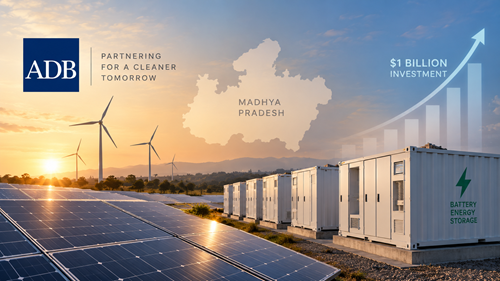
The Asian Development Bank has signed its first transaction advisory services mandate in India, entering into a formal agreement with the Government of Madhya Pradesh to structure and roll out three clean energy public-private partnership projects expected to attract up to US$1 billion in private investment.
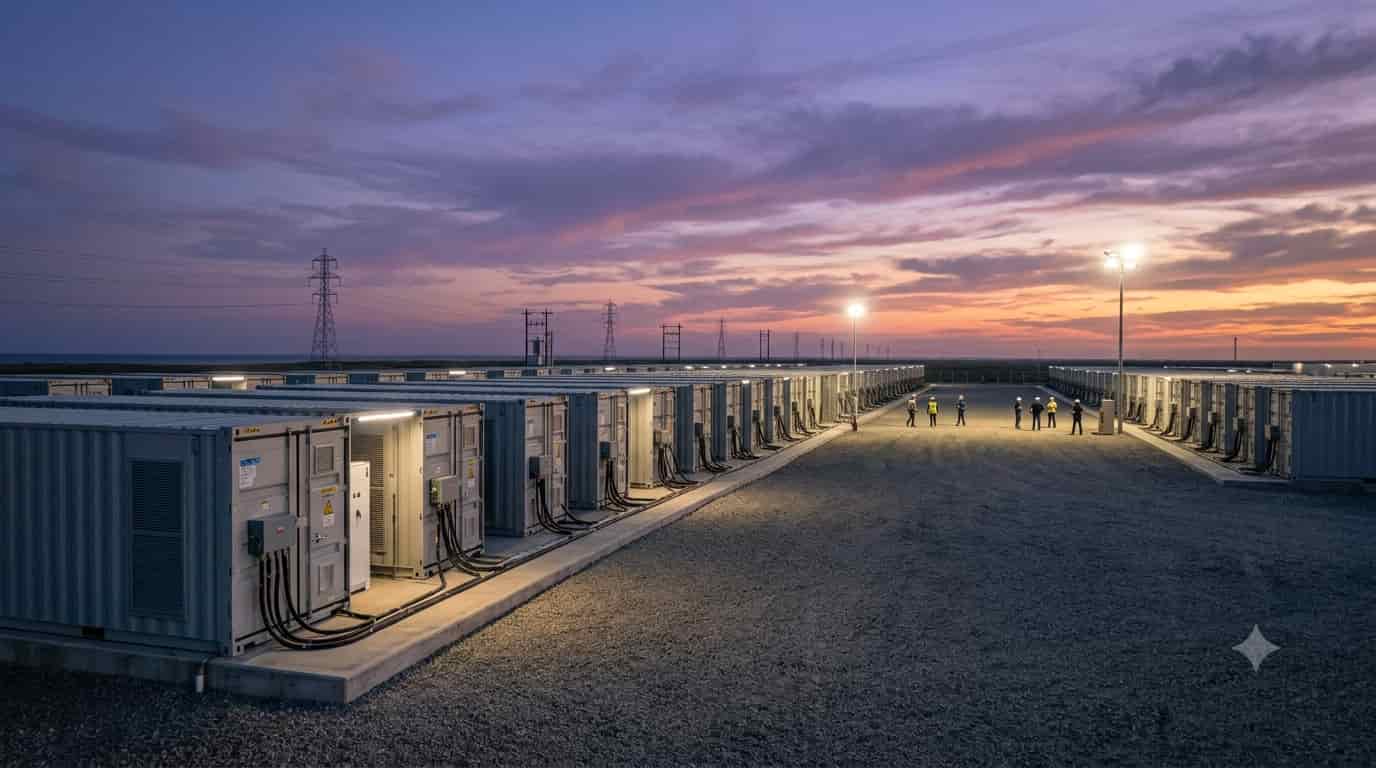
ADB Country Director for India Mio Oka signed the agreement in Bhopal on 7 September 2026, in the presence of Chief Minister Mohan Yadav. The confirmed project in the pipeline is a solar power generation and battery energy storage facility at Shajapur, designed to address peak electricity demand and improve grid stability.
The two remaining projects have not yet been publicly named. The engagement builds on ADB's 25-year presence in Madhya Pradesh across energy infrastructure, water and urban development, and aligns with the state's Renewable Energy Policy 2025, which targets 50% of electricity from renewable sources by 2030.
The "first TAS mandate in India" designation is the most structurally important element of this announcement. ADB's conventional role in India has been as a multilateral lender: providing concessional or commercial loans to government entities for infrastructure projects.
A transaction advisory engagement is categorically different — ADB is not providing capital but providing the technical and commercial expertise to structure projects in a way that makes them bankable for private investors.
The distinction matters because private capital's absence from India's state-level renewable PPP market has not primarily been a problem of investment appetite but of project structure: poorly designed concession agreements, misallocated risks, inadequate offtake certainty and opaque procurement processes have made many state renewable programmes institutionally unattractive even to investors who are actively seeking Indian clean energy exposure.
ADB Country Director Mio Oka framed the mandate's purpose precisely in these terms: "Private capital exists, but markets need to be made investable" — an acknowledgement that the supply-side constraint in India's clean energy financing chain is market structure rather than liquidity.
For Madhya Pradesh specifically, the Shajapur solar-plus-BESS project reflects a real grid challenge. MP has substantial renewable installed capacity but faces peak-demand management problems that intermittent generation without storage cannot address.
A storage-backed solar facility designed to supply electricity during peak hours and maintain reliability when solar is unavailable is precisely the type of project that has been difficult to structure under standard renewable PPP frameworks — because BESS integration raises procurement complexity, offtake pricing questions and performance guarantee requirements that state energy departments have limited experience managing.
ADB's TAS role brings international project preparation and structuring experience directly into the state government's project team, closing a capability gap rather than merely providing external financing.
The broader analytical significance is whether this engagement becomes a template. ADB explicitly framed the mandate as an opportunity to "demonstrate what works, and create scalable models for clean energy infrastructure across the state" — and, implicitly, across India.
If ADB can structure three bankable PPPs in MP that successfully crowd in private capital, the transaction model becomes replicable in Rajasthan, Gujarat, Tamil Nadu and other states where the same capital mobilisation gap exists.
The TAS approach is already well-established in ADB's Southeast Asian portfolio; India's relative absence from this model until now reflects both the country's traditional preference for bilateral lending arrangements and the historical dominance of state-owned financial institutions in infrastructure lending. The MP mandate may mark a structural inflection in how ADB engages with Indian state-level energy markets.
Powertrac orders 10 GWh BESS line in Gujarat, targets commercial production by 2027
Powertrac Group has signed an order agreement with SUNKA LEAD, a China-based provider of battery manufacturing equipment and intelligent automation solutions, for a 10 GWh BESS container manufacturing production line to be installed in Surendranagar district, Gujarat, with manufacturing equipment expected to arrive by the third week of November 2026 and commercial production of lithium battery packs targeted from the third week of January 2027.
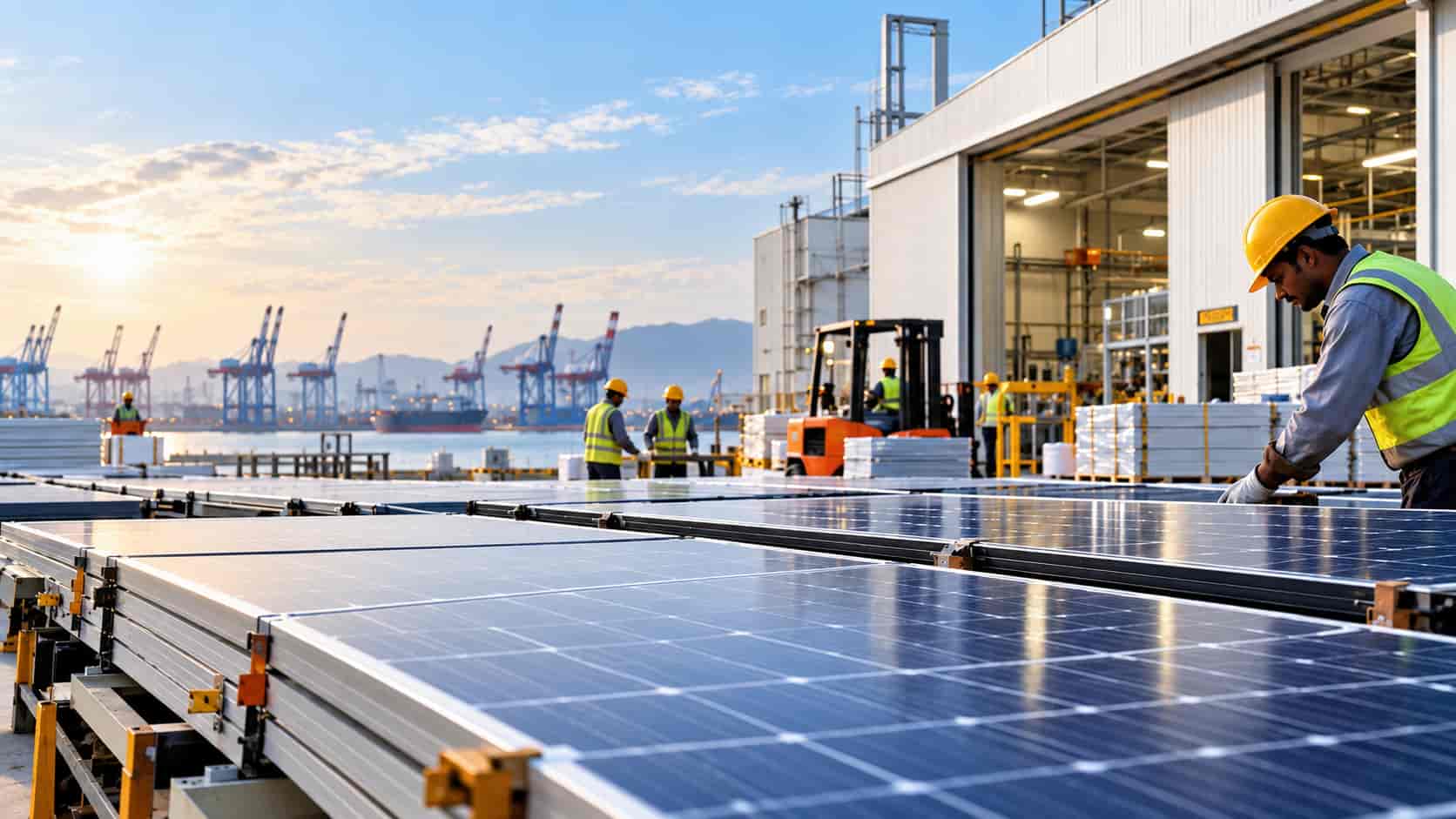
The facility will assemble battery packs from prismatic lithium-iron phosphate cells and integrate them into containerised BESS units ranging from 10 kWh to 5 MWh, using automated guided vehicles for material movement alongside robotic assembly, automated inspection and integrated quality-control systems.
An in-house container fabrication line will be built alongside the battery assembly operation. The announcement represents a ten-fold scale-up from Powertrac's February 2026 commitment of ₹600 crore (US$63m) for an initial 1 GWh containerised BESS facility, with the 10 GWh expansion as yet undisclosed in terms of capital commitment.
Powertrac is a Gujarat-based energy company with over 16 years in solar PV module manufacturing, turnkey EPC and distributed renewable IPP operations — currently holding 480 MW of distributed solar capacity under signed PPAs, primarily through PM-KUSUM-C and Gujarat's DISCOM Distributed Renewable Energy-Based Power programme.
Its pivot into BESS manufacturing follows a now-recognisable pattern among India's mid-scale solar players: as module manufacturing margins compress and grid-scale storage demand surges, companies with existing supply chain relationships, production infrastructure and customer networks in solar are adding storage as a logical adjacency. For Powertrac, the operational logic is reinforced by its IPP business — owning solar generation assets creates an internal demand anchor for storage systems, reducing the commercial risk of building manufacturing capacity ahead of a fully developed third-party market.
The supply-chain architecture of this expansion carries an analytical observation worth registering: the production line is being sourced entirely from a Chinese equipment provider.
This is commercially rational — SUNKA LEAD and comparable Chinese battery manufacturing equipment companies offer faster delivery, lower cost and proven automation at scale compared to alternatives from Europe, Japan or domestic Indian suppliers.
The Union Budget 2026's extension of Basic Customs Duty exemption on capital goods used in lithium-ion cell and BESS manufacturing directly reduces the cost of importing this equipment.
However, it also means India's rapidly expanding BESS manufacturing base is being built on Chinese equipment infrastructure—an upstream supply-chain dependency that sits in tension with the broader Atmanirbhar Bharat framing of domestic manufacturing ambition.
The cells themselves, imported separately, also originate predominantly from China. The Powertrac expansion is a net positive for India's BESS manufacturing capacity; it is not yet evidence of supply-chain independence.
India's BESS project pipeline crossed 110 GWh across under-development and pre-construction stages, against the Central Electricity Authority's National Electricity Plan requirement of approximately 411.4 GWh and 74 GW of storage by 2031-32 — implying that India's manufacturing buildout must accelerate substantially to meet a contracted demand pipeline that is itself only a fraction of the eventual storage requirement.
Powertrac's 10 GWh adds another mid-scale manufacturing node to an ecosystem that includes Waaree ESS's 5.15 GWh Gujarat facility, Amara Raja's 16 GWh Telangana gigafactory, and Pratap Group's 3 GWh Pithampur plant covered in recent Indoen editions.
Individually, each is significant; cumulatively, they suggest India's domestic BESS manufacturing base is assembling from the mid-scale upward rather than from a single dominant anchor investment—a structurally different and arguably more resilient industrial formation than the single-champion model seen in China's CATL-led battery ecosystem.
ONGC’s $10.5bn deepwater push signals India’s biggest upstream revival in two decades
Oil and Natural Gas Corporation plans to invest approximately ₹1 lakh crore ($10.5bn) over the next five years in deepwater and ultra-deepwater exploration, targeting the drilling of 87 wells by March 2031 — eight in FY27, scaling progressively to 27 in FY31.
The government's Samudra Manthan scheme under the National Offshore Exploration Scheme supports the programme, with an outlay of ₹84,084 crore (US$8.8bn) formally approved, covering preparatory work in FY26-27 and implementation from FY27-28 through FY30-31.
Chairman Arun Kumar Singh announced the plan at ONGC's 33rd AGM media interaction on August 31, noting that India has significant untapped reserves in its deepwater blocks and that available technologies now make those resources developable.
The context is stark: India's crude oil production fell in fiscal 2026 for the eleventh consecutive year, and ONGC's flagship KG-DWN-98/2 block is producing approximately 20,000 barrels per day against an original peak target of 35,000 bpd.
Eleven consecutive years of production decline is the single most important data point behind this announcement. India currently imports over 85% of its crude oil requirements, and the domestic production base — anchored for decades around mature Mumbai High and eastern offshore fields — has been structurally insufficient to arrest the decline.
The Samudra Manthan allocation is the largest single government financial commitment to upstream oil and gas exploration in India's independent history, and its scale relative to the ONGC programme (government underwriting approximately 80% of total costs through the scheme) indicates that energy supply security has reasserted itself as a national priority that transcends the energy transition narrative.
ONGC recorded three new hydrocarbon discoveries in its operated offshore acreage in FY26 and established 55 wells as hydrocarbon-bearing during the year, showing that the geological potential exists—the challenge is the capital intensity and technical complexity of bringing deepwater discoveries to production.
Several adjacent commitments reveal ONGC's broader strategic intent this year. The company will invest ₹7,000 crore (US$73m) to build 1.75 million tonnes of additional strategic petroleum reserve at Mangalore, expanding India's buffer against supply disruption.
ONGC is also establishing a trading unit in Dubai or Singapore through a joint venture with a global company, expected to be operational by March 2027, with the capacity to trade approximately 50 million tonnes of crude oil, refined products and gas annually — both ONGC group volumes and third-party cargoes.
A 50 MT trading platform would give India's national oil company commercial exposure comparable in design, if not yet in scale, to what Aramco Trading Company provides Saudi Arabia — price intelligence, supply optionality and the ability to capture margin across the crude value chain. ONGC Videsh, following its July 2026 OFAC clearance, is also in advanced discussions on operatorship of its two Venezuelan assets.
Taken together, the deepwater programme, the SPR expansion, the trading JV and the Venezuela operatorship push constitute the most comprehensive strategic repositioning of India's national oil company since the early 2000s — and the most explicitly supply-security-oriented investment cycle since the launch of NELP.
INOX Wind wins $79m Indian Oil repeat order, signals PSU wind pivot
INOX Wind has secured a 100 MW turnkey repeat order from Indian Oil Corporation worth approximately ₹755 crore (US$79m), covering end-to-end project execution, including wind turbine generator supply, EPC and ten years of post-commissioning operations and maintenance services. Indian Oil Corporation — India's largest oil marketing company and a Maharatna PSU — is directly commissioning and owning wind capacity rather than purchasing renewable energy through bilateral PPAs or green certificates.
The repeat designation confirms that IOCL's prior INOX Wind engagement met standards — an operational endorsement that carries more weight in PSU procurement than an initial contract award. INOX Wind operates five manufacturing plants across Gujarat, Madhya Pradesh, and Himachal Pradesh, with 2.5 GW of annual manufacturing capacity across its 3 MW and upcoming 4.45 MW WTG series, and its diversified customer portfolio now spans C&I, PSU, and IPP customers.
The deeper analytical point is customer identity. India's oil marketing PSUs — IOC, BPCL and HPCL — operate massive distribution networks and supply India's largest fuel markets; their transition toward renewable self-generation reflects both sustainability commitments and a commercial imperative to decarbonise captive energy costs as carbon compliance requirements tighten.
IOC's direct wind procurement, executed on a full turnkey-plus-O&M basis, positions it as an asset owner rather than a power buyer—a more capital-intensive approach that implies greater conviction in the long-term economics of domestic wind generation.
This is INOX Wind's second major PSU wind order in three weeks, following the ₹1,600 crore ($167m) NLC India contract for 200 MW covered in Indoen's 17 August edition. INOX Wind's stock fell 43% in 2026 before this order, despite order book accumulation, highlighting a divergence between operational momentum and market sentiment common in capital goods companies scaling rapidly from lower order volumes. Q1 FY27 net profit fell 58% to ₹44 crore on revenues of ₹814 crore ($85m) — near-term margin pressure persisting even as order inflows strengthen.
The IOC order adds further order book visibility but the path to margin recovery will depend on execution pace and cost management across a rapidly expanding pipeline.