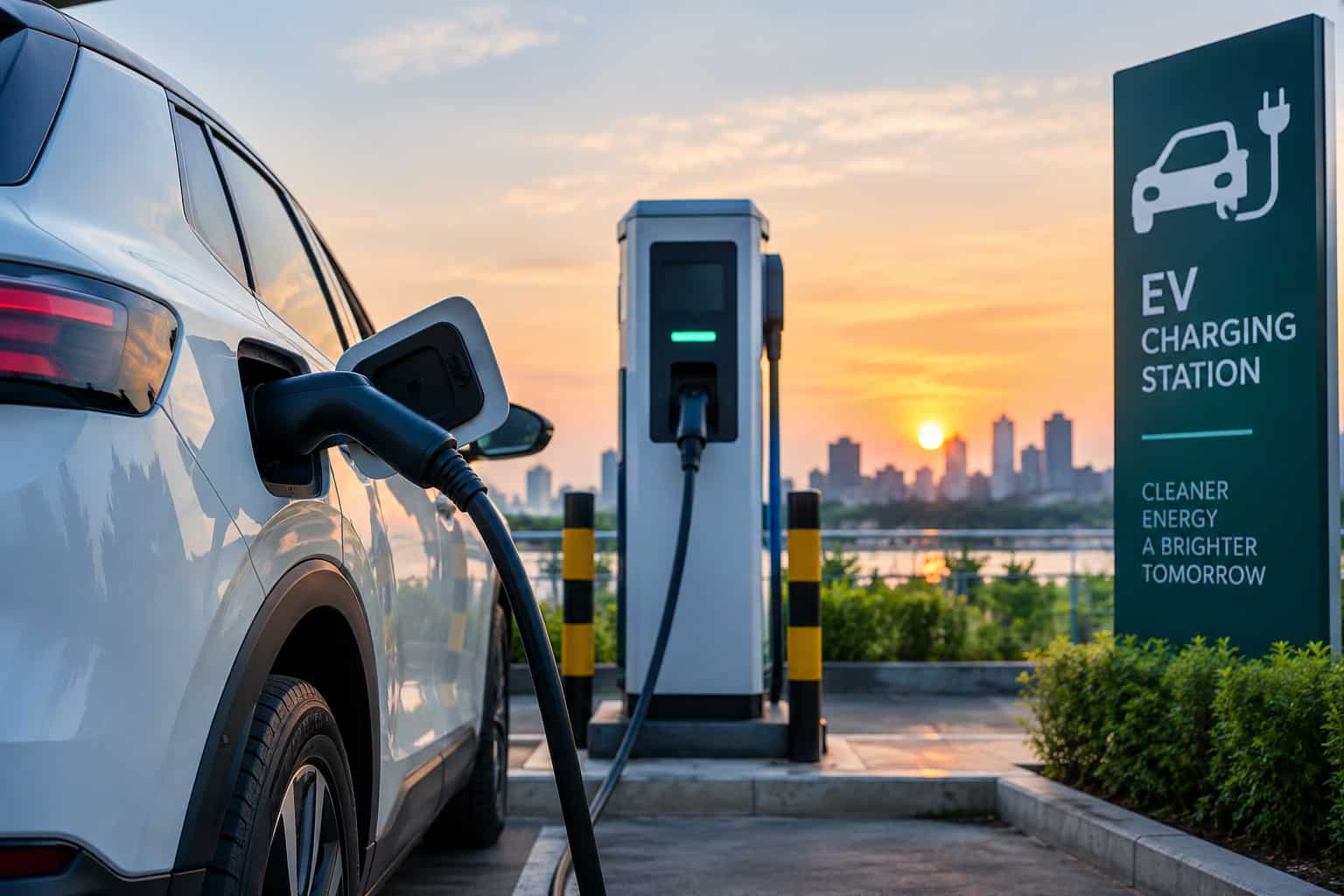

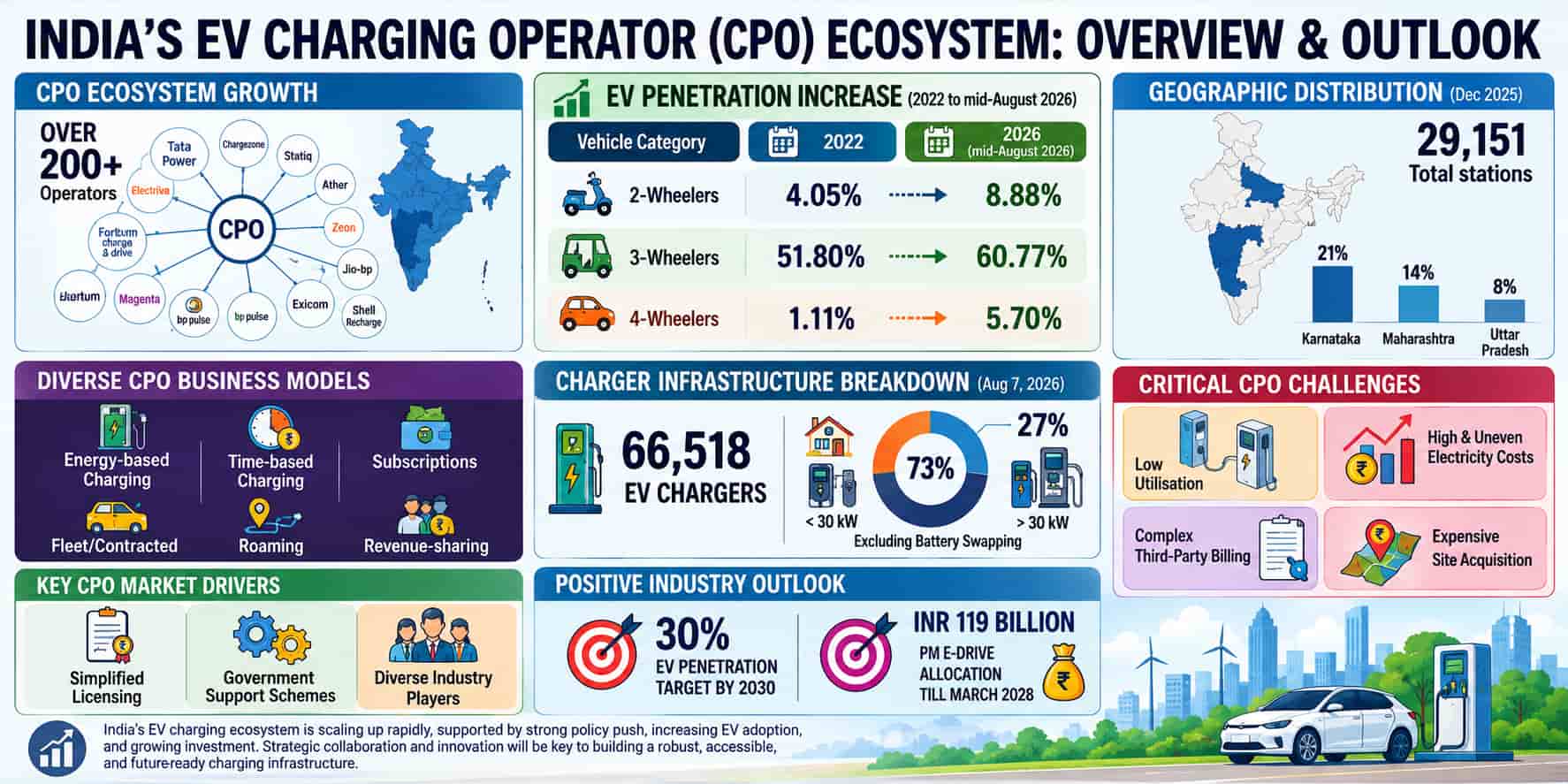
India had 29,151 public EV charging stations by December 2025, of which 8,805 were fast and 20,346 slow. In 2022, the count was near 5,000. That is a nearly six-fold jump in three years.
The spread is uneven. The top 10 states hold nearly 78% of all stations. Karnataka leads with 6,096 (21%), followed by Maharashtra with 4,166 (14%), Uttar Pradesh with 2,316 (8%), Delhi with 1,957 (7%) and Tamil Nadu with 1,780 (6%). This fits Indoen Energy’s earlier look at why south India is quietly becoming the centre of India’s EV economy. For operators, the lopsidedness is a map of where to go next.
A newer count, dated 7 August 2026, shows 67,657 chargers, including 1,139 at battery-swapping stations. Stations and chargers are not the same thing, and official sources often use the terms loosely. The direction is still clear.
The power mix is more telling. Of 66,518 chargers outside swapping stations, 48,709 (about 73%) are rated below 30 kW. Another 15,753 fall between 30 and 60 kW. Only 2,056, or roughly 3%, are above 60 kW. Just 543 cross 120 kW, and the entire country has nine above 240 kW.
The reason is simple. Two- and three-wheelers dominate India’s EV fleet, and they need little power. EV penetration is 8.88% in two-wheelers and 60.77% in three-wheelers, against 5.70% in four-wheelers. As cars electrify, demand for faster charging will follow. That is the headroom.
Who is building, and how they earn
More than 200 operators are active. Some are pure-play networks, such as Magenta, Fortum India/GLIDA, ChargeZone, Volttic, chargeMOD, Bolt.Earth, Statiq and Zeon Charging. Others come from adjacent businesses: Tata Power, Adani TotalEnergies E-Mobility, NTPC Vidyut Vyapar Nigam, Convergence Energy Services, Indian Oil, BPCL, HPCL, Jio-bp, Mahindra and Ather. They bring land, customers and balance sheets.
Recent moves show the pace. BPCL announced highway expansion in July 2026. HPCL tied up with Mahindra’s Charge_iN in March 2026 for its retail outlets. Adani TotalEnergies earmarked ₹70–80 crore (US$7–8 million) in 2025 for 1,500–2,000 more points. Tata Power opened a 180 kW station on the Mumbai–Ahmedabad highway, and ChargeZone plans over 1,000 highway stations by March 2027, with capacities from 500 kW to 1.5 MW.
Note the contrast. Announcements speak of 180 kW to 1.5 MW, while most installed chargers are below 30 kW. Closing that gap is the real story of the next few years.
Revenue is not only about selling units. Operators charge by energy or time, levy idle fees, sell subscriptions, sign fleet contracts, share revenue with site owners and earn from advertising or retail. Roaming is growing too: Bolt.Earth and ChargeZone linked networks in June 2026, giving users 1,500-plus fast-charging locations. One station may use several of these models at once.
What a bay really costs
Hardware is only part of the bill. Excluding land, an AC Level 2 bay (7–22 kW) costs about ₹2–5 lakh (US$2,100–5,200). A DC fast bay (30–60 kW) comes to ₹15–35 lakh (US$15,600–36,300). An ultra-fast bay (120–150 kW and above) runs from ₹50 lakh to ₹1 crore (US$51,900–103,700).
In a DC fast bay, the charger itself costs ₹10–25 lakh (US$10,400–25,900). Civil and electrical works add ₹3–8 lakh (US$3,100–8,300), and management software ₹2–5 lakh (US$2,100–5,200) a year. Maintenance can take another 5–10% of capital cost annually. That is roughly ₹0.75–3.5 lakh (US$800–3,600) a year per DC fast bay, whether cars arrive or not.
A thin margin and a thin queue
A sectoral study by Rubix Data Sciences, released in August 2026, shows how these costs collide with thin demand. An SBI study from April 2026 puts utilisation at 1–3% at most stations, while a 2024 S&P Global estimate was around 5%.
Put in clock terms, 1% is about 14 minutes of charging a day. At 3%, it is about 43 minutes. Even 5% is only 72 minutes. A bay costing lakhs earns for barely an hour.
Margins are thin too. Electricity for charging costs ₹6–15 per kWh (about 6–16 US cents), depending on state, tariff and site. Customers pay ₹7–12 per kWh (about 7–12 US cents) at AC points and ₹12–25 (about 12–26 US cents) at DC fast chargers. At the extremes, the ranges overlap. An operator paying ₹15 and selling at ₹12 would lose on every unit.
Fixed or demand charges make it worse, since operators may pay for sanctioned capacity even when chargers idle. “The meter keeps running whether or not a car arrives,” says one industry observer. “Utilisation is the only thing that pays for it.”
When the host forgets the bill
Many chargers sit on third-party sites such as highway restaurants, malls and hotels. The host gives the site and the power connection, while the operator runs the charger. That split carries risk.
Small hosts are often unorganised. Operators may not know if the electricity bill was paid on time. A default can cut supply and bring the charger down. This matters because government guidelines expect at least 98% monthly uptime, excluding power failures and scheduled maintenance. So an operator can lose revenue because a roadside restaurant missed a payment.
Paperwork adds friction. Hosts may or may not be GST-registered, and operators must check whether invoices are reported on the GST Network before claiming input tax credit. Penalties for poor power factor can also be passed on. Centralising bill checks and reconciliation across scattered sites is likely to become a competitive skill.
Policy money still looking for projects
Official support is sizeable. FAME-II earmarked ₹912 crore (US$95 million) for public charging, and PM E-DRIVE adds ₹2,000 crore (US$205 million). The scheme now runs to 31 March 2028, with a total outlay of ₹11,900 crore (US$1.2 billion).
Here is the striking part. As of 24 March 2026, no charging station had been installed under PM E-DRIVE. The plan envisages about 72,300 stations, of which 22,100 are fast chargers for e-cars, 1,800 for e-buses and 48,400 for e-two- and three-wheelers. Spread evenly, ₹2,000 crore comes to about ₹2.8 lakh (US$2,900) per station. That is a rough average, not a subsidy per site, but it hints at a plan weighted towards small vehicles.
Subsidies vary by location. Government premises get 100% support on upstream infrastructure and chargers. Railway stations, airports, fuel outlets and toll plazas get 80% on upstream work and 70% on the charger.
Rules help too. Charging is an unlicensed activity under the Ministry of Power’s guidelines of 17 September 2024. Highways are to have a station every 25 km on both sides, and cities one in each 3 km × 3 km grid. States are adding their own push: Maharashtra’s ₹1,990 crore (US$205 million) policy, Karnataka’s plan for 2,500 PPP stations and Delhi’s dealership rule.
Grid and land remain hurdles. Connection timelines are 7 days in metros, 15 in other municipal areas and 30 in rural areas, but network upgrades can stretch them. As Indoen Energy has noted, India’s power grid is turning from a pipe into a queue. Public land is offered on revenue-sharing at ₹1 per kWh (about 1 US cent) for 10 years.
Where steady demand may come from
India recorded 28.2 million vehicle registrations in 2025, of which over 2.3 million were EVs. Electric passenger vehicle sales touched an all-time high of over 1.76 lakh units, up 77% year on year.
Penetration has risen across segments. Two-wheelers moved from 4.05% in 2022 to 8.88% in 2026, and four-wheelers from 1.11% to 5.70%. Yet some numbers cut the other way. Three-wheeler penetration eased from 60.91% in 2025 to 60.77% in 2026, and buses, at 4.52%, are barely above their 2022 level of 4.20%. The 2026 figures are as on 17 August, so they may still move.
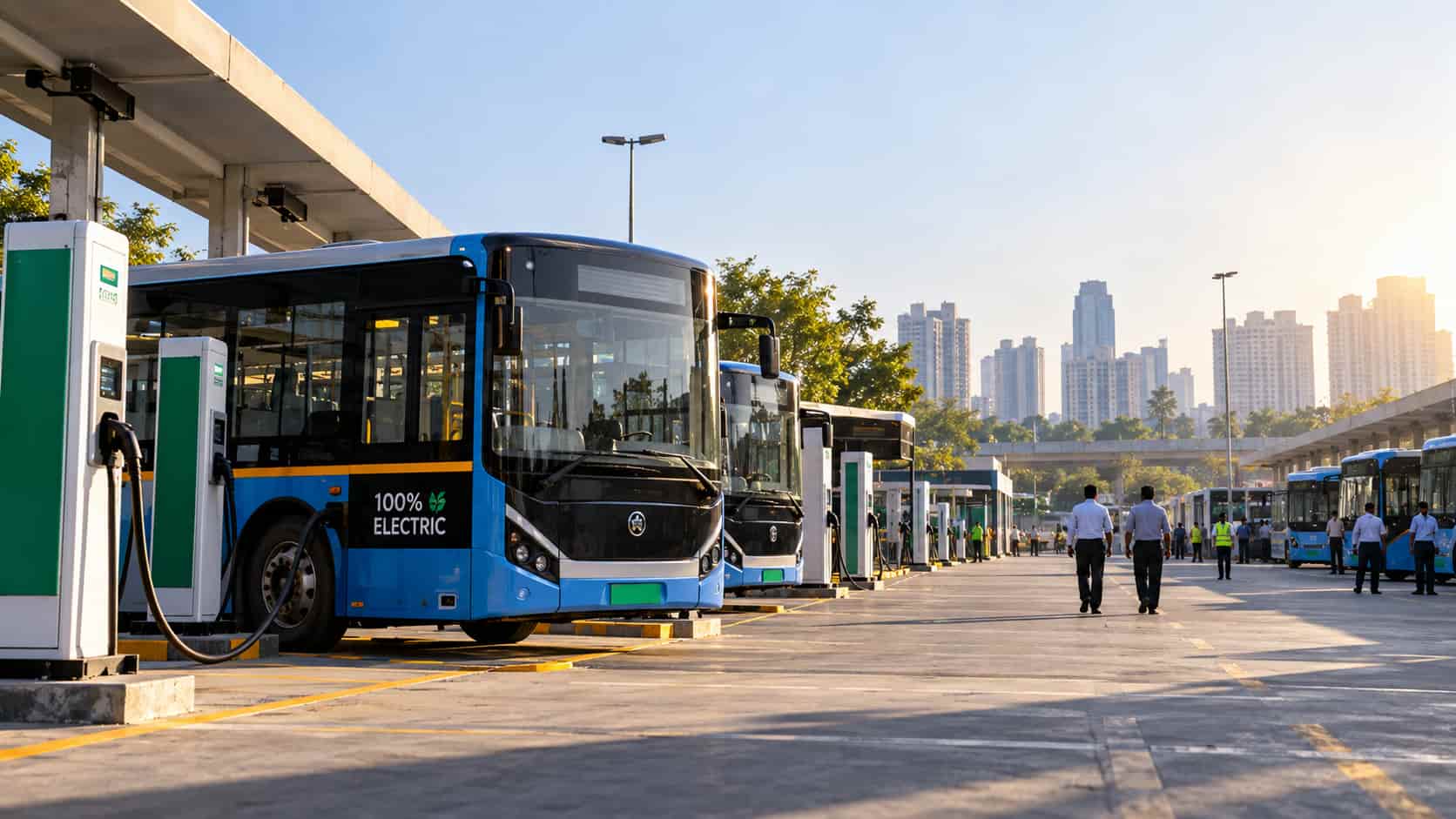
Fleets may matter most. E-three-wheeler sales rose 15% in 2025 to nearly 800,000, and the 2.88 lakh-unit L5 target under PM E-DRIVE was met ahead of schedule in December 2025. PM e-Bus Sewa has sanctioned 9,360 e-buses across 106 cities. Such vehicles charge often and predictably. That is what low-use public networks lack.
What a twentyfold build-out would take
The government targets 30% EV penetration in new vehicle sales by 2030. Annual EV sales could rise 12-fold to 30.4 million units by 2032 in a high-growth scenario. Some estimates see 50 million EVs on the road by 2030.
CII estimates India may need 1.32 million charging points by 2030, at one charger per 40 EVs. That ratio implies about 53 million EVs, close to the 50 million estimate. It also means roughly 20 times today’s 67,657 chargers. Even allowing for the loose use of “stations” and “chargers”, the scale is daunting.
The winners are likely to be operators with strong site networks, sound power management and differentiated offerings. “Whoever treats the electricity bill as seriously as the charger will last longest,” says one sector watcher.
India’s charging boom is real. Whether it pays will depend less on how many chargers are installed than on how many cars use them.
Follow us on : X | LinkedIn | Facebook | Bluesky