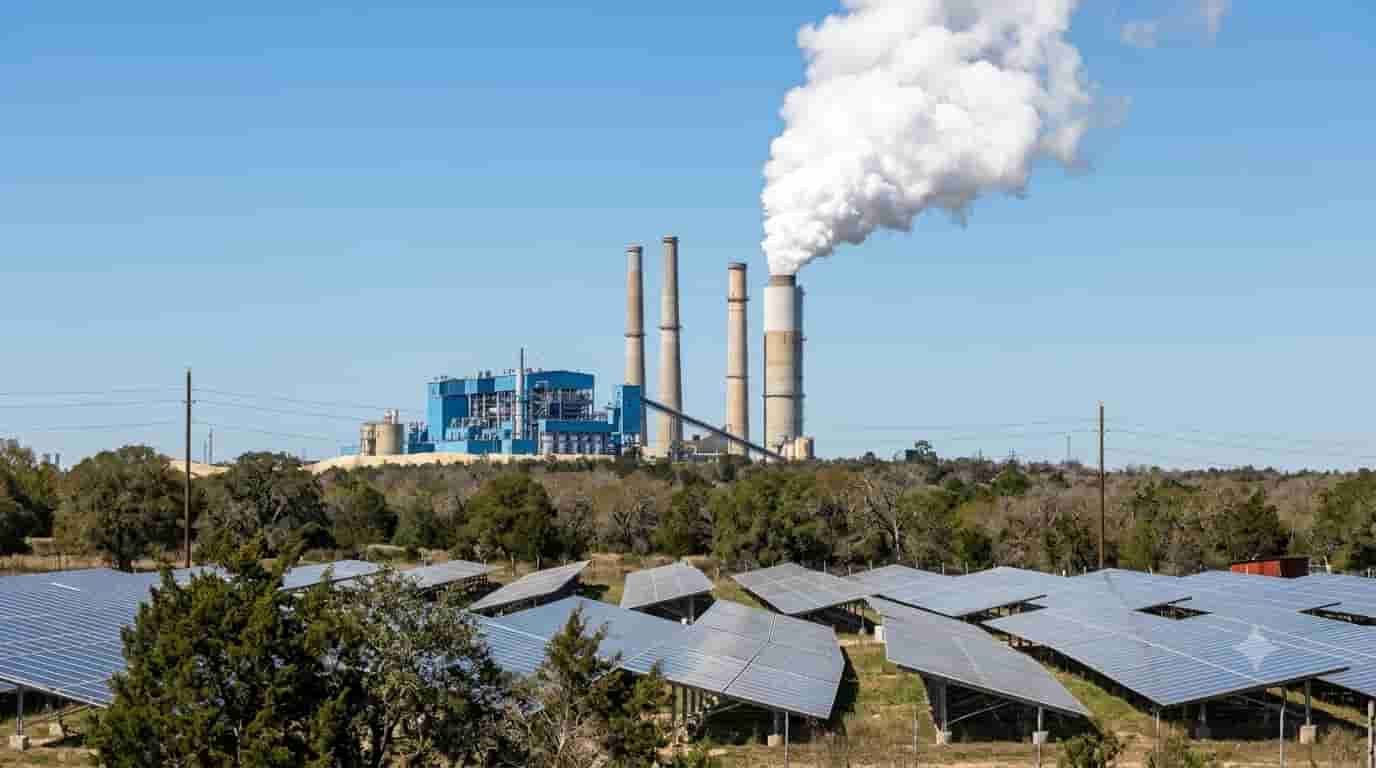

India has ambitious plans to swap coal-fired plants with renewable ones for reducing its carbon footprint. Shri R.K. Singh, Minister of Power and New and Renewable Energy while speaking at a virtual event organized by NITI Aayog recently said that close to 30 coal-fired power plants in India would be discontinued and the government plans to supplant it with renewables.
In two years from now, the government’s target is to reach 175 GW of renewable-based installation capacity and in a decade meet around 40% of energy requirements from non-coal sources. Interestingly, the country to a large extent depends on economical inputs from China and elsewhere to meet its demand for solar cells and modules which the government wants to curb.
India’s annual installed and functional capacity of solar modules was 10 GW while for solar cells it was 2.5 GW. The minister said that the government planned to increase this to 25 GW for solar cells and modules in two years. In order to protect the interests of local manufacturers from cheap imports, the government extended safeguard duty on imports of solar cells and modules by a year and plans to impose an additional tax on their imports.
Moreover, the government is also considering raising import duty on solar inverters used by consumers to connect solar panels for converting direct power to electricity. Importantly, the government is keen to set up coastal renewable energy equipment manufacturing hubs by roping in the private sector. Developments such as these may be music for environmentalists but critics have a different take.
To give a push to renewable energy many coal-fired projects (roughly around 47 GW) in various stages of development were cancelled in India last year but over 8 GW of new coal-fired projects were under construction. A report titled ‘Boom and Bust 2020: Tracking the Global Coal Plant Pipeline’ earlier revealed that India which had 19.3 GW coal power capacities was aiming at an increase.
As per the report, four new coal-fired plants were commissioned recently – Adani Godda, Patratu, and Udangudi having 1.6 GW each and Yadadri with 4GW. The new coal-fired projects attracted good investments from Power Finance Corporation and Rural Electrification Corporation which come under the jurisdiction of the Ministry of Power.
The report also shed light on a perturbing trend of new coal-fired power plants set up outpacing the discontinuation of the old plants which had a negative impact on the plant load factors of coal plants and led to overcapacity. The new capacities which are being added to the grid and the new projects which are being given clearances by the government say a different story, say market analysts. The country must have a stricter policy of retiring old plants and not giving clearance to new ones if they are serious about switching to renewable energy, they say.
It is easier said than done. The government’s planning arm NITI Aayog in a 2017 report estimated that the share of coal in India’s energy mix in 2040 to be around 44%.
This means coal, which is currently behind 72% of India’s electricity generation, has many more decades of bright future before it finally yields to renewables. While the country has shelved several hundreds of megawatts of power projects in pre-construction stages in the last some years, it currently has around 63GW of coal-fired projects in under-construction mode.
Discarding these projects will simply mean that close to $50 billion lent from public banks turning NPAs. And this is when lenders in the sector are already finding it difficult to restructure almost an equal amount in stranded assets.
So it looks highly improbable that India can afford to put the interests of public sector banks in jeopardy. More so in the aftermath of the pandemic that has redrawn priorities.
With a 7% growth forecast in electricity demand, India should ideally find it easier to meet the running expenses of the existing coal-fired plants than infusing huge capitals freshly in the much an uncertain renewable sector, at least in the immediate future.
Although thermal generated power is facing challenges in terms of logistics constraints and payment issues with electricity distribution companies, coal is still a safer bet especially in times of the pandemic when entities are operating in the survival mode.
Even the renewable sector which perhaps enjoys the advantage of competitive pricing has also taken adverse hits in terms of the structural issues which have been plaguing the Indian power sector. For example, receivable delays are a bane for renewable developers. Furthermore, import duties on solar PV modules have also led to cost increases and uncertainties for projects which have signed power purchase agreements at fixed prices.
It would, thus, be safe to surmise that coal will continue to emit its light for several more years to come until it fades away into oblivion.