

Cabinet approves 5GW PM-SSY floating solar and 10GWh BESS programme
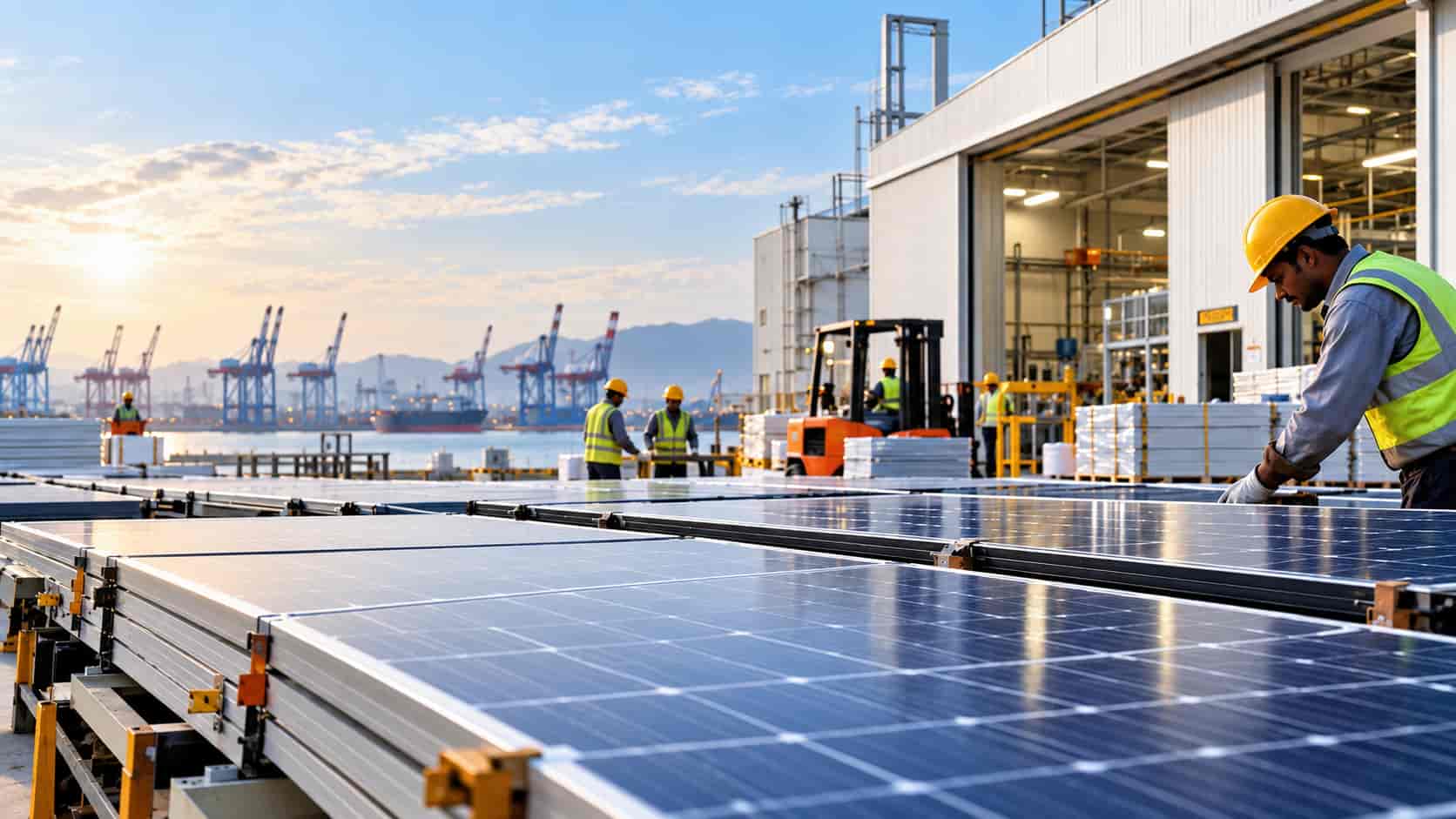
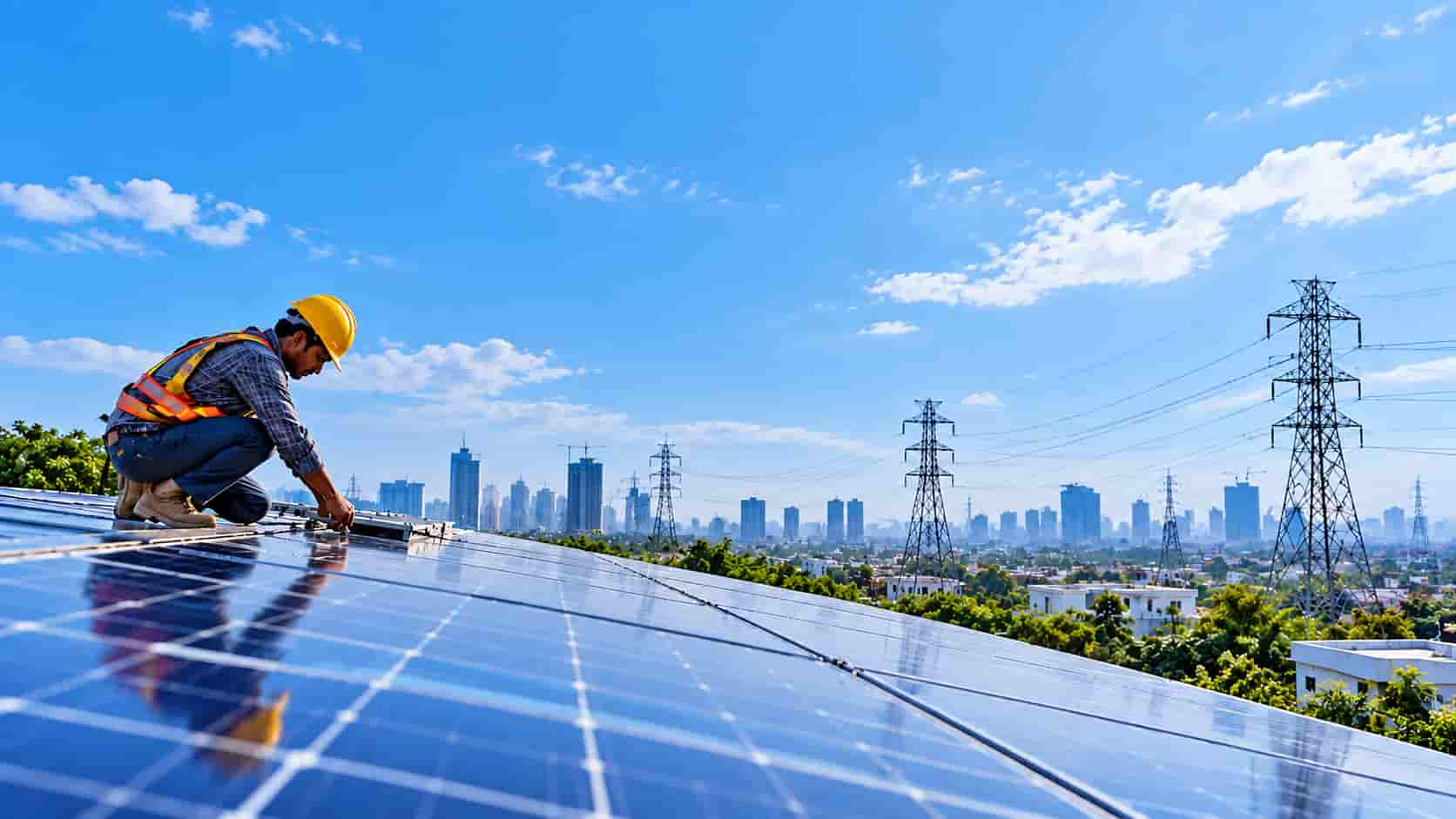
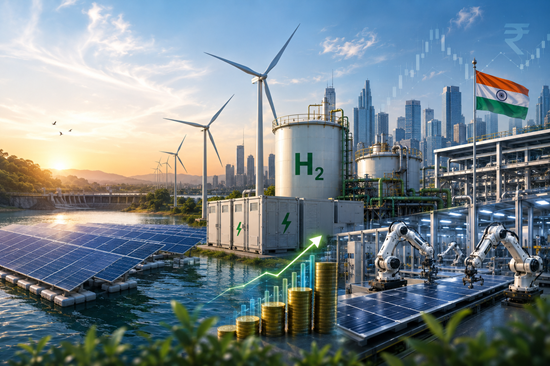
India's Union Cabinet, chaired by Prime Minister Narendra Modi, has approved the Pradhan Mantri Surya Sarovar Yojana (PM-SSY), a ₹50.7 billion (US$532 million) scheme to deploy 5GW of floating solar PV with mandatory co-located battery energy storage systems across India's inland reservoirs and water bodies.
Projects will be sanctioned between FY 2026–27 and FY 2030–31, with Central Financial Assistance of ₹10 million per MW disbursed after commissioning, supplemented by ₹5 million per project for upfront feasibility work covering bathymetry, hydrography and environmental assessments.
The storage requirement is fixed at a minimum of two hours, implying at least 10GWh of BESS co-located across the programme.
The structural significance of PM-SSY lies in what it combines: a land-scarce generation technology, mandatory dispatchability and a domestic manufacturing push in a single scheme.
Floating solar addresses one of the most persistent constraints on India's solar expansion — land availability and cost — by placing generation infrastructure on existing reservoirs that already have grid access from hydropower assets.
The mandatory co-located BESS transforms floating solar from an intermittent generation source into a firm, schedulable asset, a design choice that reflects how India is increasingly structuring renewable schemes around grid reliability rather than raw capacity addition. The scheme is expected to expand India's installed floating solar base from approximately 700MW today to 5,700MW — an eightfold increase — while reducing annual CO₂ emissions by around 10 million tonnes.
National Institute of Solar Energy assessment has estimated India's total floating solar technical potential at 102.18 GWp, with Maharashtra, Madhya Pradesh, Karnataka, Odisha, Telangana and Gujarat accounting for the largest share.
The supply-chain and manufacturing implications are as significant as the capacity target. The scheme explicitly aims to support domestic manufacturing across the floating solar value chain — including floatation systems, PV cells, modules and energy storage systems. This positions PM-SSY as both a demand-creation mechanism for domestic storage and floating-platform manufacturing, and a complement to existing PLI and ALMM-driven module production incentives.
Mandatory BESS integration is also expected to create procurement opportunities for companies offering integrated renewable-plus-storage solutions, with grid consultants noting that transmission infrastructure development for remote inland reservoirs will be a critical execution variable.
The scheme is ambitious in scope; its execution pace will depend on how quickly state agencies complete bathymetric surveys and obtain statutory clearances — a process that has historically constrained large reservoir-based programmes.
Avaada closes $1.3bn financing for 2,150MW solar and hybrid portfolio
Avaada Group has achieved financial closure of approximately US$1.3 billion for a 2,150MW renewable energy portfolio across Gujarat and Maharashtra, making it one of the largest single project-finance closures in India's renewable energy sector in recent months.
The financing has been sanctioned by State Bank of India, REC Limited and Canara Bank across four special purpose vehicles, a structure that distributes lender exposure while enabling distinct project accounting and ring-fencing for each SPV.
The portfolio breaks down into 1,350MW of hybrid renewable energy projects and 800MW of utility-scale solar, with long-term power purchase agreements anchoring offtake to Maharashtra State Electricity Distribution Company (MSEDCL) and Gujarat Urja Vikas Nigam (GUVNL) — two of India's largest and most creditworthy state distribution utilities.
The investment scale in physical terms is more than 3,000MW of solar capacity and 450MW of wind, reflecting how hybrid project structures inflate installed nameplate capacity relative to contracted generation output.
The blended generation-to-contracted-capacity ratio embedded in this portfolio mirrors a broader structuring trend in Indian renewables: developers are deliberately over-building solar and wind capacity behind a contracted PPA to improve capacity utilisation factors and reduce curtailment risk, accepting higher capex in return for lower per-unit effective generation cost.
The SBI-REC-Canara Bank consortium represents a meaningful alignment of India's three largest channels of institutional infrastructure lending — state banking, infrastructure finance and sectoral lending — behind a single integrated clean energy developer.
The Avaada transaction also reinforces a pattern of project finance scale now routinely crossing the $1bn threshold for single-developer portfolio closures in India, a development that has significant structural implications.
Avaada operates a diversified clean energy conglomerate spanning renewable power generation, solar PV manufacturing through its Avaada Electro unit, green hydrogen and derivatives, green data centres, battery storage and pumped hydro — and in July 2026 commissioned the first 3GW production line of its 6GW high-efficiency n-type TOPCon solar cell manufacturing facility at Butibori, Nagpur.
The financing closure therefore sits within a strategy of vertical integration — securing long-term contracted generation while simultaneously building the domestic manufacturing capability to supply the modules for that generation, a model that reduces supply-chain exposure and potentially improves long-run project economics if domestic cell costs stay below landed import prices.
TrueRE Oriana signs $472m Maharashtra MoU for green hydrogen, ammonia and methanol complex
TrueRE Oriana Power has signed a Memorandum of Understanding with the Government of Maharashtra to invest approximately ₹4,500 crore (US$472m) in an integrated green hydrogen project comprising facilities for green hydrogen, green ammonia and green methanol production.
The MoU was formally signed in Mumbai on 5 August 2026, with the Maharashtra government committing to facilitate regulatory approvals, permissions and statutory clearances, and to extend applicable fiscal incentives under prevailing state policies. The project will be implemented on a phased and time-bound basis in accordance with Maharashtra's industrial framework.
The development carries more weight than a standard state MoU because it is anchored by prior contracted commercial commitments. In March 2026, TrueRE Oriana Power signed a long-term Green Ammonia Purchase Agreement with SECI under the National Green Hydrogen Mission for contracted supply of 60,000 tonnes per annum at a discovered price of ₹52.25 per kg, with a total contract value of approximately ₹3,135 crore over 10 years.
The Maharashtra MoU is therefore not a standalone aspiration but a downstream investment step to build production infrastructure against secured offtake — a structurally more credible configuration than typical state-level green hydrogen investment announcements.
The distinction matters: India has accumulated hundreds of gigawatts' worth of green hydrogen MoU commitments since 2021 with minimal actual investment follow-through, and separating contracted-demand-backed projects from aspirational MoU exercises is increasingly important for assessing the sector's real traction.
The choice of Maharashtra as the project location also points to a deliberate industrial clustering rationale. Maharashtra offers proximity to major industrial consumers — refineries, fertiliser plants, steel producers — who represent the most viable near-term domestic offtake for green ammonia and green methanol at commercially viable prices.
TrueRE Oriana's company order book stood at ₹6,612 crore as of March 2026, giving it a financial base from which to support the equity component of this project, though the ₹4,500 crore investment will require significant debt mobilisation and the commercial viability of the methanol stream remains uncertain given current green methanol market pricing globally.
The project represents nonetheless one of the clearer signals from a mid-scale Indian EPC-rooted developer that the green hydrogen value chain — not just hydrogen but ammonia and methanol as tradeable derivative products — is becoming a credible corporate investment direction rather than merely a policy aspiration.
INOX Wind wins $168m repeat NLC India order, order book at 4.7GW
INOX Wind has secured a ₹1,600-crore (US$168m) turnkey 200MW wind energy contract from NLC India, a repeat engagement with the state-owned power producer that will be executed over 24 months from the letter of award.
The contract is fully integrated — covering wind turbine generator supply, EPC activities and post-commissioning operations and maintenance services — reflecting the preference among large public-sector buyers for single-vendor accountability across the full project lifecycle.
The order takes INOX Wind's total order book to 4.7GW, comprising commercial and industrial customers, public sector enterprises and independent power producers, against an annual manufacturing capacity of approximately 2.5GW across facilities in Gujarat, Madhya Pradesh and Himachal Pradesh.
The more analytically interesting dimension here is the client, not the contract value. NLC India is a Central Public Sector Undertaking historically anchored in lignite mining and thermal power generation; its repeat procurement of large-scale wind capacity from a private EPC player is part of a deliberate PSU-sector diversification into renewables, driven partly by central government directives and partly by the commercial logic of hedging against stranded-asset risk in coal-linked operations.
NLC's engagement with INOX Wind across successive contracts represents the kind of PSU-driven procurement that provides order-book stability to private manufacturers without depending on private-sector capital allocation cycles — a structurally useful demand anchor for an equipment and EPC company managing manufacturing scale-up against uncertain near-term auction volumes.
At 4.7GW, INOX Wind's order book is approximately 1.9 times its current annual manufacturing capacity, providing meaningful near-to-medium term revenue visibility.
The company's integrated structure — blades, nacelles, hubs and towers manufactured in-house, with Inox Green Energy Services managing O&M and Inox Renewable Solutions handling EPC — positions it to capture margin across multiple project phases rather than competing purely on turbine supply price.
India's wind sector has been structurally underperforming its installed solar trajectory for several years, constrained by land permitting, grid interconnection timelines and transmission bottlenecks; the accumulation of large PSU orders by players like INOX Wind, combined with India's 500GW non-fossil target's dependence on a meaningful wind contribution, suggests the sector's medium-term execution pipeline is more credible now than its recent commissioning track record has implied.