
India’s energy landscape is entering a decisive phase where two seemingly contradictory trends are unfolding simultaneously. On one hand, the country is witnessing record-breaking electricity demand driven by rising temperatures and economic expansion.
On the other, renewable energy—particularly solar—is scaling at an unprecedented pace, reshaping the structure of power generation.
Recent developments highlight this dual reality. India’s peak power demand has surged to 252 GW, a historic high triggered by intense heatwaves and increased cooling requirements.
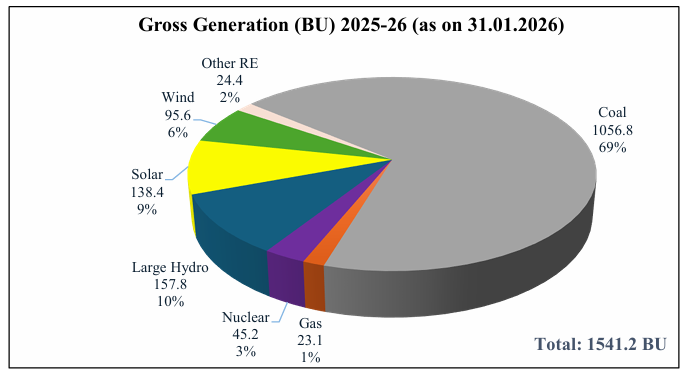
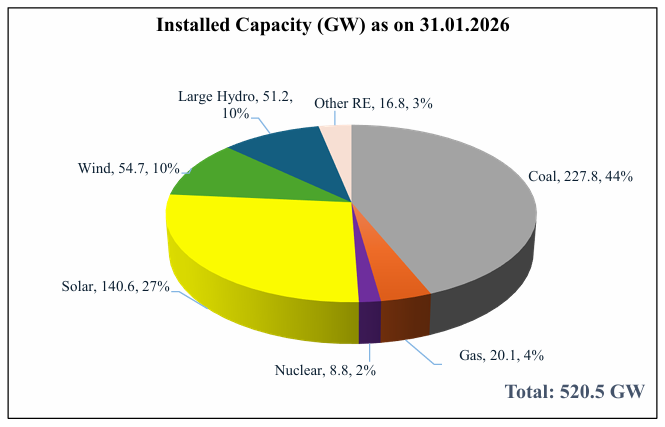
At the same time, solar capacity has crossed 150 GW, with renewables playing an increasingly dominant role in the country’s energy mix. These trends, while individually significant, together pose a deeper question: Can India’s power system keep pace with both rising demand and rapid energy transition?
Source: CEA report: LONG-TERM NATIONAL RESOURCE ADEQUACY PLAN (2026-27 to 2035-36)
A summer of extremes: Demand hits new highs
India’s electricity demand has been on an upward trajectory, but the latest surge reflects more than just economic growth. Extreme weather events, particularly prolonged heatwaves, have significantly amplified consumption patterns. Air conditioning, refrigeration, and industrial cooling needs have driven peak demand to unprecedented levels, touching 252 GW, according to recent reports.
This spike is not an isolated phenomenon. Over the past few years, peak demand has consistently broken previous records, signalling a structural shift in consumption behaviour. Rising incomes, urbanisation and increased electrification are compounding the impact of climate-driven demand.
Government projections suggest that peak demand could cross 260 GW in the near term, underscoring the urgency of strengthening generation and grid infrastructure.
However, this demand surge is also exposing vulnerabilities. Power shortages during peak hours, particularly in certain regions, indicate that capacity addition alone may not be sufficient. The challenge lies in ensuring reliable supply when it is needed most.
Solar’s rapid ascent: A transformative shift
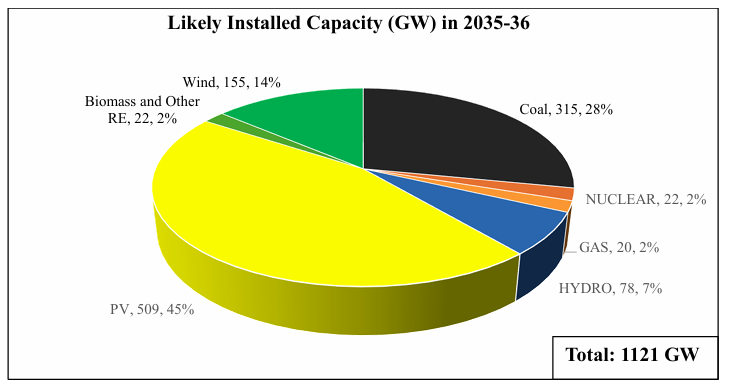
Parallel to the demand surge is the rapid expansion of solar energy. India’s installed solar capacity has now crossed 150 GW, marking a major milestone in its clean energy journey.
Solar energy has emerged as the fastest-growing segment within the power sector, driven by falling costs, supportive policies and increasing investor interest. In certain regions and time periods, solar is contributing a significant share to the overall energy mix, fundamentally altering generation patterns.
This growth is part of a broader renewable push, with India targeting 500 GW of non-fossil capacity by 2030.
The implications are profound. Solar power, once seen as a supplementary source, is now becoming central to India’s energy strategy. It offers not only environmental benefits but also energy security by reducing dependence on imported fuels.
Yet, the scale of this expansion is also creating new operational challenges.
Source: CEA report: LONG-TERM NATIONAL RESOURCE ADEQUACY PLAN (2026-27 to 2035-36)
Regional concentration: The Rajasthan–Gujarat axis
A key feature of India’s renewable growth is its geographic concentration. States such as Rajasthan and Gujarat have emerged as dominant players, together contributing over 34% of the country’s total renewable energy capacity as of March 2026.
These states offer favourable conditions, including high solar irradiance, availability of land and supportive policy frameworks. Large-scale solar parks and wind projects have transformed these regions into renewable energy hubs.
However, this concentration also introduces systemic risks. Power generated in these states often needs to be transmitted over long distances to demand centres, placing significant pressure on transmission infrastructure.
Experts note that while generation capacity has expanded rapidly, grid connectivity and transmission corridors have not kept pace. “We are building capacity faster than we are building the system to carry it,” said a senior industry executive familiar with grid operations.
This imbalance raises concerns about curtailment and inefficiencies, particularly during periods of high renewable output.
Source: CEA report: LONG-TERM NATIONAL RESOURCE ADEQUACY PLAN (2026-27 to 2035-36)
The mismatch problem: Daytime surplus, evening deficit
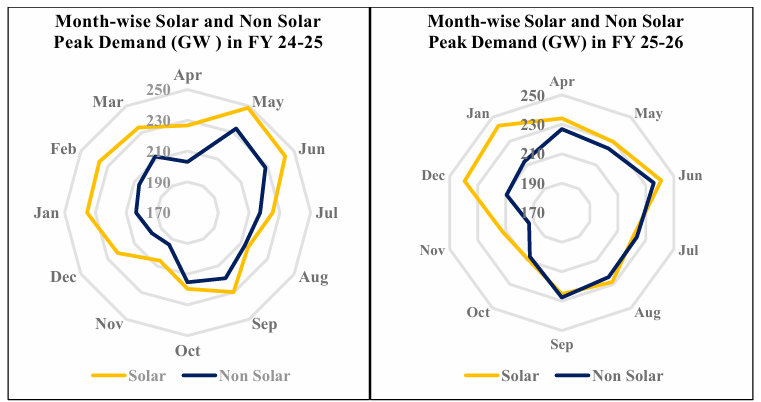
One of the most critical challenges emerging from this transition is the mismatch between supply and demand patterns.
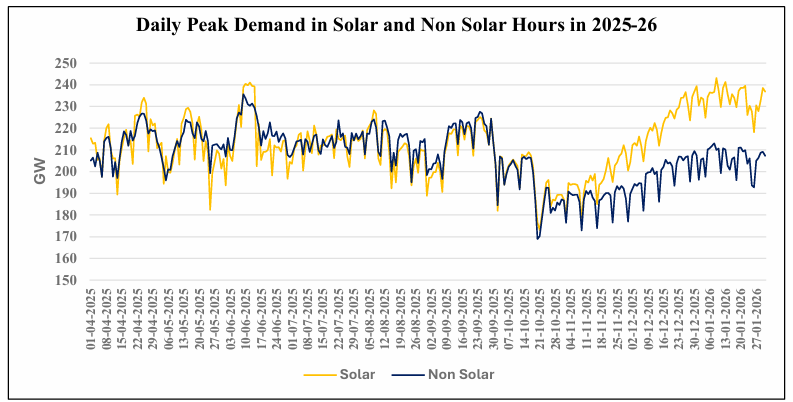
Solar power generation peaks during daylight hours, while electricity demand often rises in the evening. This creates a situation where surplus power is available during the day, but shortages emerge after sunset.
This phenomenon, often referred to as the ‘duck curve,’ is becoming increasingly visible in India’s power system.
To address this, the country is exploring solutions such as battery storage, pumped hydro, and hybrid renewable projects. However, deployment remains limited relative to the scale of the problem.
Without adequate storage and flexibility, the growing share of solar could paradoxically increase system instability rather than reduce it.
Source: CEA report: LONG-TERM NATIONAL RESOURCE ADEQUACY PLAN (2026-27 to 2035-36)
Coal’s continued relevance
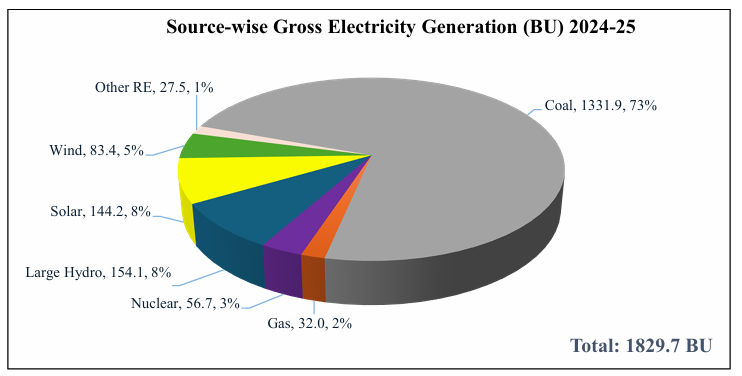
Despite the rapid growth of renewables, coal continues to play a critical role in meeting India’s power demand.
During peak demand periods, thermal power plants provide the necessary reliability and flexibility to balance the system. In fact, recent demand surges have led to increased coal-based generation to avoid outages.
This highlights a fundamental tension within India’s energy transition. While renewables are expanding, they cannot yet fully replace conventional sources, particularly for meeting peak demand.
The government has acknowledged this reality, emphasising the need for a balanced energy mix.
Critics, however, argue that continued reliance on coal could slow down decarbonisation efforts. Proponents counter it, saying that energy security and reliability must take precedence in the near term.
Source: CEA report: LONG-TERM NATIONAL RESOURCE ADEQUACY PLAN (2026-27 to 2035-36)
Infrastructure bottlenecks: The grid challenge
At the heart of these dynamics lies the grid—a critical yet often overlooked component of the energy system.
As renewable capacity expands, the need for robust transmission and distribution infrastructure becomes increasingly urgent. Delays in grid expansion can lead to curtailment of renewable energy, reducing efficiency and investor confidence.
The International Energy Agency has repeatedly highlighted that global investment in grids must double by 2030 to support energy transitions.
India faces similar challenges. While initiatives such as the Green Energy Corridor aim to strengthen transmission networks, progress has been uneven.
A senior official involved in grid planning at POWERGRID noted, “The next phase of the energy transition will not be about adding capacity—it will be about integrating it.”
He added that this integration challenge is far more complex than it appears on paper.
“Renewable energy is inherently variable. Solar generation peaks during the day and drops sharply in the evening, while wind patterns are seasonal and unpredictable. Managing this requires a much more flexible grid, real-time balancing, and significant investments in transmission and storage infrastructure. We also need better forecasting tools and coordination between states to ensure that surplus power in one region can be efficiently utilised in another. Without these systemic upgrades, simply adding more renewable capacity could lead to inefficiencies, curtailment, and even grid instability,” he said.
Source: CEA report: LONG-TERM NATIONAL RESOURCE ADEQUACY PLAN (2026-27 to 2035-36)
Economic and policy implications
The interplay between rising demand and renewable expansion has significant economic implications.
High demand levels can drive up power prices in short-term markets, affecting industrial competitiveness. At the same time, renewable energy—despite its low marginal cost—requires substantial upfront investment.
Balancing these factors requires careful policy calibration. Tariff structures, market mechanisms and regulatory frameworks must evolve to reflect the changing nature of the power system.
There is also a growing debate around capacity payments and incentives for flexible generation, including storage. These mechanisms could play a crucial role in ensuring system reliability.
A system under transition
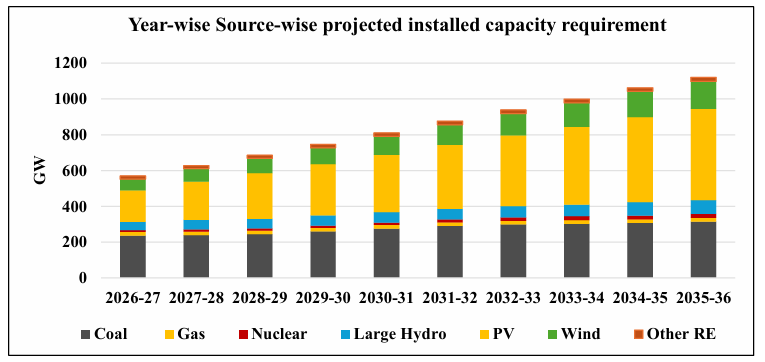
India’s power sector is undergoing a transformation that is both rapid and complex. The simultaneous rise of demand and renewables is creating new opportunities, but also new risks. On one hand, the expansion of solar capacity represents a major achievement, positioning India as a global leader in clean energy. On the other, record demand levels highlight the scale of the challenge ahead.
The convergence of these trends is forcing a rethink of traditional approaches to energy planning.
Source: CEA report: LONG-TERM NATIONAL RESOURCE ADEQUACY PLAN (2026-27 to 2035-36)
The road ahead: Integration, not just expansion
The path forward will depend on India’s ability to move beyond capacity addition towards system integration.
Investments in storage, grid infrastructure and digital technologies will be critical. Equally important will be policy reforms that align incentives with system needs.
The stakes are high. As climate change intensifies and energy demand continues to grow, the resilience of the power system will become increasingly important.
A defining moment
India stands at a crossroads in its energy journey. The record demand of 252 GW and the rapid rise of solar capacity are not isolated developments—they are indicators of a deeper transformation.
The challenge now is to ensure that this transformation is sustainable, reliable, and inclusive.
In the coming years, the success of India’s energy transition will not be measured solely by how much capacity it adds, but by how effectively it manages the system as a whole.
Cover image: AI-generated (representative)