
India’s nuclear story could have taken a very different path, and it almost did. What began as a casual phone call with a friend about India’s rising energy needs quickly became a question India still hasn’t fully answered.
In the mid-1960s, Homi Jehangir Bhabha had already mapped out a bold, long-term plan based not on uranium, but on thorium—one of India’s most abundant yet underused resources. Backed by Prime Minister Lal Bahadur Shastri at a crucial juncture, the vision was clear: move from scarcity to self-reliance.
India did not have abundant uranium, then or now. But it had something else: vast thorium reserves. Bhabha built a long-term roadmap around this reality through the three-stage nuclear power programme, a phased pathway from uranium to plutonium and, eventually, to thorium.
Fate, however, intervened when, within weeks in 1966, India lost both its Prime Minister and its leading nuclear scientist, leading to a slowdown and a temporary loss of momentum. The programme continued, but not with the same urgency.
Bhabha’s successor, Vikram Sarabhai, focused more on space and peaceful applications; the thorium stage remained long-term and was delayed. Shastri’s death brought Indira Gandhi to power. India’s nuclear policy would later become more strategically assertive, culminating in the Smiling Buddha nuclear test of 1974.
India’s power system is now entering a more demanding phase, and, in sync with the nation's needs, it has reached a major milestone in its nuclear energy programme.
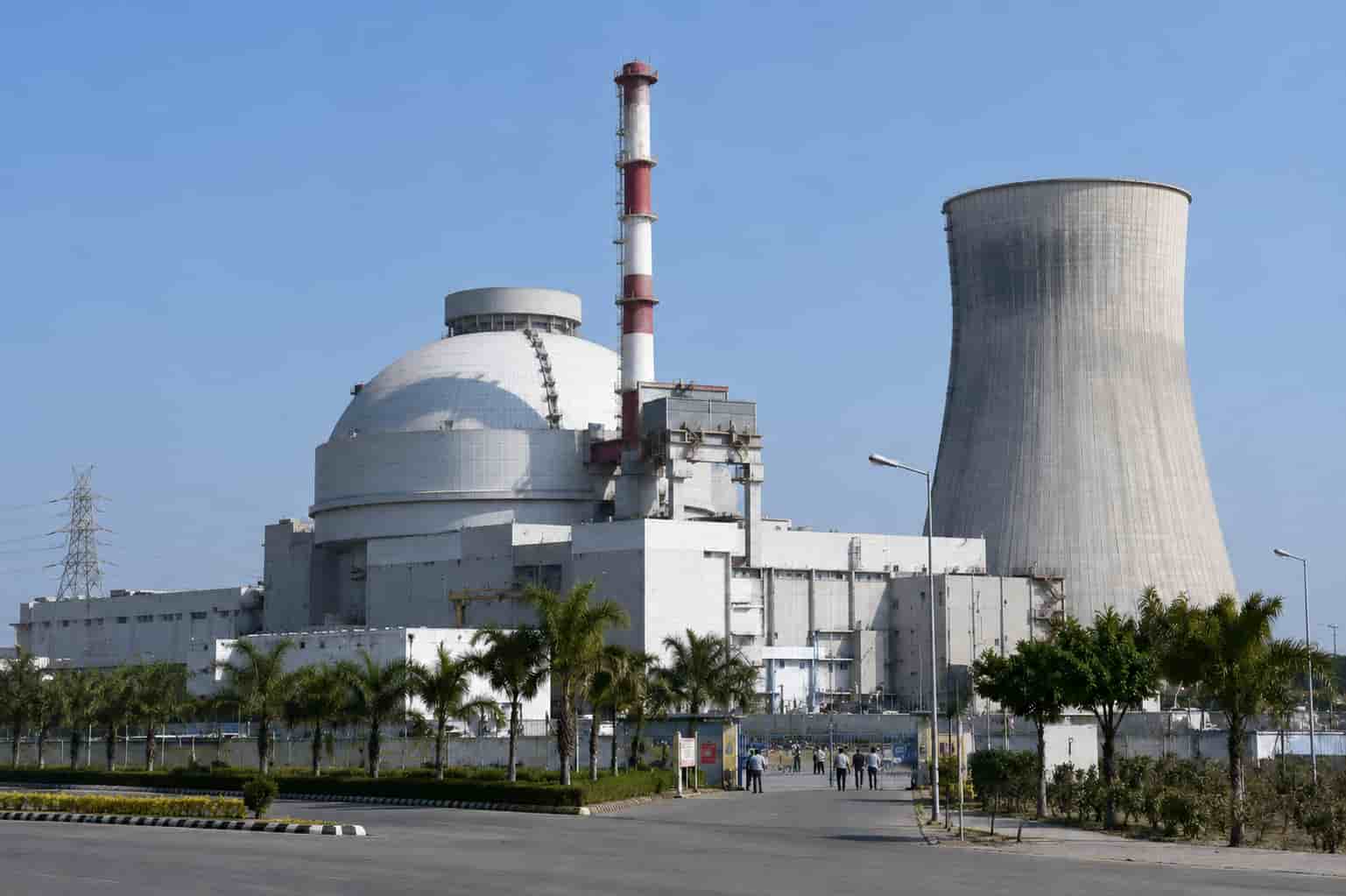
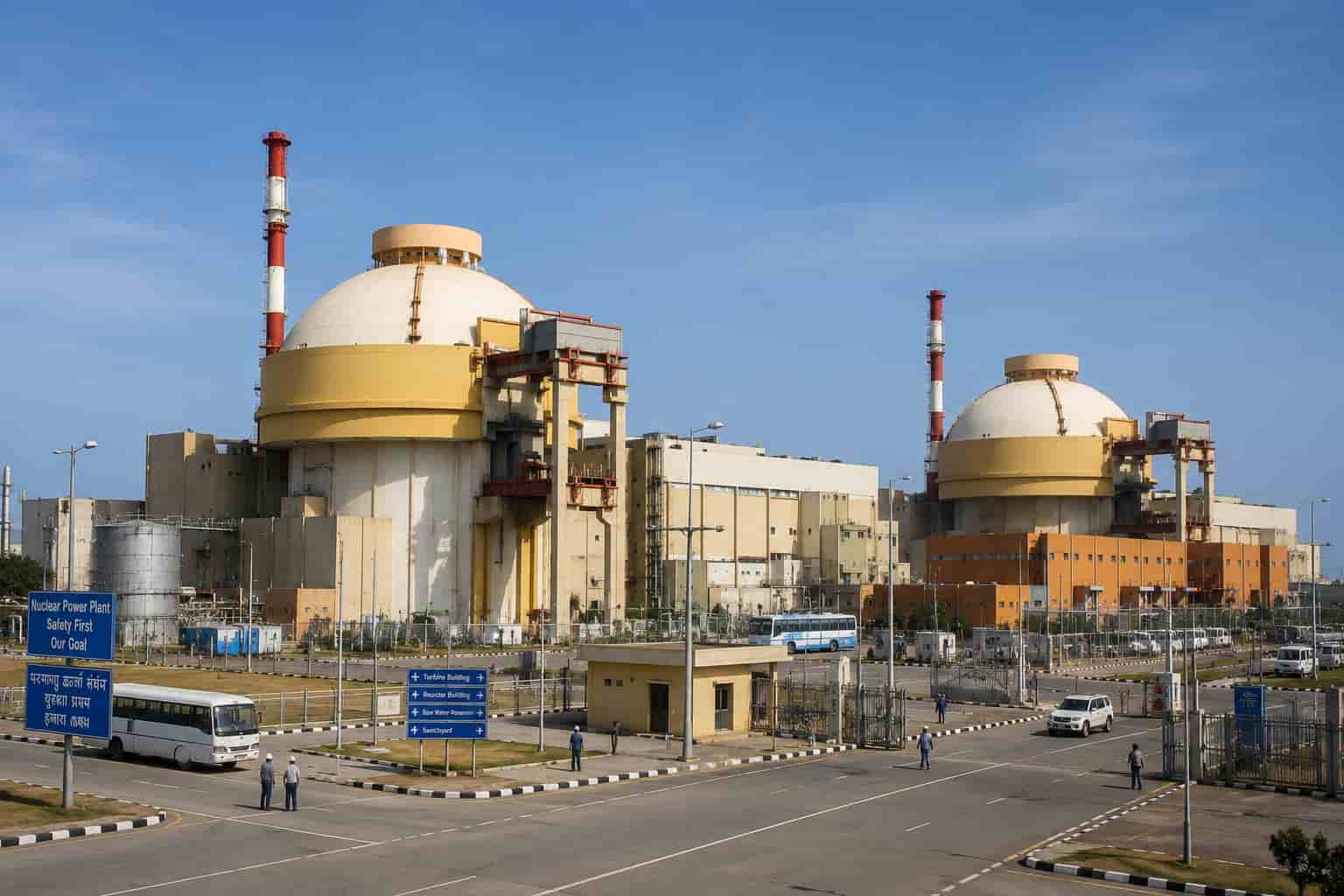
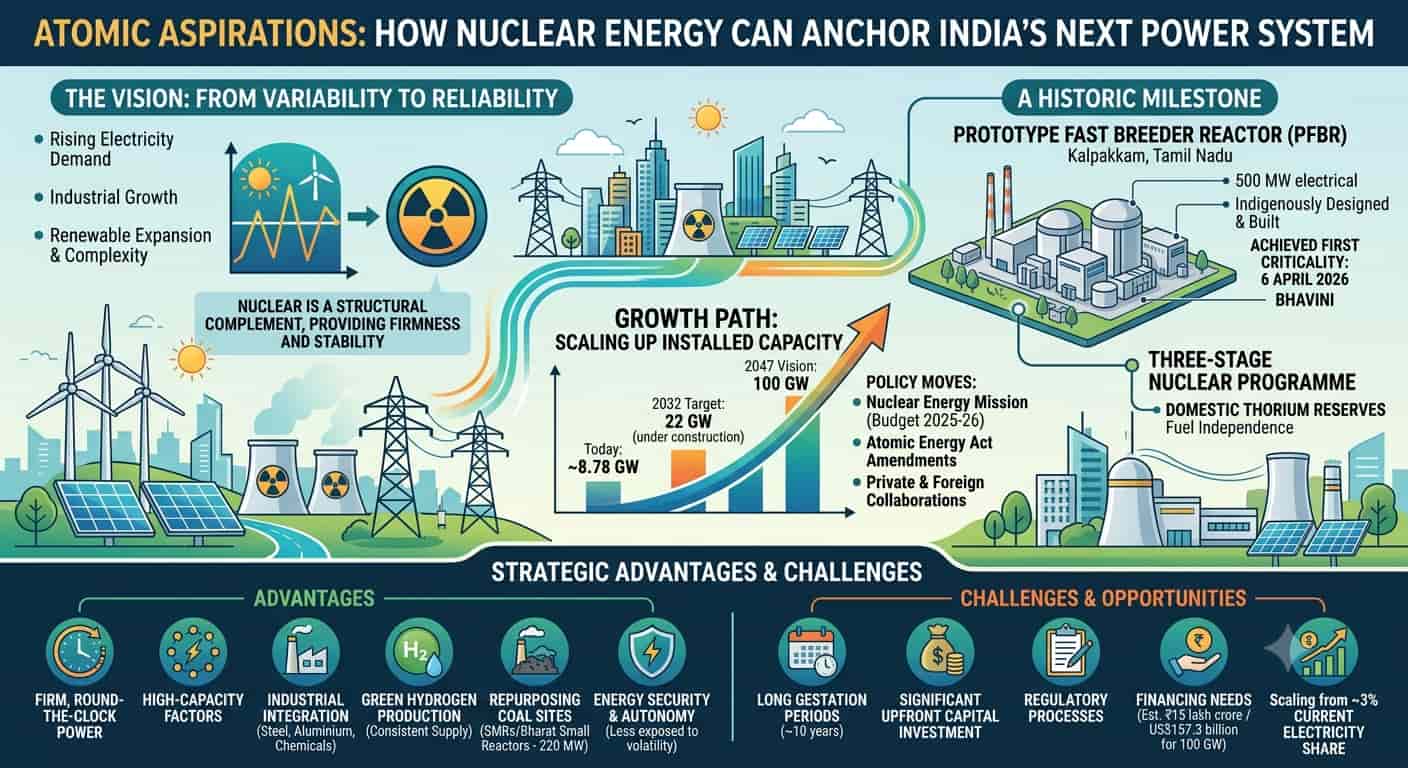
The indigenously designed and built Prototype Fast Breeder Reactor (PFBR) at Kalpakkam in Tamil Nadu achieved first criticality on 6 April 2026, marking the start of a sustained, controlled nuclear chain reaction. The PFBR is a 500-megawatt electrical reactor, built by Bharatiya Nabhikiya Vidyut Nigam Limited (BHAVINI) at the Kalpakkam Nuclear Complex.
The transition continues to be driven by expansion, renewable capacity, investments, and ambition. As it progresses, it is engaging with a new set of emerging realities, bringing greater clarity, discipline, and balance to the transition ahead.
Electricity demand is accelerating faster than anticipated, while renewable energy is scaling up, though not aligned with consumption patterns. Storage is improving but remains limited in duration and economics. In the meantime, industrial needs are spiralling, with new, continuous loads on the grid. What India is witnessing is not a slowdown, but a fundamental shift in the nature of the challenge.
It is no longer only about how much power India can generate, but about how reliably and consistently that power can be distributed.
This is the point at which the transition moves beyond capacity addition into system design, and it is here that nuclear energy begins to take on a different role, not as an alternative to renewables but as a structural complement, providing the firmness, stability, and depth that a high-renewables system increasingly requires.
"The next phase of the energy transition is not merely about adding megawatts. It is about building a power system capable of absorbing variability without compromising industrial reliability," according to energy sector analysts.
From expansion to firmness
India’s renewable energy expansion has been extraordinary by any measure. Non-fossil fuel capacity has surpassed 280 GW, supported by ambitious national targets and sustained policy support. The country is working towards 500 GW of non-fossil capacity by 2030, a goal that reflects both climate commitments and energy security priorities.
 However, scale has exposed its own limits as both solar and wind are inherently variable. Their output depends on time, season, and geography. As their share in the energy mix rises, so does the complexity of managing the grid.
Surplus generation in one period coexists with shortages in another. Peak demand does not always align with renewable output. Storage solutions are evolving, but remain constrained by cost and duration. This creates a structural gap, one that cannot be bridged by capacity alone.
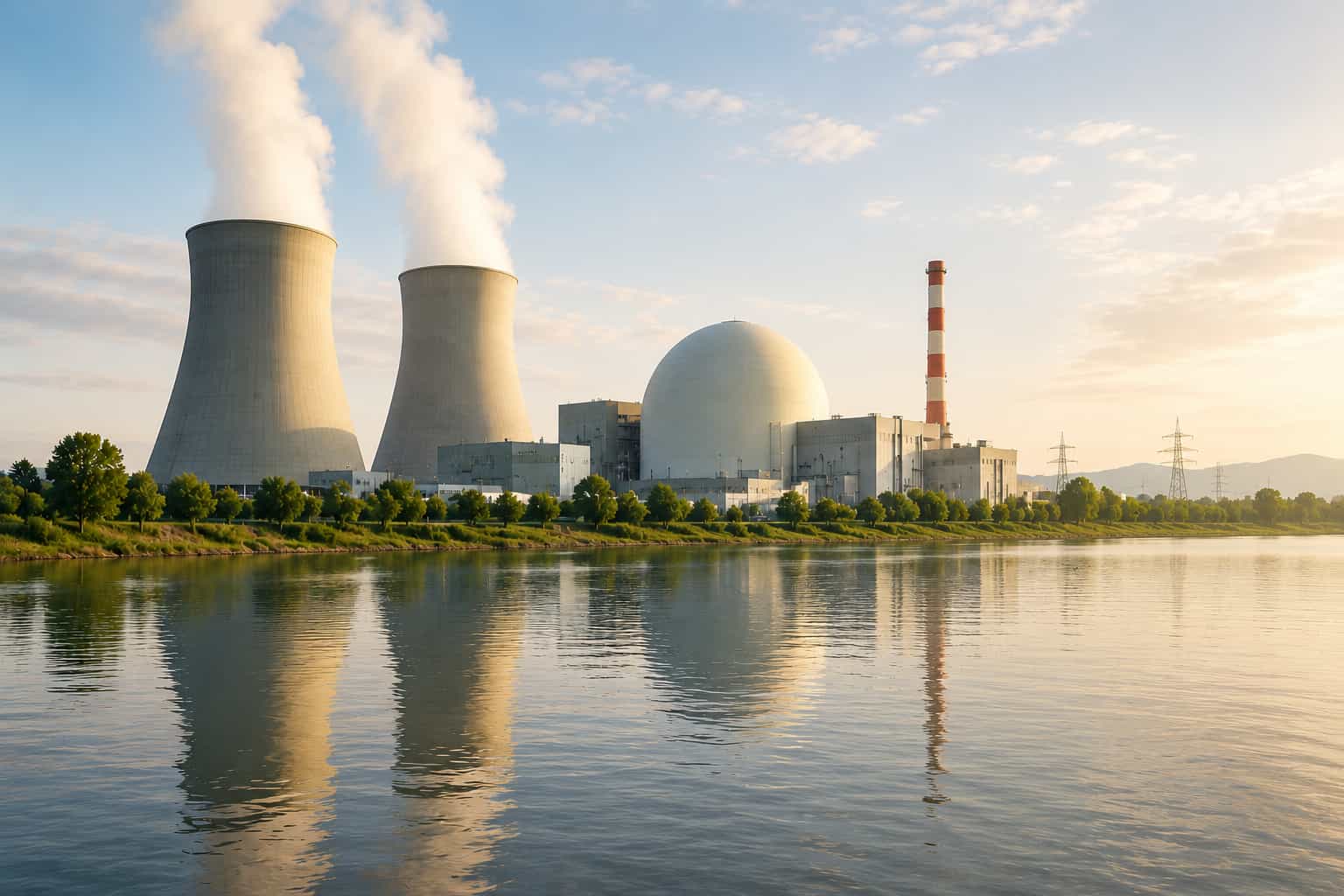
Nuclear energy addresses this gap at its core by providing firm, round-the-clock power, operating at high-capacity factors and independently of weather conditions. In system terms, it does not just add to supply; it stabilises it.
For decades, India’s nuclear sector advanced steadily, but without the scale needed to reshape the energy system, and that is beginning to change.
India’s installed nuclear capacity is approximately 8.78 GW today. However, the forward trajectory is far more ambitious: 22 GW by 2032, driven by reactors under construction, and 100 GW by 2047, as part of India’s long-term energy vision. This is not incremental growth; it is a structural scale-up.
The shift is evident from the various policy announcements made by the Government of India, such as the Nuclear Energy Mission announced in the Union Budget 2025-26, the proposed amendments to the Atomic Energy Act to enable wider participation, and an increasing willingness to private and foreign collaborations.
Taken together, these moves signal a transition from a tightly controlled sector to a more scalable, ecosystem-driven model.
Beyond electricity and towards industrial integration
Nuclear energy is no longer being positioned as just another source of grid power. Its role is expanding across the broader energy-industrial ecosystem, and this shift is evident in multiple ways.
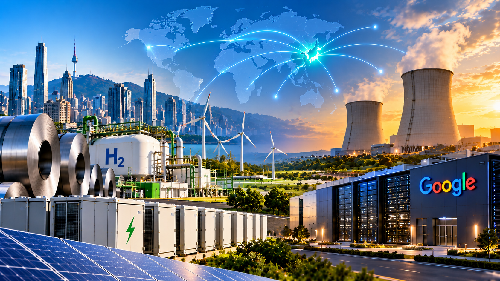
Energy-intensive industries such as steel, aluminium, and chemicals require continuous, high-load power. Intermittent renewables alone cannot meet these needs without substantial backup systems. Nuclear offers a stable alternative, particularly through smaller, dedicated reactors. It is also emerging as a complementary input for green hydrogen production, where electrolysers benefit from a consistent electricity supply to operate efficiently.
There is growing interest in repurposing retiring coal plant sites for nuclear units, especially Small Modular Reactors (SMRs). This approach leverages existing land, transmission infrastructure, and workforce, reducing transition friction. India is also developing Bharat Small Reactors (220 MW) for modular deployment closer to industrial demand centres.
Developments such as these suggest a deeper transition: from centralised generation to embedded energy infrastructure.
The strategic layer: energy security and autonomy
Nuclear energy holds a unique place in India’s strategic thinking. Unlike fossil fuels, it is less exposed to global price volatility, and, like renewables, it is not dependent on weather variability. In contrast to many emerging technologies, it is an area where India has developed long-standing domestic capability.
This convergence makes nuclear energy a critical enabler of energy sovereignty. India’s three-stage nuclear programme, centred on its thorium reserves, reflects a long-term vision for fuel independence. Although still evolving, it remains one of the few pathways to a domestically anchored energy system at scale.
Policy signals reinforce this direction.
The government has articulated a vision of achieving an ambitious target, positioning it as a cornerstone of a low-carbon, self-reliant energy system. At the same time, efforts to enable private participation suggest a pragmatic recognition: the scale required cannot be delivered by the public sector alone.
Execution is the real test
Ambition, however, is not the constraint. Execution is. Nuclear projects are inherently complex. They involve long gestation periods, often around 10 years, and require significant upfront capital investment.
Regulatory processes, while essential for safety, add further layers of complexity. Financing large-scale nuclear expansion remains challenging, particularly in a sector where returns are realised over long time horizons.
At present, nuclear power contributes only about 3% of India’s electricity generation. Meaningfully scaling this share will require sustained institutional, financial, and technological coordination. The investment required is substantial—an estimated ₹15 lakh crore (US $157.3 billion.) to reach 100 GW.
These are not marginal hurdles. They define the pace at which ambition can translate into reality.
A layered energy architecture
India’s energy transition is no longer about choosing between options. It is about combining them. What is emerging is a layered system with renewables providing scale and cost advantage, storage offering flexibility and balancing, hydrogen enabling industrial decarbonization, and nuclear delivering stability and continuity.
Each layer addresses a different constraint. Together, they form a coherent architecture. Within this structure, nuclear plays a distinct role. It is not the fastest to scale or the cheapest to deploy but it is the most consistent. It provides the depth that allows the rest of the system to function effectively.
From ambition to assurance
The first phase of India’s energy transition was about expansion—adding capacity, accelerating deployment, and reducing emissions intensity. The next phase is about assurance.
Can the system deliver power when and where it is needed, support industrial growth without volatility, and remain resilient under stress?
These questions redefine the transition. Nuclear energy alone cannot answer them. But without it, the answers become harder to sustain at scale.
A quiet but decisive shift
India’s nuclear push is not unfolding with the visibility of solar parks or the speed of renewable auctions. It is slower, more complex, and less visible. But it is also more structural. It represents a shift from variable capacity to firm power, from expansion to system design, and from dependence to strategic control.
In the years ahead, as India’s energy system becomes more complex and demanding, nuclear energy may well prove to be the anchor that holds it together. If renewables define the speed of the transition, nuclear will define its strength. In an energy system that now requires both, this distinction may shape the outcome more than any single technology.