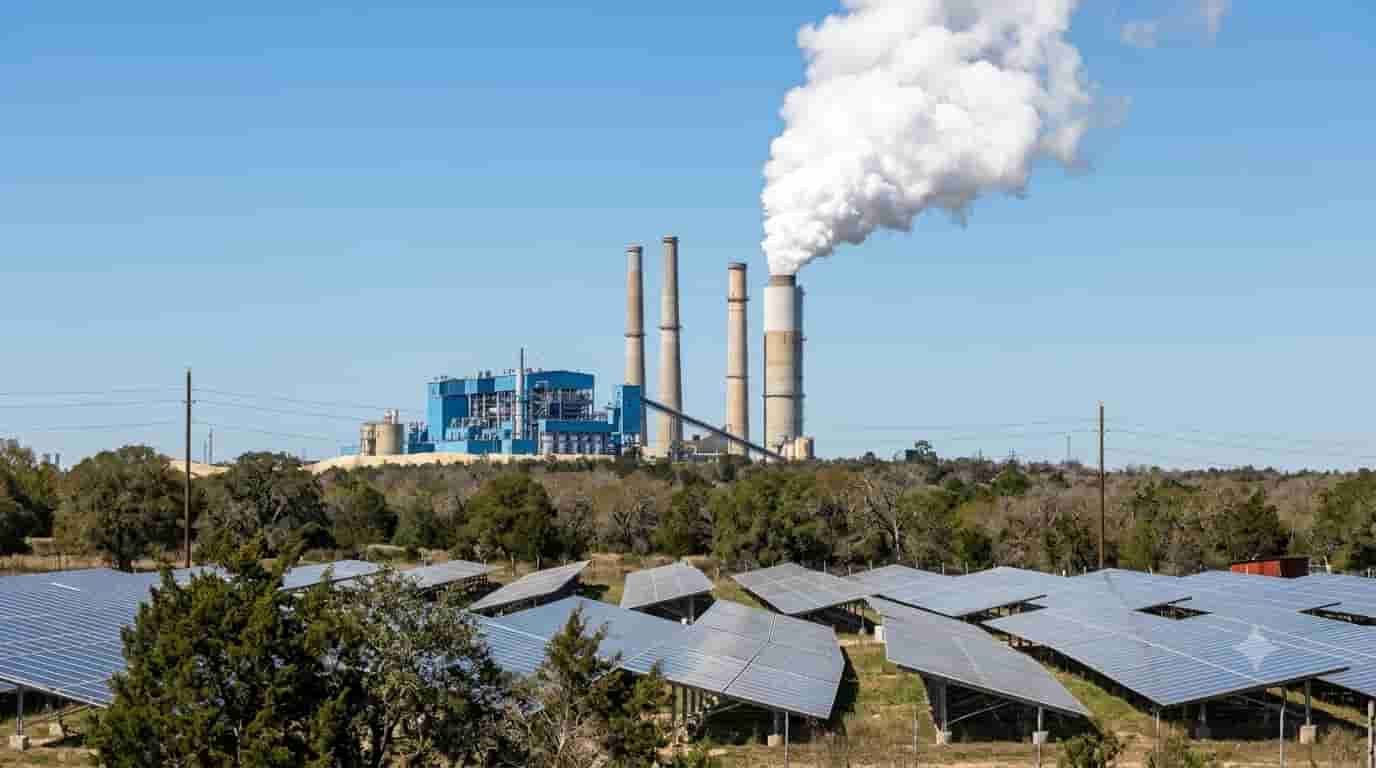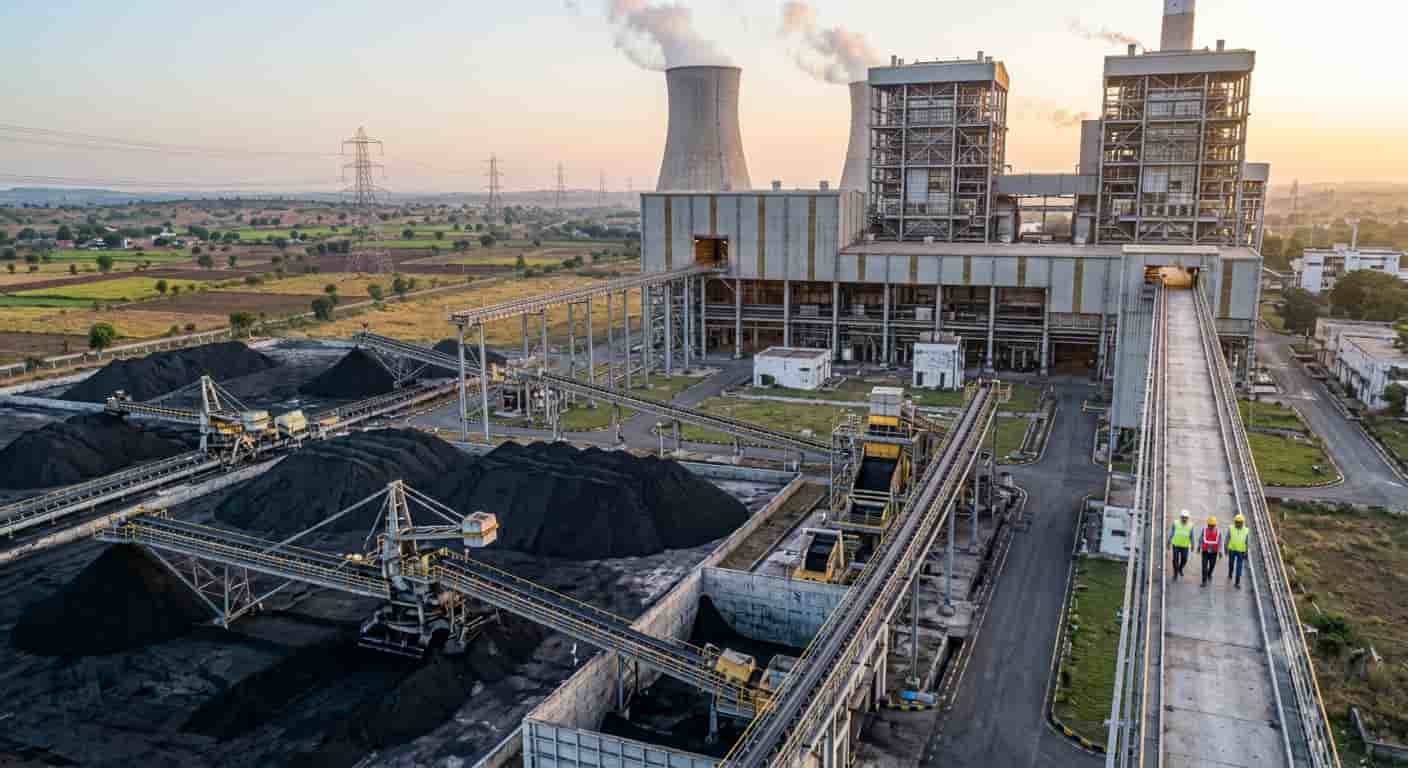

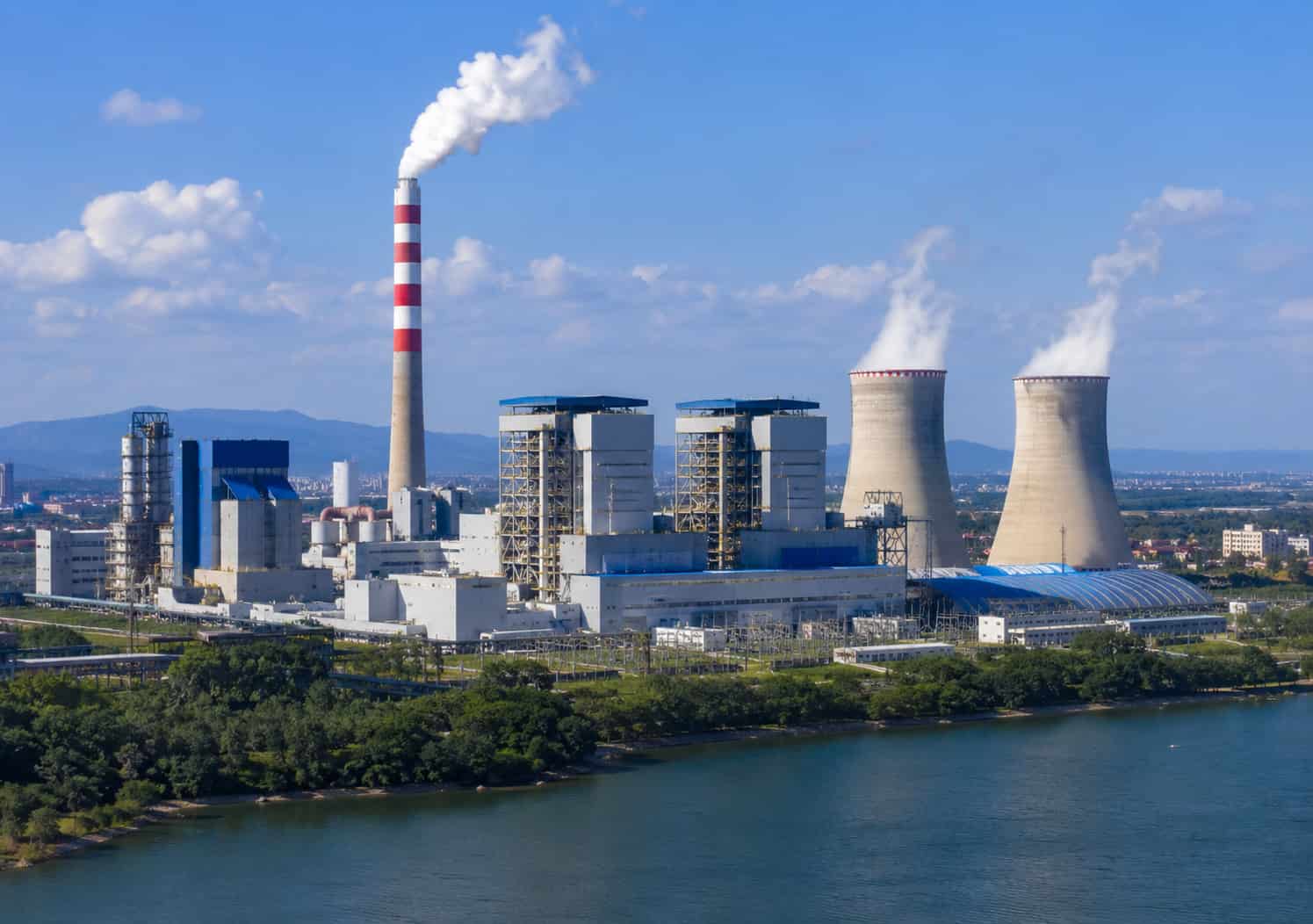
India’s coal fleet is being asked to do something it was never built for. It must ramp down every afternoon as solar floods the grid, then ramp back up by evening, all while the paperwork underneath it still assumes the plant runs flat out, day and night, for a quarter of a century.
A new report from the Centre for Science and Environment (CSE), titled Beyond Baseload: Reforming Thermal PPAs for India’s Energy Transition, argues that this mismatch between how coal actually runs and how coal contracts are written has quietly become one of the more expensive blind spots in India’s power sector.
A fleet built for one job, now doing another
Solar capacity has grown from a modest 2.82 GW in FY 2013-14 to 150.6 GW in FY 2025-26. Coal generation has not shrunk in response; it has simply changed shape. A decade ago, India produced one unit of solar power for every 19 units of coal power.
Today that ratio is one to seven. Coal still supplies roughly two-thirds of India’s electricity and remains, in the report’s words, the backbone of grid reliability. But its job has shifted from steady baseload supply to flexible balancing, propping up the grid in the hours when the sun goes down.
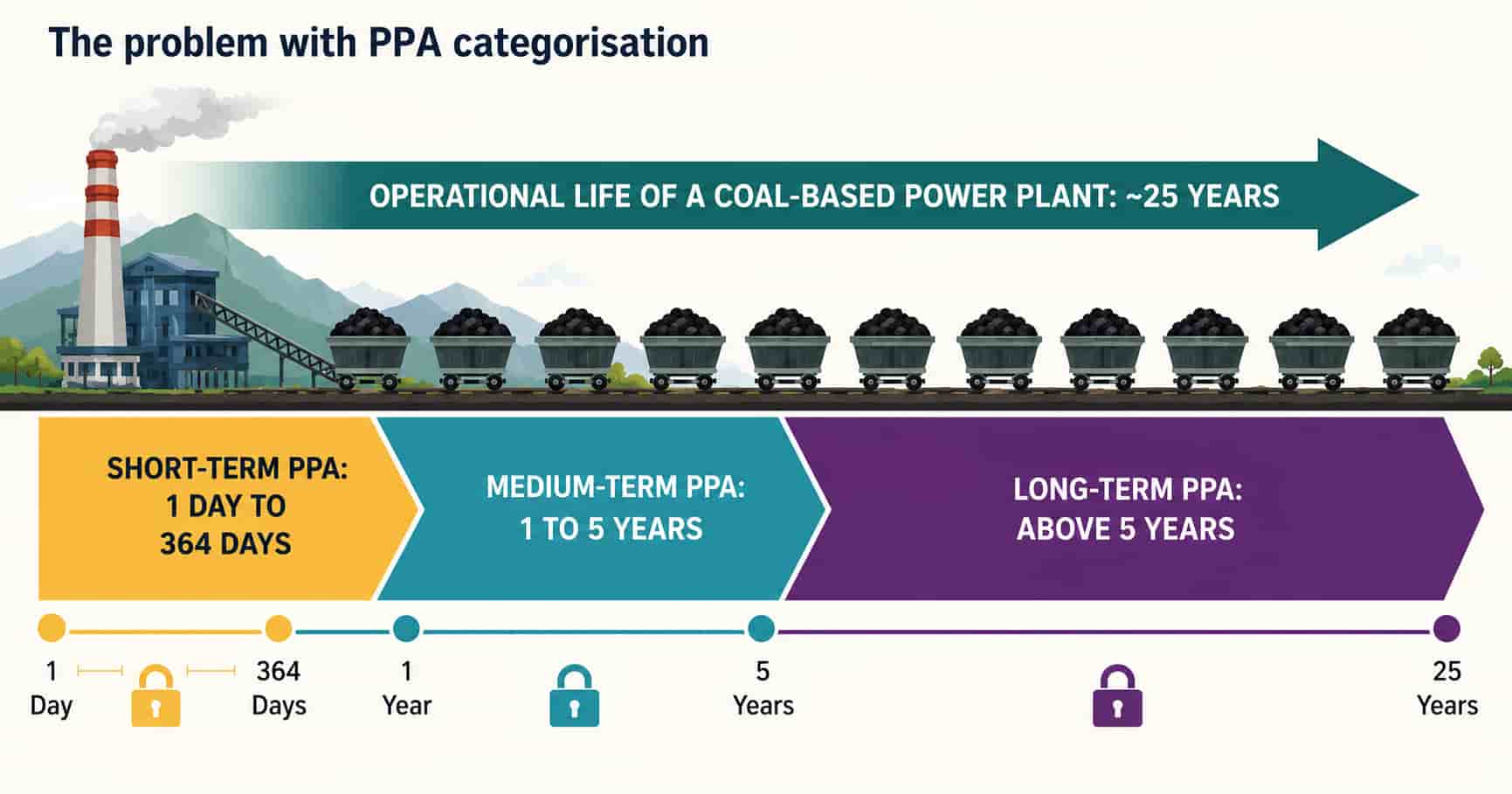
The trouble is that Power Purchase Agreements, or PPAs, the long-term contracts binding generators to distribution companies (DISCOMs), were drafted for the old job. They still pay largely on the basis of a plant’s availability, not on how the plant is actually being asked to behave. As the report on coal’s need to flex noted earlier this year, the fleet’s rigidity is already becoming a bottleneck for further solar growth. This new study goes a layer deeper, into the commercial architecture that keeps that rigidity in place.
The arithmetic of a 25-year contract
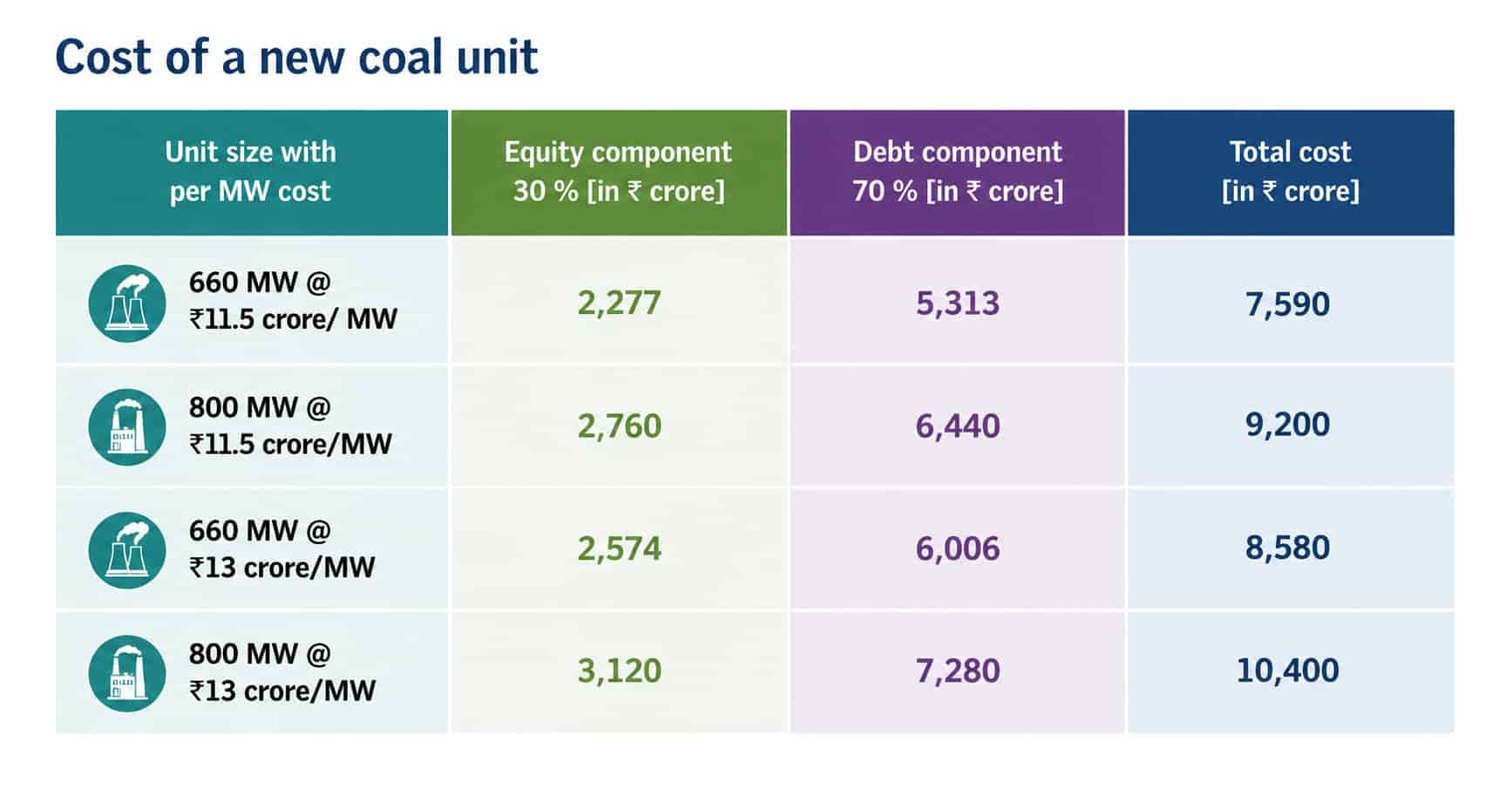
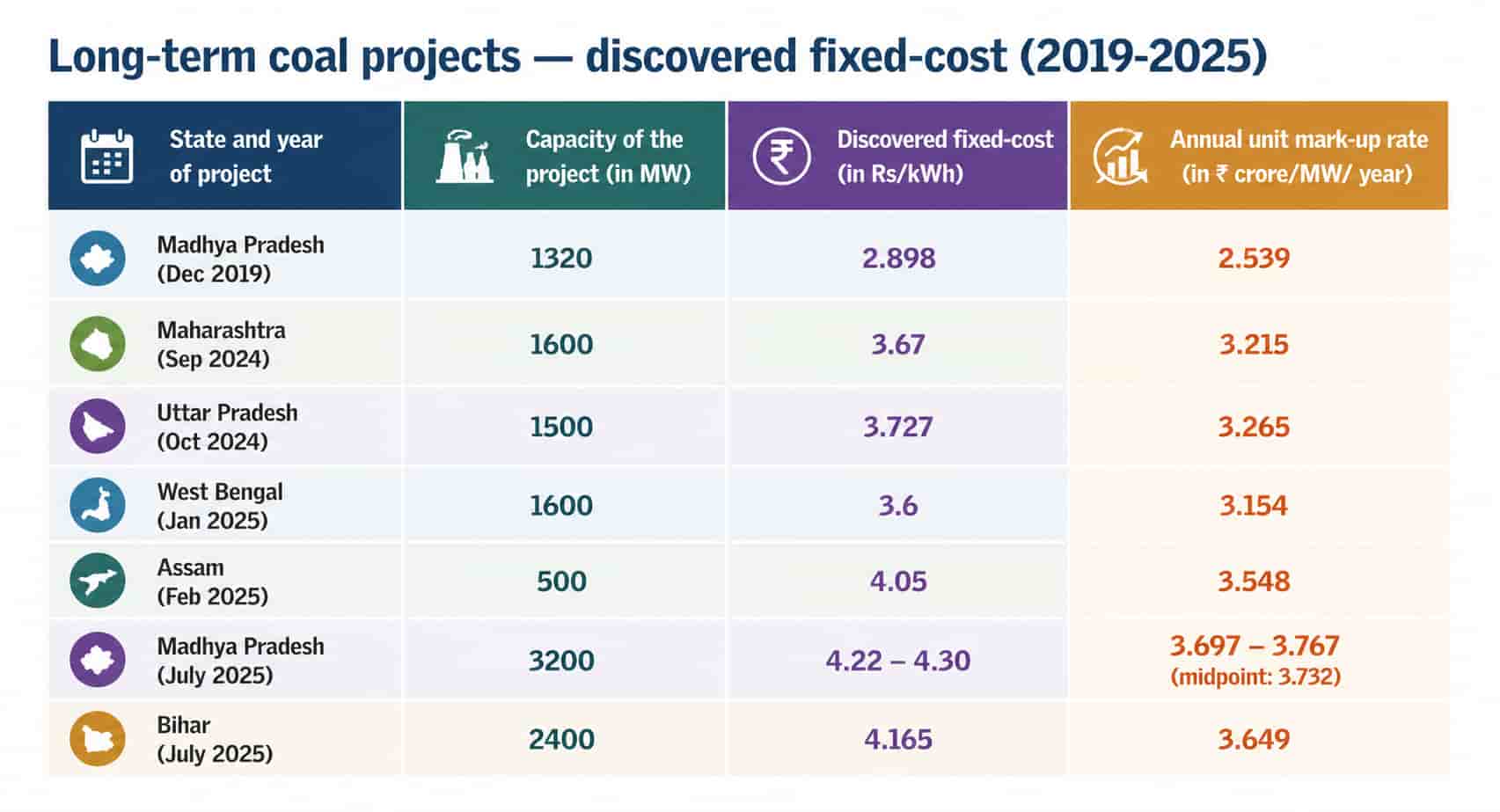
To make its case, the report walks through the economics of a fresh coal PPA using Bihar’s 2,400 MW Pirpainti Thermal Power Station, cleared by the Bihar Electricity Regulatory Commission in 2025 at a discovered tariff of 6.4 cents per unit, with a fixed-cost component of 4.4 cents per unit.
Assuming the plant is available 80% of the time across a 25-year contract, the fixed-cost payout alone works out to roughly ₹1.75 lakh crore (US$ 18.3 billion). Against an estimated capital cost of ₹27,600-31,200 crore (US$ 2.9 billion-US$ 3.3 billion), that is between 5.6 and 6.4 times the original investment.
This is not, by itself, damning. Long-gestation infrastructure needs long-term certainty to attract capital, and every rupee of that payout is not pure profit; debt servicing, operations and depreciation eat into it. But the report’s more interesting finding is what happens once the debt is retired. Commercial loans for these projects typically clear within 10 to 12 years.
The PPA, however, usually runs for 20 to 30 years. For the remaining decade or more, DISCOMs continue paying full fixed-capacity charges on a plant whose original loan has already been paid off, with nearly all of that payment now flowing straight through as equity return. The report calls this the "toll-gate effect": the generator becomes something closer to a landlord collecting rent on infrastructure that has already paid for itself.
Lower tariffs, higher bills
The report’s most counterintuitive number concerns contract length itself. Modelling an 800 MW greenfield coal unit, CSE compares PPA tenures of six, 11, 15, 20 and 25 years. Stretching the contract from 11 years to 25 years does lower the annual capacity tariff, by 70 to 114 paise per unit (roughly 0.7 to 1.2 US cents).
That sounds like a saving for consumers. But because a longer tenure means more years of compounding debt interest and equity returns, the cumulative minimum payout more than doubles over the same stretch, from ₹32,968 crore (US$ 3.5 billion) at 11 years to ₹54,966 crore (US$ 5.8 billion) at 25 years.
Using the market’s actual weighted average fixed-cost tariff rather than a bare minimum, the 25-year payout climbs to ₹67,500 crore (US$ 7.1 billion).
"A lower annual tariff feels like relief to a DISCOM board in the short run," the study notes, "but it is often bought by locking in a far larger bill over the life of the contract." That is arguably the report’s central insight: contract length is being used as a lever to manage optics rather than actual cost, and regulators evaluating PPAs on headline tariff alone are missing the larger number sitting underneath.
What RTI data reveals about the lock-in
CSE backed its financial modelling with Right to Information applications sent to DISCOMs and power corporations across 12 states between January and March 2026. Six states, including Maharashtra, Karnataka, Kerala, Rajasthan, Haryana and Tamil Nadu, gave full disclosures; Bihar’s two DISCOMs rejected the applications outright, and three states did not respond at all.
Even with partial coverage, the exercise mapped 67.1 GW of contracted coal capacity, almost all of it locked into long-duration PPAs, with the heaviest concentration of contract expiries clustered in the 2030s. Some Kerala, Tamil Nadu and Maharashtra contracts run out only in the 2040s and 2050s.
One outlier stands apart. Mumbai’s BEST utility is the only DISCOM in the sample using five-year PPAs. Its contracted coal units have already outlived their nominal 25-year operational life yet continue running under short-term arrangements, at lower tariffs than comparable long-term deals. It is a modest but telling counter-example: coal capacity can keep operating commercially without a DISCOM signing away three decades upfront.
When markets price the lock-in as an asset
If further proof were needed that long-term PPAs carry real financial value, it arrived earlier this year when Torrent Power acquired Nabha Power Ltd from Larsen & Toubro for an enterprise value of ₹6,889 crore (US$ 720 million), paying ₹3,661 crore (US$ 385 million) for equity and convertible instruments alone.
Nabha’s 1,400 MW Punjab plant sells 85 % of its output under a 25-year PPA with the Punjab State Power Corporation, with 13 years of that contract still to run as of July 2026. According to the report, the willingness of a buyer to pay a near-6x EBITDA multiple for that plant reflects precisely how much a locked-in, availability-based revenue stream is worth to investors, even one attached to a coal asset in an era of rising renewables.
Reform without rupturing certainty
The report is careful not to argue that PPAs should be torn up. Instead, it points to a precedent already sitting inside India’s power law: the Tata Mundra ultra-mega power project. After Indonesia’s 2010 coal-pricing reforms eroded the plant’s economics, TATA Power spent nearly 15 years fighting through the Central Electricity Regulatory Commission, the Appellate Tribunal and eventually the Supreme Court, without success.
Only in March 2026 did TATA Power and the Gujarat DISCOM sign a Supplementary PPA allowing a full coal-cost pass-through, restarting a plant that had spent months in reserve maintenance. It shows renegotiation is possible even for a competitively bid Section 63 contract, but also that without a defined process, it can take a decade and a half to happen.
CSE’s recommendations lean on that lesson. It calls for revising the Ministry of Power’s Model Thermal PPA to build in efficiency and emission benchmarks, differentiated availability requirements for solar versus non-solar hours, and mandatory periodic portfolio reviews so DISCOMs assess ageing contracts rather than simply letting them run.
It also floats a scheduled exit or release clause, agreeing upfront, at signing, what compensation would apply at the fifth, eighth, 12th, 15th, 20th and 25th year of a contract, so that any future renegotiation is a calculation rather than a fight.
The stakes are not small. The report estimates that at current minimum technical loads, roughly 45.72 GW of contracted coal capacity sits unused during peak solar hours; if regulators push minimum loads down to 40 %, as policy already intends, that idle capacity could rise to around 80 GW.
India still plans to add another 97 GW of coal capacity by FY 2034-35, mostly under the same contractual template examined in this report. Whether that template evolves in time may determine, more than any single power plant decision, how much India’s consumers ultimately pay for keeping the lights on during its transition away from coal.
Follow us on : X | LinkedIn | Facebook | Bluesky