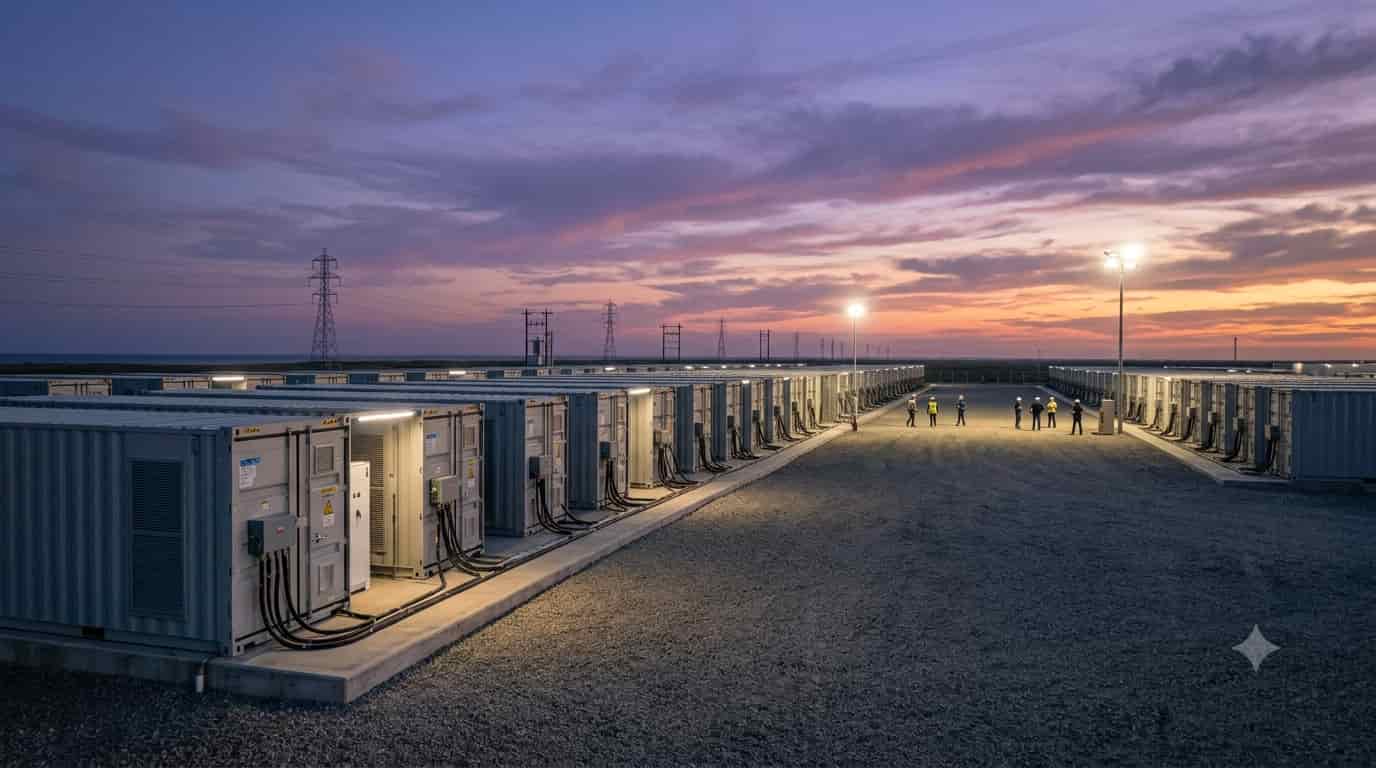


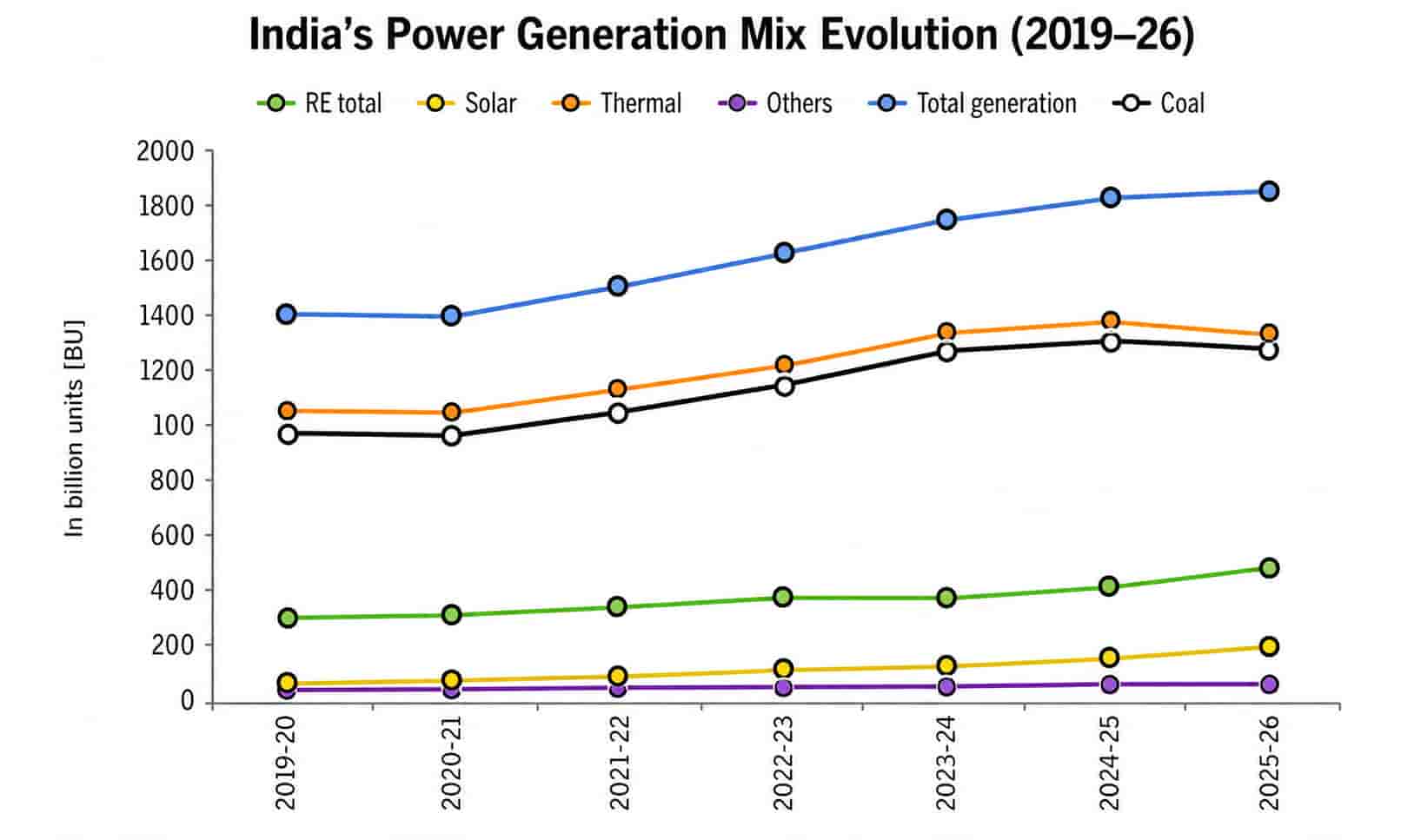
By November 2025, India reached a milestone few expected this early. Non-fossil sources crossed half of the country’s installed power capacity, meeting a Paris Agreement climate commitment five years ahead of schedule. Solar capacity alone has grown 3.5 times in six years, from 40 GW to over 140 GW.
But a large and growing share of that clean power is going unused. The reason has less to do with how much renewable energy India can build, and more to do with whether its ageing coal fleet can get out of the way fast enough to let that power onto the grid.
A grid built for one shape, running on another
India’s electricity demand has always had a familiar rhythm: a moderate daytime load and a sharper evening peak once the sun goes down and household and commercial consumption rises together. Solar generation, by contrast, is concentrated entirely in daylight hours and disappears within minutes at dusk.
The result is a deepening ‘duck curve’: a steep dip in net demand around midday, followed by a punishing evening ramp. On 23 April 2025, for instance, demand jumped from 213 GW to more than 224 GW within a single hour, just as solar output collapsed from nearly 19.4 GW to under 0.3 GW.
India’s coal plants were designed for the opposite kind of operation altogether — steady, baseload running, not constant throttling. Most units currently cannot be turned down below 55 % of their rated capacity, a threshold known as the minimum technical load. During sunny hours, many are already pinned at that floor, unable to step back further to make room for solar. Anything beyond that floor has nowhere to go but curtailment.
The cost of a grid that cannot bend
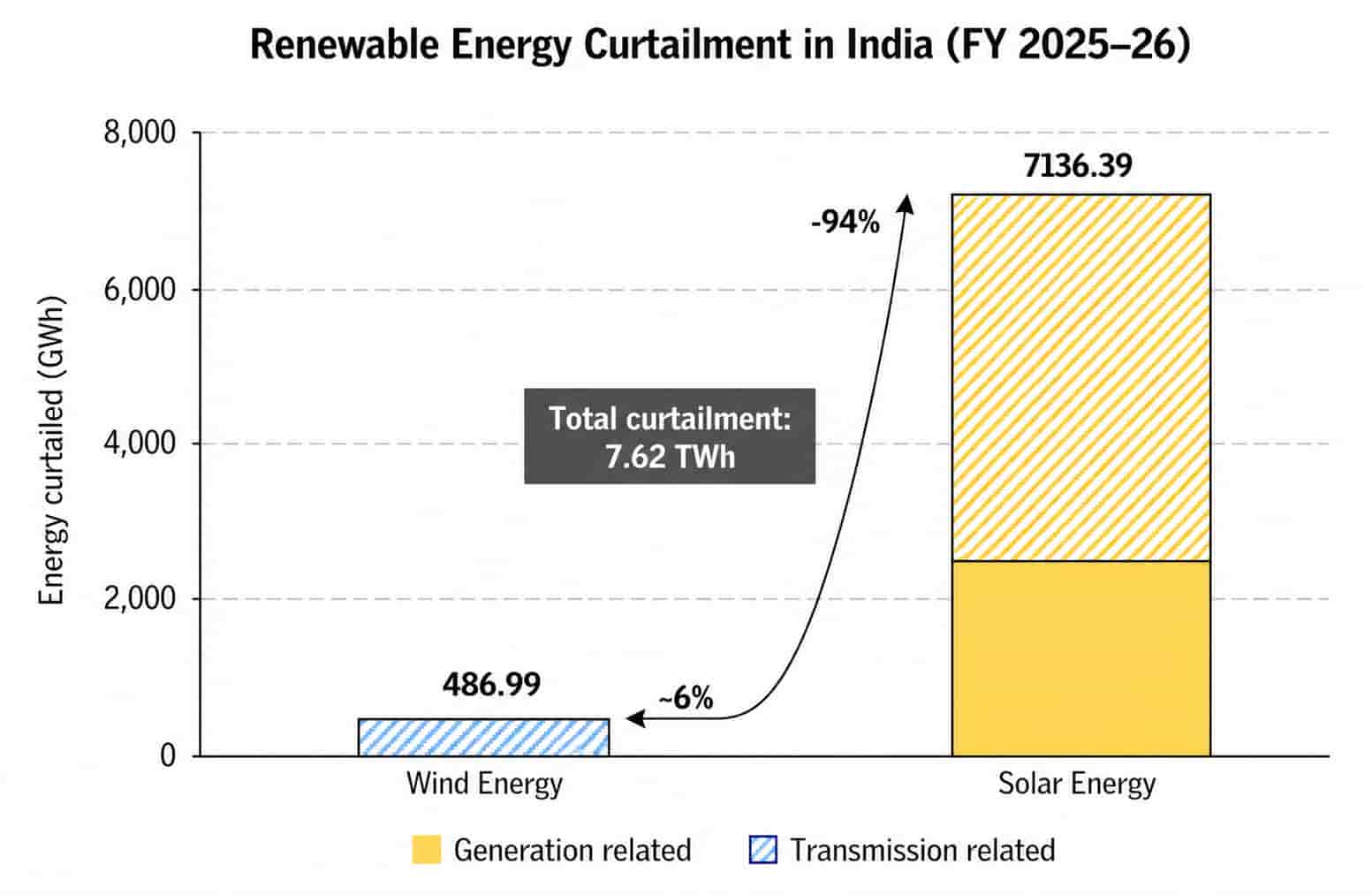
Between April 2025 and March 2026, roughly 7,136 gigawatt-hours (GWh) of solar and 487 GWh of wind generation were curtailed, adding up to about 7.61 terawatt-hours (TWh) of clean power that was generated but never used.
CSE’s analysis puts an economic figure on this waste: ₹2,651.32 crore (USUS$277 million) as the shadow cost of the unused renewable energy, plus a further ₹3,331.42 crore (USUS$350 million) spent replacing it with costlier fossil generation, taking the total economic burden to nearly ₹5,982.74 crore (USUS$625 million) in a single year. Roughly 7.91 million tonnes of avoidable carbon dioxide emissions rode along with it.
Much of that replacement cost comes from natural gas, which is increasingly being pressed into service to cover the steep evening ramp that coal cannot manage quickly enough. Gas-fired power in Delhi, for example, costs the discom around ₹12 to ₹12.57 (≈ US$125.38/MWh) per unit, roughly double what coal or renewable energy would cost to supply the same demand.
With more than 100 GW of additional solar capacity currently under construction, this mismatch is set to widen rather than narrow unless something in the middle of the system changes. As the CSE’s report, titled Flex to Fix: Deciphering India’s Coal Flexibilisation Challenge for RE Integration, puts it, flexibility, not capacity, has become the binding constraint on India’s clean energy transition.
A national plan that is years behind its own schedule
Recognising this, the Central Electricity Authority has mandated a phased plan covering 493 thermal generating units, totalling 196.7 GW, to be made flexible by 2030. The target is to bring the minimum technical load down from 55% to 40%, while lifting ramp rates to at least 3% of capacity per minute.
Pilot testing suggests this is technically achievable. Most Indian coal units tested so far have managed to operate at 40% load, and some, including a unit run by the Damodar Valley Corporation, have gone even lower. Ramp rate tests have shown performance ranging from a baseline of 1% per minute up to over 3% per minute in select units.
Execution, however, tells a different story. Only about one 500 MW unit has fully demonstrated compliance on both counts — low-load operation and ramping speed together. Just 1.9 GW of capacity has achieved the 40% minimum load capability across the fleet, and even the modest 5.85 GW pilot phase itself remains incomplete, with only around 800 MW effectively delivered.
India, in effect, is still running a pilot programme years after formally entering Phase 1 of a national rollout, a gap the report attributes not to technical infeasibility but to regulatory, financial and institutional bottlenecks. Readers following Indoen Energy’s earlier coverage of coal’s flexibility wall will recognise this as the same structural gap between ambition and delivery.
Why flexing coal beats building batteries, for now
One of the report’s more striking findings concerns cost. Retrofitting a coal unit for flexible operation typically costs between ₹6 crore and ₹30 crore (≈ US$0.63 million – US$3.13 million), depending on its age, with older, pre-2004 units at the top of that range. Scaled across the entire phasing plan, CSE estimates the total capital requirement at roughly ₹2,958 crore to ₹14,790 crore (US$310 million to US$1.5 billion).
Compare that with the cost of doing the same job through batteries instead. Replacing thermal ramping capability with grid-scale storage would require an estimated 30.8 GW and 184.7 GWh of battery capacity, at an investment of ₹3.7 lakh crore to ₹9.6 lakh crore (US$38.7 billion to US$100.3 billion) for long-duration systems, or ₹1.08 lakh crore to ₹1.39 lakh crore (US$11.3 billion to US$14.5 billion) even for shorter-duration deployment.
On a capital-expenditure basis, that works out to somewhere between 600% and 31,000% more expensive than flexibilising the existing coal fleet.
“Large-scale storage deployment, while essential in the long term, would require far higher capital outlay than retrofit-based flexibility,” the report notes, making the case that flexibilisation is the most cost-effective near-term bridge, not a substitute for storage, but a companion to it while battery costs continue to fall and volumes scale up.
Tariff impacts for consumers, meanwhile, look manageable. CSE estimates the system-wide tariff impact of flexibilisation at just 0.47 to 2.35 paise per unit under a phased recovery approach, with daily tariff increases for flexible operation running at 8 to 15%.
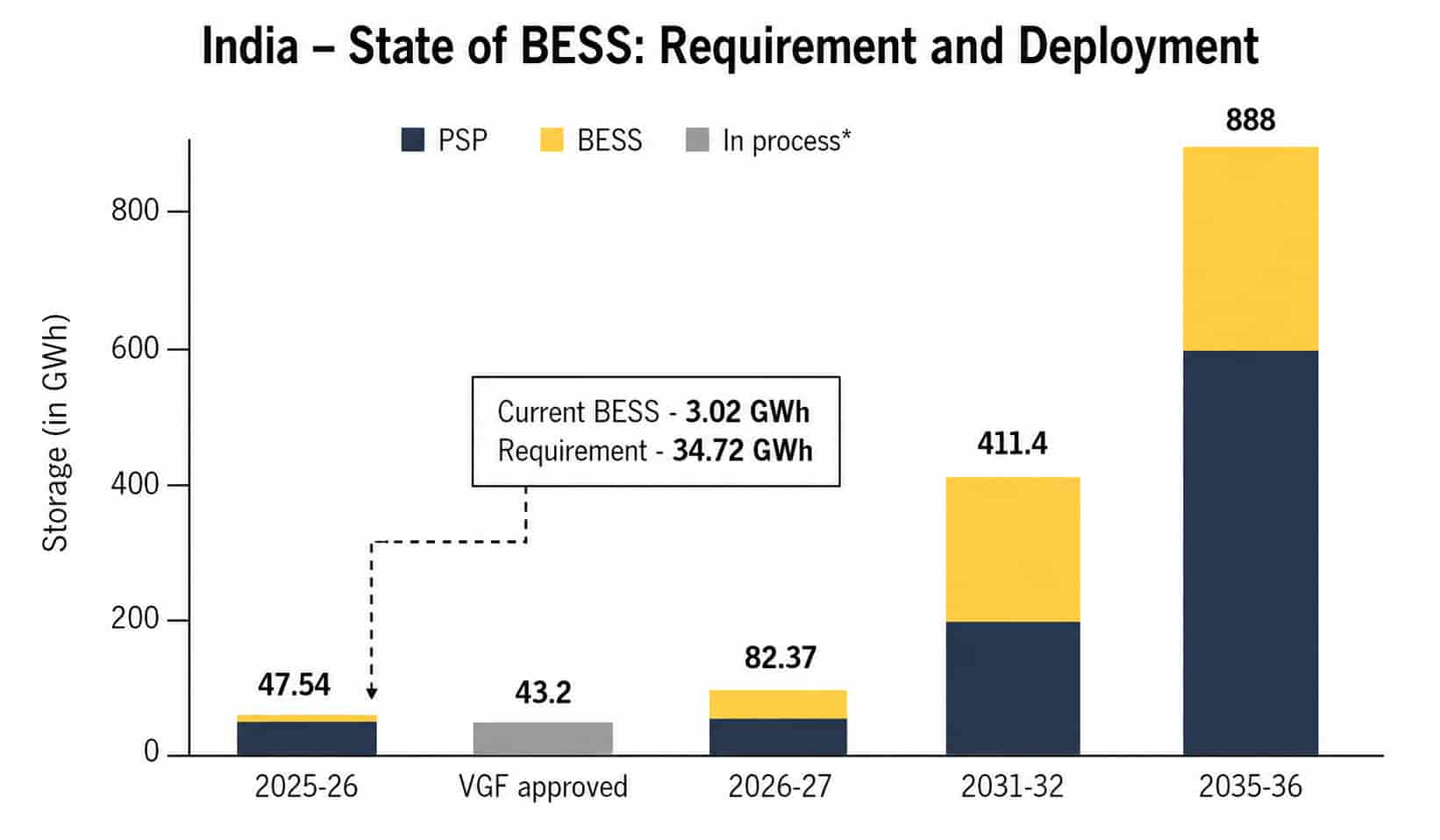
As of 2025, India’s own operational battery storage capacity stood at only 205 MW, or 0.5 GWh, underlining just how far behind demand the storage build-out currently sits, even with a Viability Gap Funding scheme for 43.2 GWh approved that year and ambitions to reach 236.22 GWh by 2030.
What flexibility actually buys the grid
Run the numbers system-wide, and the payoff becomes clearer.
Lowering the coal fleet’s minimum load from 55% to 40% during the ten sunniest hours of the day creates roughly 34.275 GW of immediate operational headroom, translating into about 125.1 TWh of additional annual renewable integration space, a 71.5% increase over FY 2025–26 baseline solar generation.
On a typical peak-demand day, this could free up around 18,148 MW of additional real-time grid absorption capacity, enough, the report suggests, to accommodate 25% more solar or effectively double wind integration during the riskiest midday windows.
There is a genuine trade-off buried in this, and the report is careful not to gloss over it. Running coal units at sustained low loads degrades their heat rate and increases auxiliary power consumption, producing an efficiency penalty of 18 to 25% at the plant level.
Yet even after accounting for this penalty, the net effect is a decarbonisation win: between 92 and 101 million tonnes of avoided carbon dioxide emissions annually, a 7.7 to 8.4% cut in the power sector’s overall footprint.
Looking at China and Germany
India is not the first country to face this problem. China, which still burns more coal than any other nation, has already retrofitted more than 300 GW of its coal fleet for flexible operation since 2021, ahead of its own targets, and is now working toward technical loads as low as 25% across its entire fleet.
Its progress has been driven by binding administrative tools, including performance-linked renewal of power purchase agreements and a capacity payment system that keeps ageing coal units financially viable even as their utilisation falls.
Germany has taken a different route, relying on a mature, price-based market with 15-minute dispatch blocks that reward fast-responding generators directly through market signals rather than administrative mandate.
Both paths, the report observes, point to the same underlying lesson: flexibility scales only when incentives, dispatch rules and long-term policy signals move together, not when technical feasibility is treated as sufficient on its own.
The gaps that are actually holding India back
The barriers are not primarily technical. India’s coal fleet spans 31 different unit sizes, with some units nearly five decades old, making uniform retrofitting difficult.
Regulatory treatment is uneven too: cost recovery for flexible operation currently applies mainly to cost-plus generating stations, leaving competitively bid plants with far weaker recovery mechanisms, and only five states have issued formal regulations recognising flexibilisation costs at all.
Tariff frameworks also fail to capture lifecycle equipment wear from repeated cycling, workforce upskilling costs, or the testing periods plants need before going live.
CSE's recommendations focus on closing these gaps, not reopening the technical debate. Retrofits should be prioritised by heat-rate and emission performance, not applied equally across all units. CAPEX and OPEX definitions should broaden to cover training and testing costs. Incentives like preferential dispatch should complement penalties, not replace them. Curtailment costs should carry standardised disclosure. And time-of-day pricing should let flexible plants sell power against real-time signals.
The bottom line
India’s renewable energy story has, so far, been one of capacity addition outpacing almost every forecast. The next chapter, this report makes clear, will be decided less by how many gigawatts of solar and wind get built, and more by whether the coal fleet that still anchors the grid can be persuaded, retrofitted and paid to bend. Without that shift, the country risks watching its own clean power go to waste even as it keeps building more of it.
Follow us on : X | LinkedIn | Facebook | Bluesky