
South Africa’s $181bn investment drive targets infrastructure delivery
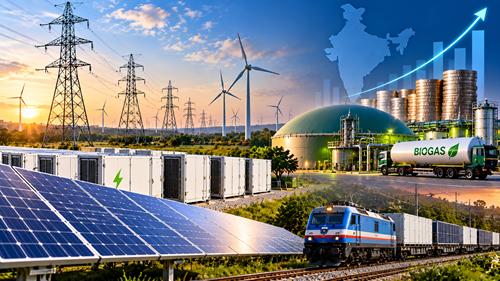
South Africa has set a target of roughly US$181bn in investment over 2026–2030, spread across energy, mining, infrastructure, manufacturing and digital services. The sixth investment conference in March produced 81 confirmed investments and about US$53.6bn in commitments. Roughly two-thirds of the confirmed company-led pledges came from South African-headquartered firms. The programme therefore leans more on domestic balance sheets than on foreign inflows.
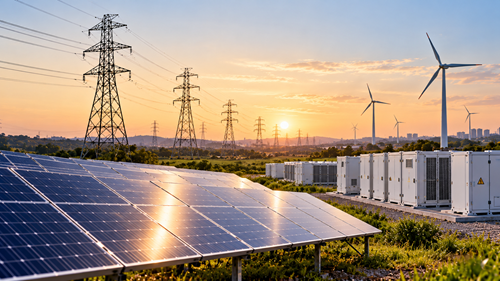
The harder question is conversion. Of the about US$90.4bn pledged in the 2018–2023 drive, only about US$38.2bn had reached the economy by March 2026, around 42%. That compares with the 60–80% realisation McKinsey finds typical for announced foreign investment. The gap is sharpest in power. South Africa’s renewable pipeline exceeds 220 GW, with about 36 GW in the grid-connection process, yet confirmed renewable investment at the conference was only about US$1.75bn. Pretoria’s answer is a Credit Guarantee Vehicle to de-risk private money in transmission, with about 14,000 km of lines to be built and a cost of roughly US$27.1bn. It is backed by a US$1.5bn World Bank policy loan approved in July for electricity, freight and water reforms.
The mining leg is a beneficiation push. The government wants to process platinum-group metals, manganese, and chromium domestically rather than export them as ore. If it succeeds, ore-importing steel and ferroalloy industries, including India’s, may face changed terms of access and capture more value at source.
For India, the parallel is the grid. The Centre has flagged a ₹9.15 lakh crore (US$96.0bn) transmission investment opportunity by 2032, and renewable capacity is again running ahead of evacuation.
South Africa’s guarantee-vehicle model, which uses concessional and multilateral capital to absorb early-stage risk, is a live case study for de-risking private transmission developers. Its 42% conversion record also offers a cautionary yardstick for India’s own state-level investor-summit commitments, where announcements and disbursements tend to diverge.
EU clears Greece’s $1.1bn energy security spending exemption
EU finance ministers have cleared Greece to treat energy-security investment as exempt from EU net-expenditure growth limits. Athens requested the change on 6 August, and the Commission recommended approval on 17 September.
The exemption is capped at 0.3% of GDP a year and 0.6% cumulatively through 2028. It brings no fresh EU grant: Greece funds the projects itself, and the spending still counts toward its primary balance and debt. It excludes temporary price relief, such as fuel tax cuts and income support.
The plan totals €1.002bn ($1.1bn) across eight programmes. Railway safety and extensions take the largest share at €320m ($360m). Next come a €200m ($225m) subsidy for battery storage paired with renewables and a €200m ($225m) rollout of heat pumps and solar water heaters for 100,000 beneficiaries.
Smaller lines cover efficiency upgrades in 109 public buildings (€117m, $130m), industrial carbon capture (€50m, $56m), a coal-region programme in Western Macedonia and Megalopolis (€50m, $56m), schools (€45m, $50m) and bus charging (€20m, $22m). Inclusion in the plan does not guarantee eligibility. Each project must be evidenced through twice-yearly reporting.
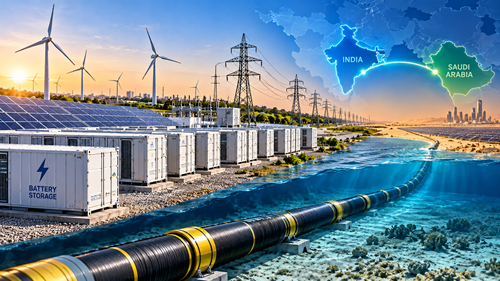
The significance lies in the fiscal design rather than the sum. Brussels is carving out capital spending that reduces import dependence while denying the same treatment to consumption-style subsidies. India’s own ₹5,400 crore ($565m) viability-gap scheme for 30 GWh of battery storage rests on the same logic of public capital for storage, so Greece’s storage line is a useful comparator.
The coal-region allocation is also relevant to India. States such as Jharkhand and Odisha face the same question of how to fund transition spending without breaching borrowing ceilings. Greece’s model of ring-fencing productive energy capex inside a fiscal-rule framework, rather than relying on grants, is a template worth tracking.