
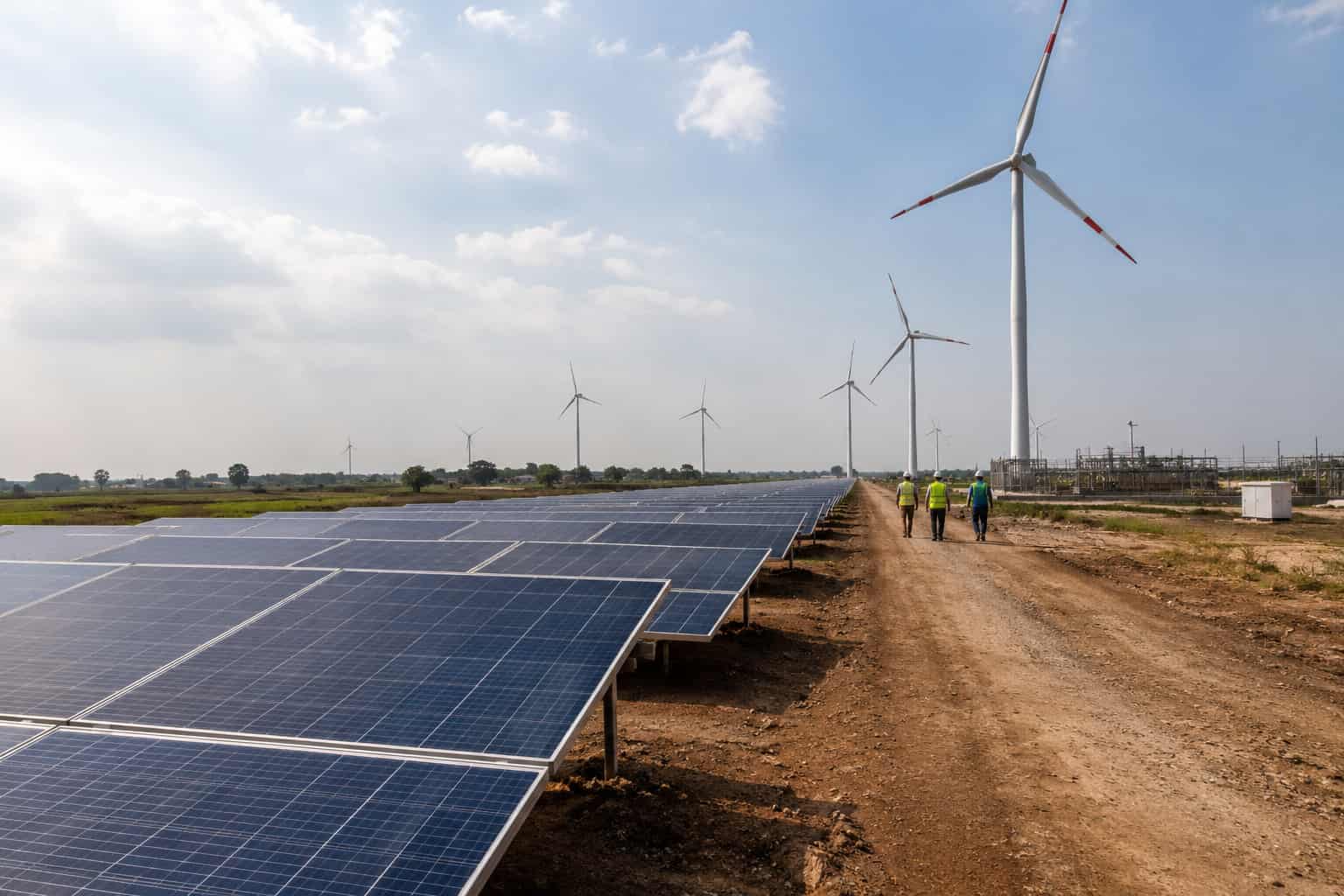

Apple’s India clean-energy investment signals the next phase of global manufacturing decarbonisation
Apple’s latest clean-energy investment in India reflects a broader shift underway across global manufacturing supply chains, where climate targets are increasingly shaping industrial geography and capital allocation.
While the reported $10.6 million investment is relatively modest in isolation, the strategic significance lies in how multinational technology companies are beginning to integrate renewable-energy sourcing directly into manufacturing and procurement strategies.
India is becoming central to this transition. As global firms seek alternatives to China while simultaneously reducing supply-chain emissions ahead of tightening climate commitments, India’s expanding renewable-energy ecosystem is emerging as a competitive advantage.
Access to cleaner electricity is likely to become increasingly important for export-oriented manufacturing sectors such as electronics, semiconductors, batteries and data infrastructure.
The development also points towards a deeper transformation in industrial economics. Renewable-energy procurement is no longer merely a sustainability exercise; it is gradually becoming part of cost competitiveness, investor expectations and trade positioning.
With Europe and parts of the developed world moving towards carbon-border mechanisms and greener supply-chain norms, manufacturers operating in India may increasingly face pressure to demonstrate lower-carbon operations.
Over the next decade, such investments could accelerate the creation of integrated “green manufacturing corridors” across India, particularly in states competing for global electronics and advanced manufacturing investments.
The broader signal is clear: energy transition and industrial strategy are becoming inseparable, and companies that adapt early may gain structural advantages in future global trade networks.
Kandla’s green hydrogen export ambitions reveal India’s emerging energy-trade strategy
Deendayal Port Authority and GH2 Solar signing an agreement to advance liquid green hydrogen exports highlights how India’s energy transition is increasingly acquiring a geopolitical and trade dimension. The move reflects growing ambitions to position Indian ports not merely as logistics gateways, but as future hubs in the global clean-energy economy.
The significance of the development lies less in the MoU itself and more in the strategic direction it represents. Countries across Europe and East Asia are searching for long-term green hydrogen suppliers to decarbonise heavy industry, fertilisers, shipping and chemicals.
India, with relatively low renewable-energy costs and large coastal infrastructure, sees an opportunity to emerge as part of this future energy-export chain.
Kandla’s location strengthens this ambition. Gujarat is rapidly evolving into one of India’s most important clean-energy and industrial corridors, attracting investments in green hydrogen, renewable manufacturing, petrochemicals and port infrastructure.
If large-scale hydrogen exports become commercially viable, ports such as Kandla could evolve into critical energy-trade nodes similar to LNG export terminals today.
However, substantial uncertainties remain around the economics of hydrogen exports globally. Questions around transport costs, electrolyser pricing, storage infrastructure and long-term overseas demand continue to affect project viability.
Even so, momentum around green hydrogen is likely to accelerate over the coming years as governments pursue industrial decarbonisation targets and energy-security diversification. India’s early positioning may therefore provide long-term strategic advantages if the market matures at scale.
India-made large wind turbines reflect the changing economics of the renewable-energy sector
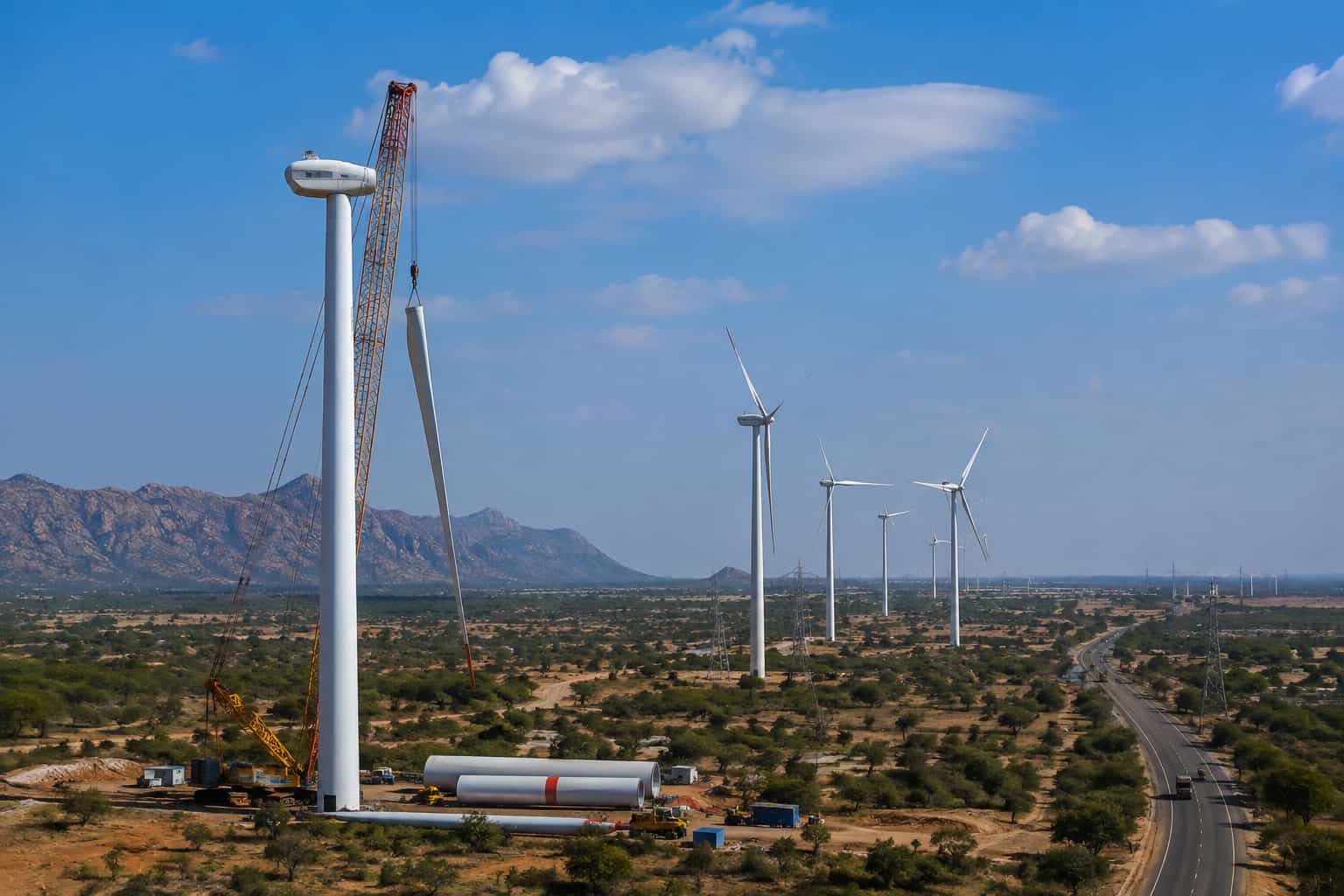
KP Group becoming the first company in India to install a domestically manufactured 4.2 MW wind turbine reflects an important transition underway within the country’s renewable-energy sector.
The development signals how India’s clean-energy ambitions are increasingly shifting beyond deployment targets towards manufacturing capability, technological scale and industrial self-reliance.
Larger turbines are becoming critical to the future economics of wind power. Higher-capacity machines improve electricity generation efficiency, reduce land-use intensity and strengthen project viability in regions where premium wind sites are becoming limited.
Similar trends have already reshaped wind markets in China and Europe, where turbine sizes have steadily increased as developers pursue lower generation costs and higher productivity.
The domestic manufacturing aspect is equally significant. India has long aimed to reduce dependence on imported clean-energy technologies while strengthening local industrial ecosystems under broader “Make in India” objectives.
Advanced turbine manufacturing could create spillover effects across engineering, steel, logistics and heavy-industry supply chains while also improving India’s position in global renewable manufacturing markets.
The timing is notable because India’s wind sector is regaining policy and investor attention after several years of slower momentum compared to solar energy. Rising interest in hybrid renewable projects, grid stability and round-the-clock power solutions is reviving the strategic importance of wind generation.
Over the coming decade, the sector may increasingly evolve towards integrated renewable systems combining wind, solar and battery storage rather than standalone technologies.