
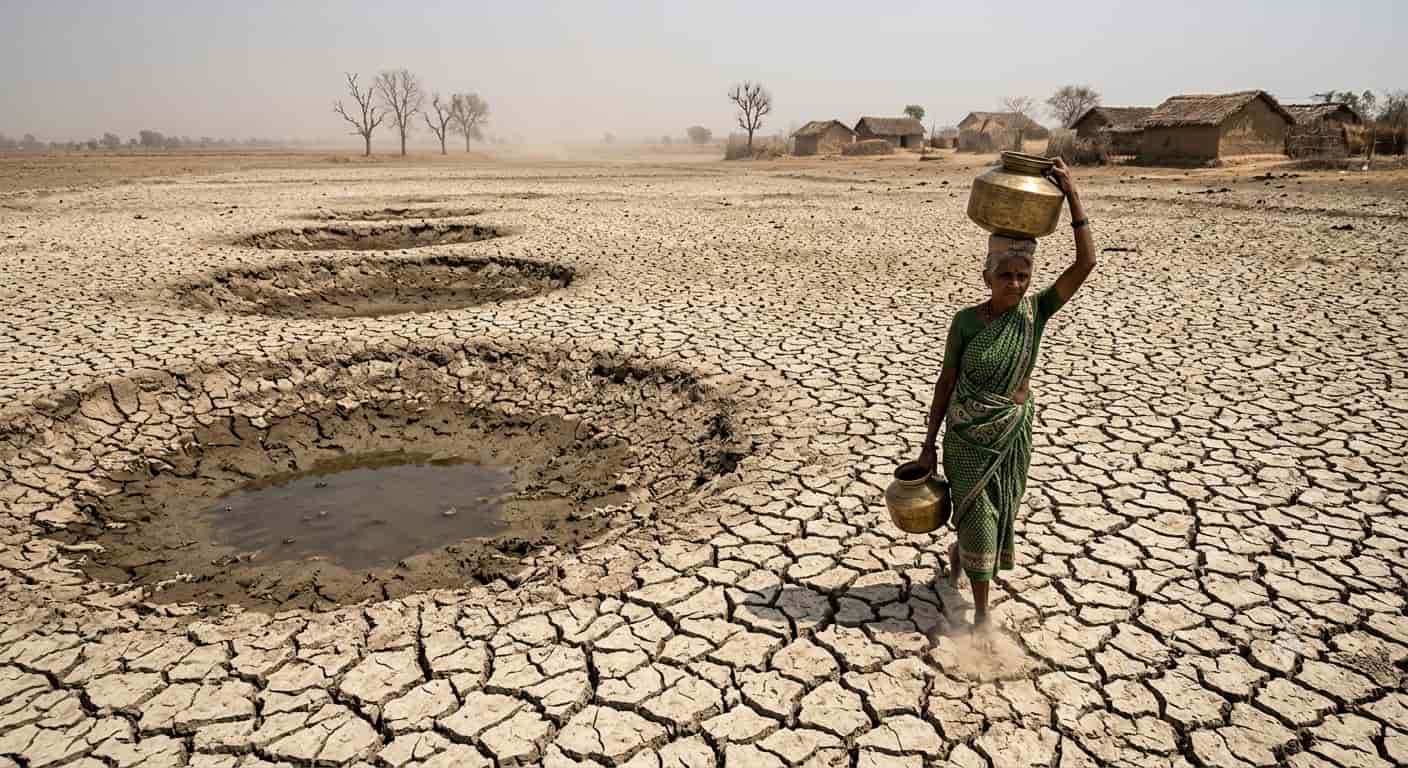
India’s climate crisis is producing two very different economies.
In one, rising temperatures are creating markets. Demand for air conditioners is rising, electricity consumption is increasing, and the need for solar, storage and transmission is generating large investment opportunities.
In the other, the same climate stress is damaging crops, disrupting livelihoods, increasing displacement and weakening the economic security of households already living close to the edge.
The first economy is increasingly visible to investors. The second is much harder to finance.
That may be emerging as one of the central contradictions in India’s climate response. The problem is no longer simply that the country needs more climate finance. It is increasingly about what climate finance is structurally designed to fund — and what it is unable to see.
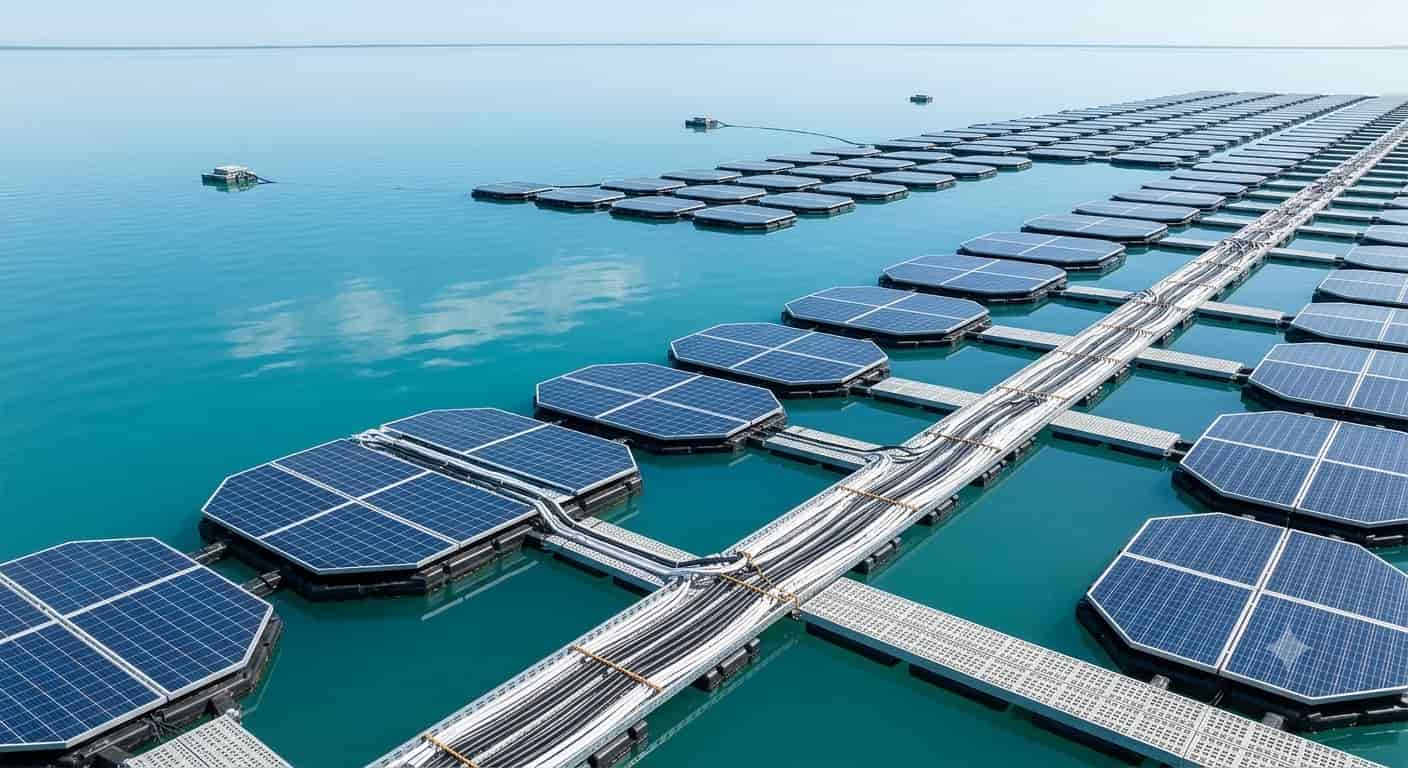
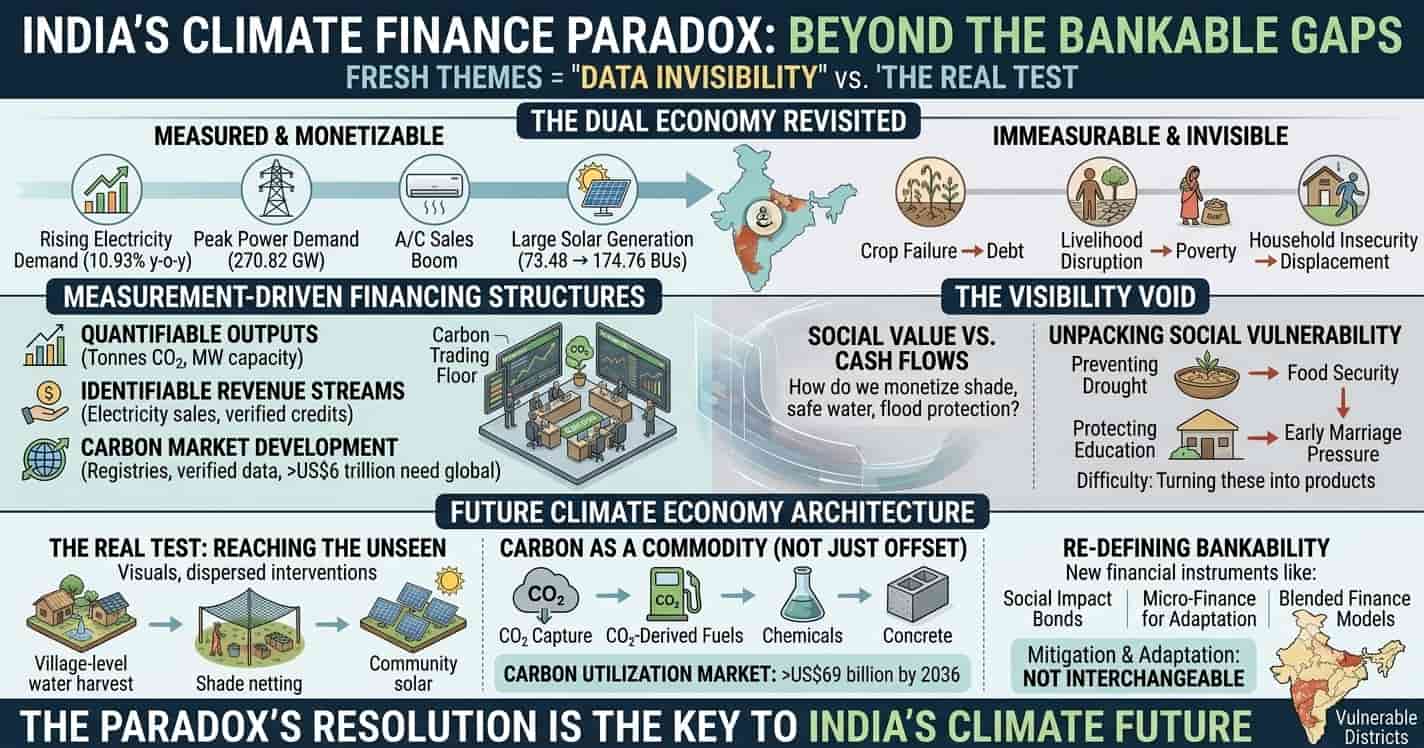
India can finance a solar park because electricity generation can be measured and sold. It can finance a battery because storage can generate revenue. Carbon markets can create tradable assets because emissions reductions can be quantified and verified.
But preventing a drought from pushing a poor household deeper into debt is much harder to turn into a financial product. So is protecting a girl’s education when climate-related livelihood stress increases pressure for early marriage.
That creates a growing bankability gap within climate action. Capital flows most easily towards activities with measurable outputs and identifiable revenue streams, while some of the interventions with the greatest social value remain dependent on public expenditure and concessional finance.
 Climate stress is creating new markets
India’s energy system shows how quickly climate risk can become an investment opportunity.
In April and May 2026, all 50 of the world’s hottest cities were located in India. By July, electricity consumption had risen 10.93% year-on-year to 170.70 billion units, while peak power demand reached 270.20 GW. The all-time high of 270.82 GW had already been recorded in May. Rising temperatures and humidity were driving greater use of cooling appliances across the country.
Recent reporting also pointed to the sharp growth in air-conditioner sales as households increasingly respond to a warming climate through mechanical cooling.
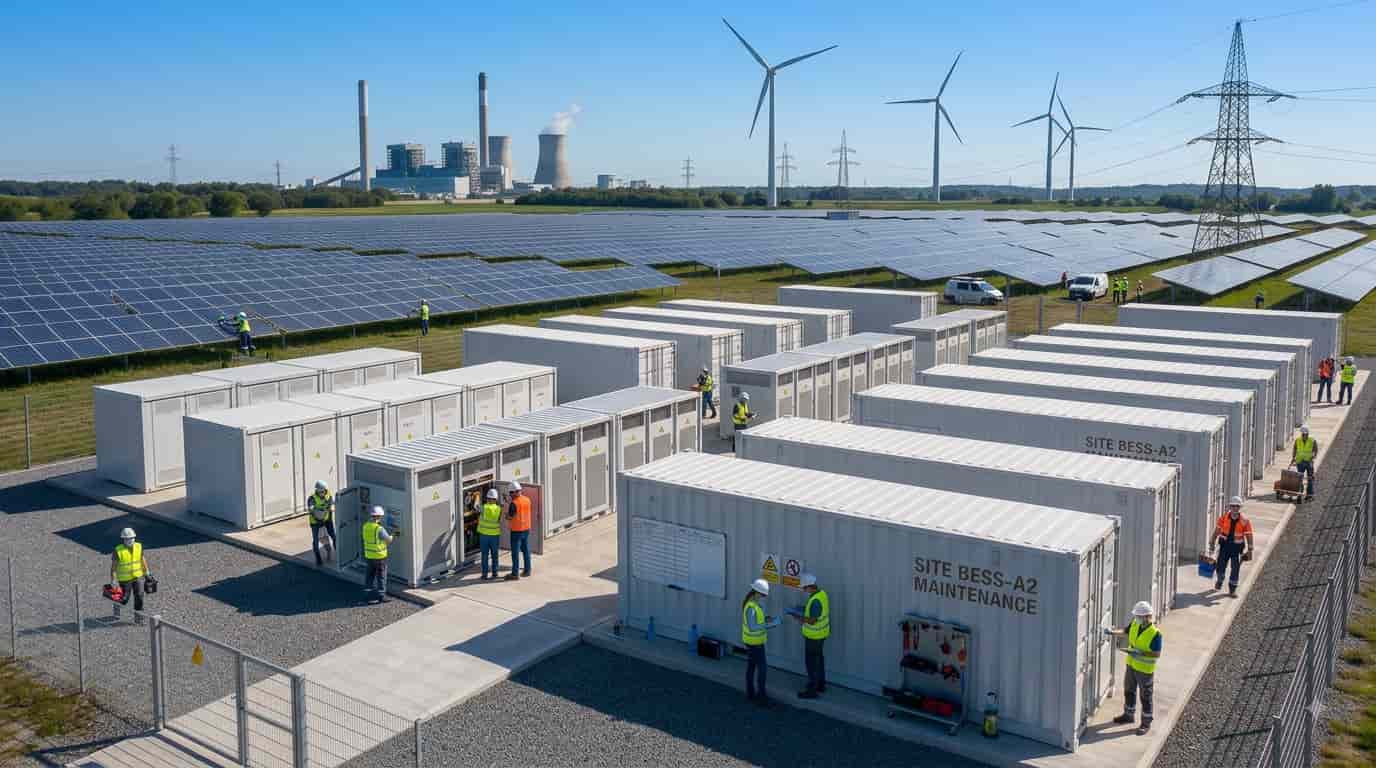
The investment response is obvious. India needs more generation, more transmission and much larger amounts of storage. Solar generation rose from 73.48 billion units in 2021-22 to 174.76 billion units in 2025-26, according to official data cited in the same analysis of India’s power system. Yet transmission and storage infrastructure have struggled to keep pace, leaving the system unable to fully absorb renewable generation during periods of high solar output.
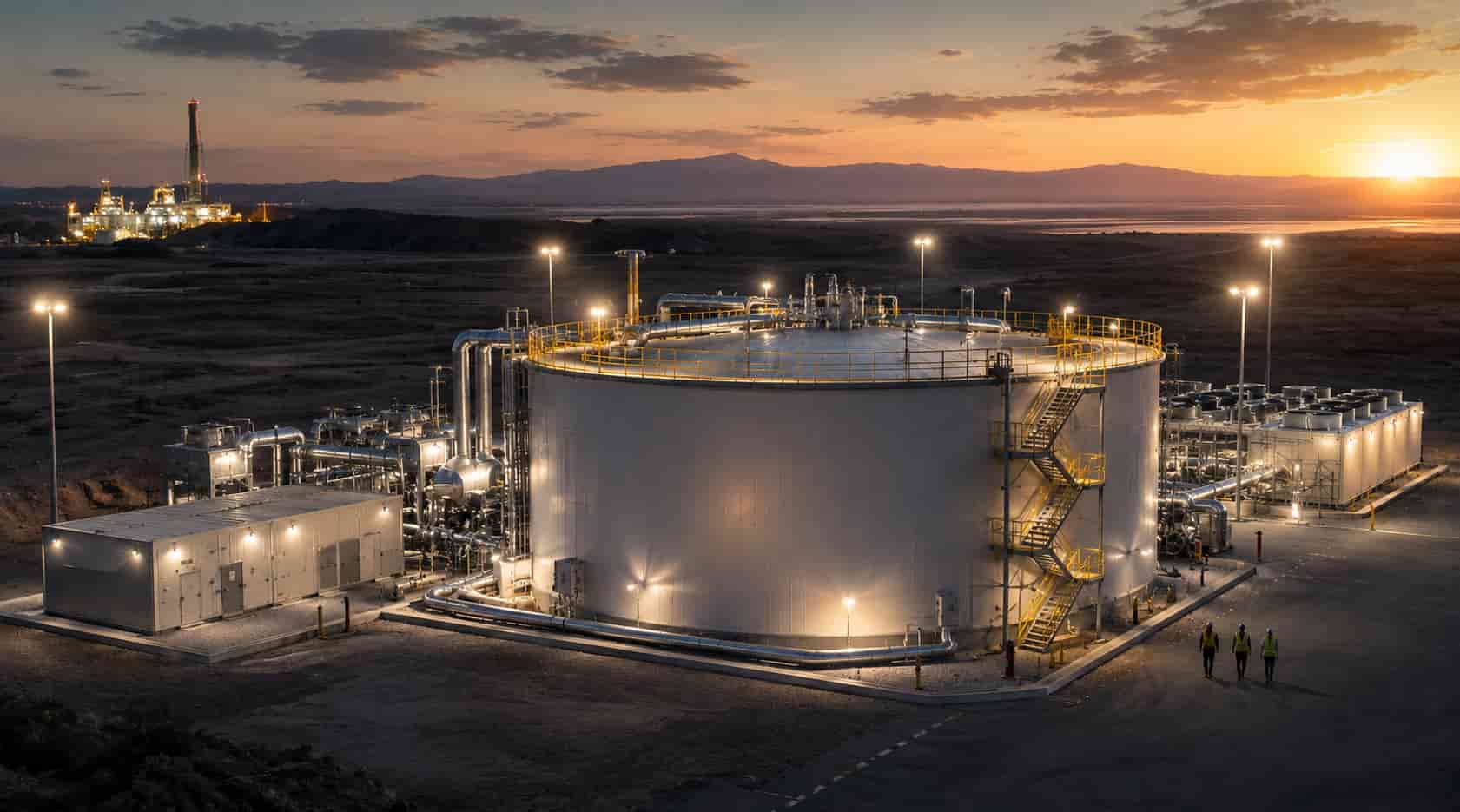
This is where climate stress becomes commercially visible. Rising electricity demand creates markets for solar modules, batteries, transmission systems, cooling technologies and flexible generation. India’s transition therefore offers investors a growing universe of identifiable projects with assets, contracts and potential cash flows.
“A large part of the transition challenge is becoming easier for capital markets to understand because the assets themselves are familiar,” said an executive at one of India’s leading renewable energy developers. “The real difficulty is ensuring that the financial system does not define climate action only through projects that can produce predictable cash flows.”
That distinction matters.
The climate crisis is not merely increasing the cost of protecting the economy. It is also creating new investment opportunities within it. The danger is that the commercial success of the energy transition may obscure the fact that large parts of climate adaptation remain financially invisible.
The money follows what can be measured
The rapid development of carbon markets could deepen this distinction.
Carbon markets are increasingly being promoted as a channel for mobilising private capital into climate action. In an August 2026 address on scaling carbon markets, the UNDP said developing countries would require more than US$6 trillion by 2030 to meet their climate ambitions and argued that credible carbon markets, supported by strong registries and data infrastructure, could help bridge part of that financing gap.
The logic is compelling. A tonne of carbon reduced or removed can be given a unit of measurement. A methodology can be developed to monitor it. The result can be verified, recorded and potentially traded.
That creates a powerful financial architecture around mitigation.
Carbon markets are not an end in themselves, as the UNDP’s intervention itself emphasised. The intention is to mobilise public and private investment into renewable energy, cleaner transport, sustainable agriculture and other transition activities.
But the same system exposes a fundamental limitation.
Adaptation is more difficult to standardise. How does an investor calculate the financial return from a stronger village embankment? Or from shade infrastructure that reduces heat exposure? Or from preventing a climate shock from forcing a child out of school?
The benefits are real. But they do not automatically become cash flows.
That is the deeper paradox. The more sophisticated climate finance becomes, the greater the possibility that it concentrates on those parts of the climate crisis that are easiest to translate into financial instruments.
 India’s vulnerability has no comparable market
The contrast becomes sharper when set against the scale of India’s exposure.
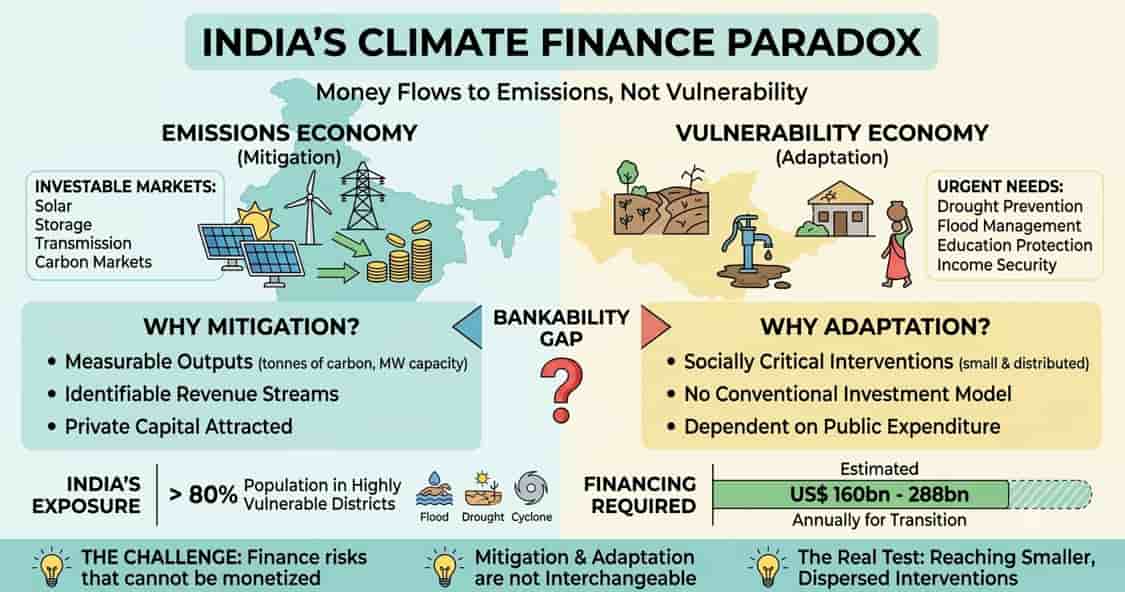
More than 80% of India’s population lives in districts highly vulnerable to floods, droughts and cyclones, according to the Climate Vulnerability Index cited in recent analysis of climate finance in India. In states such as Assam, Andhra Pradesh, Maharashtra, Karnataka and Bihar, that vulnerability is already visible through damaged roads, disrupted farming and recurring displacement.
The interventions required are often neither technologically complex nor difficult to identify. Higher roads, stronger embankments, safer shelters, water systems and early-warning mechanisms can substantially reduce the human and economic costs of climate shocks.
But straightforward does not necessarily mean financially attractive.
The same analysis argued that climate finance often flows more easily towards large, easily packaged projects such as solar parks, grid upgrades, transmission systems and other infrastructure assets. Smaller adaptation projects that save lives and livelihoods in villages and districts can struggle to secure comparable funding.
India is estimated to require about US$160 billion to US$288 billion annually through 2030 to keep pace with climate change. Yet adaptation finance reaching vulnerable communities remains far below what is required, leaving states to confront climate risks with strained budgets, borrowing constraints and uncertain funding pipelines.
This is not an argument against renewable investment or large-scale climate infrastructure. India needs both at enormous scale.
The problem arises when mitigation and adaptation are implicitly placed in competition for capital and policy attention. A country can make rapid progress in building clean-energy assets while leaving its most vulnerable communities exposed to climate shocks that are already occurring.
“Mitigation and adaptation cannot be treated as interchangeable categories,” said a researcher at a New Delhi-based energy think tank. “A successful energy transition reduces future risks, but it does not automatically protect people from the risks they face today.”
When climate vulnerability enters the household
The consequences of this financing gap extend well beyond infrastructure.
A recent ground report from Rajgarh in Madhya Pradesh shows how climate stress can interact with existing social and economic vulnerabilities. Crop failures, rainfall variability, food insecurity and migration can weaken household finances and disrupt education, intensifying conditions that make girls more vulnerable to early marriage.
The evidence does not suggest that climate change directly causes child marriage. The report is more nuanced: climate shocks can multiply existing drivers such as poverty, livelihood insecurity and migration. In some communities, slow and cumulative climate pressures can narrow household choices until early marriage becomes entangled with economic survival.
India accounts for 34% of the world’s child brides, while around 23% of women aged 20-24 were married before the age of 18, according to NFHS-5 figures cited in the ground report. Globally, Save the Children estimates that nearly 9 million girls each year face the combined risks of climate disasters and child marriage.
This is why adaptation cannot be understood only as physical infrastructure.
A climate-resilient road may protect a village. But a climate-resilient household requires something broader: income security, functioning schools, access to public services, social protection and institutions capable of responding before an environmental shock becomes a deeper social crisis.
These outcomes may have enormous public value. Yet they are among the hardest to package as investable projects.
Carbon is becoming an asset. Vulnerability is not.
The emerging commercial interest in carbon itself points towards where climate finance could be heading.
Beyond carbon credits, companies are increasingly exploring ways of turning captured CO₂ into industrial products. A recent market assessment forecasts that the emerging carbon dioxide utilisation market could exceed US$69 billion by 2036, with growth expected in applications including CO₂-derived fuels, chemicals and concrete.
The commercial economics of these technologies remain uncertain and will vary sharply across applications. Many utilisation pathways are still developing and depend heavily on technology costs, energy prices and policy support.
But the broader direction is significant. Carbon is increasingly being treated not only as an environmental liability but also as a potentially valuable industrial raw material. The same market assessment describes the growing business case for treating captured CO₂ as an input into products rather than simply a waste stream requiring disposal.
This creates one of the more striking features of the emerging climate economy.
The world is becoming better at putting a price on carbon than at putting a price on preventing vulnerability.
India’s challenge will be to ensure that this financial innovation does not create a distorted hierarchy of climate priorities. Carbon markets, clean-energy assets and new industrial technologies can all play an important role in the transition. But they should not become substitutes for adaptation simply because they are easier to finance.
The real test of India’s climate-finance system may therefore lie outside its largest renewable projects and future carbon exchanges.
It will lie in whether finance can reach the smaller, dispersed and less commercially attractive interventions that determine how ordinary households survive climate stress.
The future climate economy will almost certainly generate more assets, more markets and more financial instruments. India should welcome that development.
But it should also ask a harder question.
If climate finance increasingly rewards what can be measured in tonnes of carbon, megawatts of capacity or returns on investment, who finances the risks that cannot be reduced to any of them?
That question may ultimately matter as much to India’s climate future as the size of its solar pipeline or the price of a carbon credit.
Follow us on : X | LinkedIn | Facebook | Bluesky